Diseases
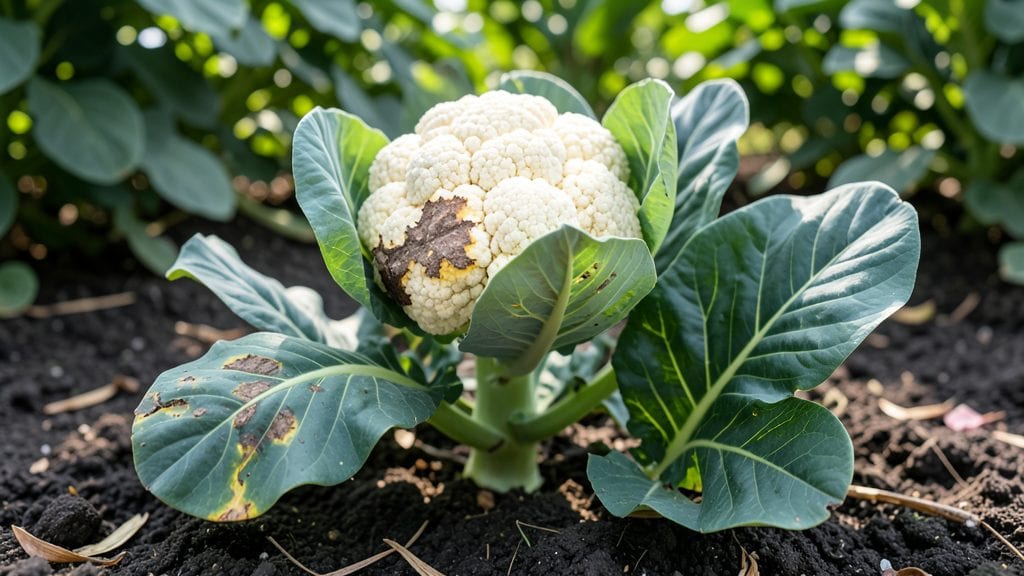
Cauliflower plant diseases can turn your lush heads into sad, yellowing messes—fast. 🌱 I’ve watched my own crops go from promising to pathetic in weeks because of fungal and bacterial invaders, and I’m here to help you spot the warning signs before it’s too late.
The key is acting early, and knowing which diseases to watch for in your garden.
Most cauliflower diseases start with waterlogged soil or crowded plants, creating the perfect breeding ground for pathogens. Black rot, clubroot, and downy mildew are the usual suspects, each leaving distinct clues—like yellowing leaves, stunted growth, or strange spots.
The good news? Organic sprays, proper spacing, and clean tools can often stop these pests in their tracks before they ruin your harvest.
You’ll learn to recognize the 10 most common diseases by their symptoms, plus how to treat them without harsh chemicals. A few simple adjustments—like improving drainage or rotating crops—can make all the difference. By the end, you’ll feel confident tackling even the trickiest fungal or bacterial threats.
Whether you’re dealing with a small backyard plot or a larger farm, these strategies work. The goal isn’t just to save your plants—it’s to grow cauliflower that’s healthy, productive, and free from the frustration of preventable diseases. Let’s get your crops back on track.
Root Causes Behind Plant Problems
Understanding why cauliflower plants succumb to diseases starts with peeling back the layers of their growing environment. These issues rarely happen in isolation—they’re often the result of a perfect storm of conditions. Let’s break down the key culprits that turn a thriving crop into a battleground for pathogens.
Cauliflower thrives in well-draining, nutrient-rich soil, but when these conditions falter, diseases like clubroot (Plasmodiophora brassicae) and black rot (Xanthomonas campestris) move in. Here’s why:
- Waterlogged soil 💦: Cauliflower roots need oxygen. Poor drainage creates anaerobic zones where fungal spores thrive.
Clubroot, for example, distorts roots by forming galls that block nutrient uptake. - Compacted or heavy clay soil 🏗️: Restricts root growth, weakening plants and making them vulnerable to bacterial infections like bacterial soft rot (Erwinia carotovora). - Low organic matter 🌱: Soil lacking compost or aged manure lacks beneficial microbes and nutrients, leaving plants stressed and disease-prone.
Actionable fix: Amend soil with sand, perlite, or compost to improve aeration. Test pH (ideal: 6.0–6.8)—acidic soil (below 6.0) encourages clubroot.
Fungal diseases like downy mildew (Hyaloperonospora brassicae) and white rot (Sclerotinia sclerotiorum) love damp conditions. Here’s how moisture becomes a problem:
- Overhead watering 💦: Splashes soil onto leaves, spreading spores.
Downy mildew thrives in humidity >90% and appears as yellow, angular spots on undersides of leaves. - Frequent rain or poor airflow 🌬️: Stagnant air traps moisture, creating ideal conditions for gray mold (Botrytis cinerea), which causes brown, fuzzy lesions on heads. - Irrigation at night ⏰: Condensation forms on leaves, prolonging moisture and inviting bacterial infections like blackleg (Leptosphaeria maculans).
Actionable fix: Water early in the day (before 10 AM) and use drip irrigation to avoid wetting foliage. Space plants for airflow (18–24 inches apart).
Cauliflower is a cool-season crop, but extreme heat or cold weakens its defenses. Diseases exploit this stress:
- Heat stress 🔥: Temperatures above 85°F (29°C) cause bolting (premature flowering), making plants susceptible to Alternaria leaf spot (Alternaria brassicae), which appears as dark, concentric rings on leaves.
- Cold snaps ❄️: Below 50°F (10°C) slows growth, while frost damages tissue, creating entry points for bacterial leaf spot (Pseudomonas syringae).
- Sudden temperature swings 📉: Shock weakens plants, allowing powdery mildew (Erysiphe cruciferarum) to coat leaves in white, powdery patches.
Actionable fix: Use shade cloth in summer and row covers in spring/fall. Plant in partial shade during peak heat.
Diseases don’t just appear—they’re often carried in on tools, seeds, or even water. Common vectors include:
- Infected seeds 🌱: Some pathogens (like black rot) are seed-borne.
Even treated seeds can harbor dormant bacteria. - Reused garden tools ⚔️: Pruners or knives contaminated with gray mold or white rot spread spores between plants. - Water from ponds or untreated sources 💧: May contain Pythium (a water mold causing damping-off in seedlings).
Actionable fix: Sterilize tools with 70% isopropyl alcohol between uses. Buy seeds from reputable suppliers and soak in 1% bleach solution (90 sec) before planting.
Insects like cabbage worms or aphids don’t just eat leaves—they injure plants, creating wounds where bacteria and fungi enter:
- Cabbage maggots 🐛: Larvae feed on roots, weakening plants and inviting Fusarium wilt (Fusarium oxysporum), which clogs vascular tissue, turning leaves yellow.
- Aphids 🐜: Excrete honeydew, promoting sooty mold (a secondary fungal issue) and transmitting viral diseases like cauliflower mosaic virus.
Actionable fix: Use row covers to block pests early. Apply neem oil or Bt (Bacillus thuringiensis) for organic control.
Dense planting and monocropping (growing brassicas year after year) create a breeding ground for diseases:
- Limited airflow 🌬️: Trapped humidity in crowded beds encourages white rot and downy mildew.
- Depleted soil microbes 🌱: Repeatedly planting cauliflower in the same spot exhausts beneficial fungi/bacteria, leaving clubroot spores to persist for years.
Actionable fix: Practice 3–4 year crop rotation with non-brassicas (e.g., legumes, grasses). Space plants properly and solarize soil (cover with plastic for 4–6 weeks) to kill pathogens.
Key Takeaway: Most cauliflower diseases are opportunistic—they exploit weak points in your garden’s ecosystem. By addressing soil, water, temperature, and hygiene, you can starve pathogens before they take hold. 🚀
Quick Fixes for Sick Cauliflower Plants
When your cauliflower crop starts showing signs of disease, acting fast can mean the difference between saving your harvest and losing it entirely. Below, we’ve mapped out practical, step-by-step solutions for the most common cauliflower diseases—along with prevention tips to keep your plants thriving.
Think of this as your emergency repair guide for fungal and bacterial infections.
Cause: Plasmodiophora brassicae thrives in acidic, waterlogged soil, distorting roots and stunting growth.
How to Fix It: 🔥 Step 1: Remove Infected Plants – Pull up and destroy (do not compost) affected plants to stop the spread. Use gloves and sanitize tools with 70% rubbing alcohol or bleach solution (1 part bleach to 9 parts water).
🍳 Step 2: Adjust Soil pH – Club root loves acidic soil (pH < 6.5). Test your soil and amend with lime (calcium carbonate) to raise pH to 6.8–7.2. Follow package instructions for application rates.
👨🍳 Step 3: Improve Drainage – Amend heavy clay soil with compost, sand, or perlite to prevent waterlogging. Raise beds or plant on slopes if drainage is poor.
🥘 Step 4: Rotate Crops – Avoid planting brassicas (cabbage family) in the same spot for at least 3 years. If space is limited, use mustard or radish as trap crops to exhaust the pathogen.
💡 Prevention Tip: 🌡️ Solarize soil in late summer by covering it with clear plastic for 4–6 weeks to kill pathogens.
Cause: Xanthomonas campestris bacteria spreads through water and infected seeds, causing V-shaped yellow leaves and blackened veins.
How to Fix It: 🔪 Step 1: Prune Infected Leaves – Cut off yellowing or blackened leaves with sterilized pruners (wipe with bleach between cuts). Dispose of clippings in the trash, not compost.
⏰ Step 2: Avoid Overhead Watering – Switch to drip irrigation or soaker hoses to keep foliage dry. Water early in the morning so leaves dry quickly.
🎯 Step 3: Use Copper-Based Sprays – Apply copper fungicide (like Copper Soap or Bordeaux Mix) every 7–10 days until symptoms disappear. Follow label rates—do not overapply.
✨ Step 4: Sterilize Tools & Seeds – Soak seeds in 10% bleach solution for 10 minutes before planting. Clean tools with rubbing alcohol after each use.
💡 Prevention Tip: 🔥 Plant resistant varieties like ‘Snowball Y Improved’ or ‘Purple of Sicily’ to reduce risk.
Cause: Hyaloperonospora brassicae thrives in cool, humid conditions, creating fuzzy gray mold on undersides of leaves.
How to Fix It: 🌬️ Step 1: Improve Air Circulation – Space plants 18–24 inches apart and prune crowded foliage. Use fan oscillators on low setting for 1–2 hours daily if humidity is high.
🍳 Step 2: Apply Preventative Sprays – Use neem oil, sulfur, or potassium bicarbonate (1 tbsp per gallon of water) every 7–10 days as a preventative. For active infections, switch to fungicides like chlorothalonil or mancozeb.
👨🍳 Step 3: Remove & Destroy Affected Leaves – Snip off moldy leaves and dispose of them far from the garden (not in compost).
💡 Prevention Tip: 🌡️ Mulch with straw (not plastic) to keep soil temperature stable and reduce humidity near leaves.
Cause: Erysiphe cruciferarum appears as white, powdery spots in dry, shady conditions.
How to Fix It: 🧂 Step 1: Spray Baking Soda Solution – Mix 1 tsp baking soda + 1 tsp horticultural oil + 1 tsp dish soap per quart of water. Spray both sides of leaves every 5–7 days until cleared.
☀️ Step 2: Increase Sunlight – Move plants to a sunnier spot (6+ hours of direct sun) or use reflective mulch to bounce light onto leaves.
🍳 Step 3: Prune for Airflow – Thin out dense growth to reduce humidity trapped in the canopy.
💡 Prevention Tip: ✨ Plant companion crops like marigolds or thyme to deter fungal spores.
Cause: Alternaria brassicae creates dark brown spots with yellow halos in warm, wet weather.
How to Fix It: 🔄 Step 1: Rotate Crops – Avoid planting brassicas in the same spot for 3+ years. If space is tight, use cover crops like clover to break the disease cycle.
🍳 Step 2: Apply Copper Fungicide – Spray copper hydroxide (like TriBasic Copper) every 10–14 days until symptoms fade.
👨🍳 Step 3: Water at the Base – Never wet leaves—use drip irrigation and water early morning.
💡 Prevention Tip: 🌡️ Harvest promptly—stressed, overmature plants are more susceptible.
To keep your cauliflower plants healthy long-term: ✅ Start with disease-free seeds (buy from reputable suppliers). ✅ Sterilize tools between plants (bleach or alcohol). ✅ Rotate crops—never plant brassicas in the same spot yearly. ✅ Test soil and amend for balanced nutrients (too much nitrogen = weak plants). ✅ Monitor humidity—aim for 40–60% range with proper airflow.
Final Thought: Most cauliflower diseases are manageable with early action and good garden hygiene. Act fast, stay consistent, and your plants will bounce back! 🌱💪
Frequently asked questions about cauliflower plant diseases
What are the first signs my cauliflower plants have a disease?
Watch for yellowing leaves, stunted growth, or strange spots—common early warnings. Fungal issues like downy mildew show as fuzzy gray patches on undersides, while bacterial problems (e.g., black rot) cause V-shaped yellowing with black veins. Root diseases like clubroot distort roots and stunt the plant above ground. Check leaves daily, especially after rain.
Can I save my cauliflower crop if it already has a fungal disease?
Yes, but act fast! Remove infected leaves immediately and improve airflow by spacing plants 18-24 inches apart. Apply copper fungicide or neem oil every 7-10 days while keeping foliage dry. For severe cases, consider pruning back the plant to redirect energy to healthy growth. Prevention is key—sterilize tools and rotate crops yearly.
Why do my cauliflower plants get diseases more often in wet seasons?
Excess moisture creates the perfect breeding ground for pathogens. Waterlogged soil encourages clubroot and Pythium, while damp leaves invite downy mildew and gray mold. Overhead watering splashes spores onto leaves, spreading disease. Switch to drip irrigation and water early in the morning to let leaves dry quickly.
Are there organic treatments for bacterial diseases like black rot?
Yes! Start by pruning infected leaves and sterilizing tools with rubbing alcohol. Use copper-based sprays (like Bordeaux mix) every 7-10 days, and avoid overhead watering. For prevention, soak seeds in 1% bleach solution for 90 seconds before planting. Resistant varieties like ‘Snowball Y Improved’ can also help reduce risk.
How long do cauliflower disease spores survive in the soil?
It varies by pathogen: Clubroot spores can persist for 10+ years, while downy mildew survives 1-2 years in organic matter. Black rot bacteria may linger 3-5 years in soil. Solarizing soil (covering with plastic for 4-6 weeks) or practicing 3-year crop rotation breaks the cycle. Test soil pH—clubroot thrives in acidic conditions (pH <6.5).