Pruning
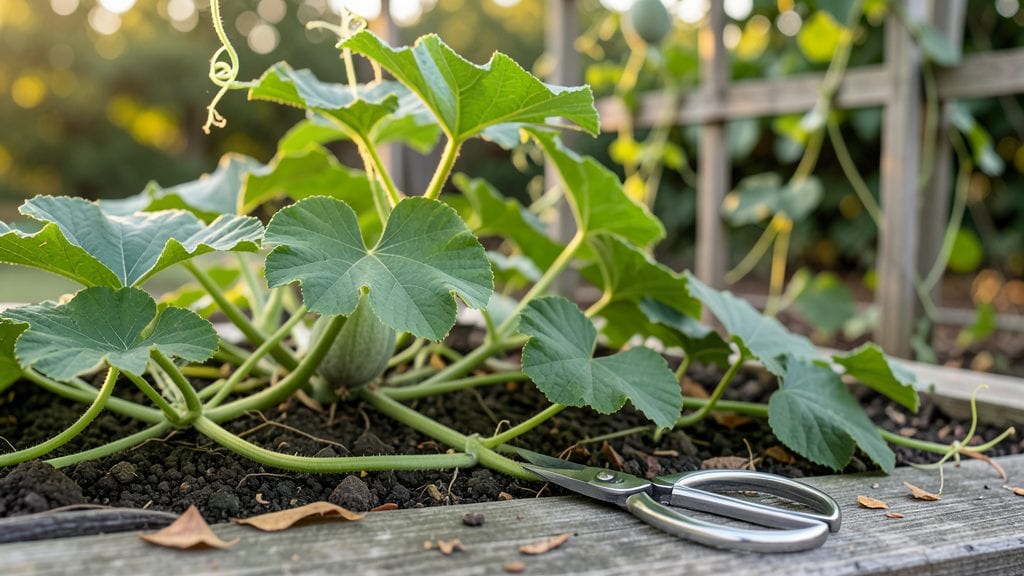
Pruning cantaloupe plants might seem counterintuitive—after all, why cut back a plant that’s already working hard to produce fruit? 🌿 I’ve learned the hard way that strategic pruning actually boosts yields by directing energy where it matters most: to bigger, sweeter melons.
The key is timing and technique, not aggressive trimming.
You’ll only need three basic cuts to maximize production: removing suckers early, trimming laterals at the right stage, and thinning vines to improve air circulation. Most gardeners skip pruning entirely, but those who do see melons ripen weeks earlier and produce fewer but higher-quality fruits.
The tools? Just clean pruners and a sharp knife—no fancy equipment needed.
By focusing on the plant’s main vines, you’ll encourage stronger root systems and better fruit set. I’ve gone from struggling with small, underripe melons to harvesting 10-pound behemoths that split the vine with sweetness.
The secret lies in balancing growth and fruit load—never let the plant get overcrowded, or you’ll end up with bitter, undersized fruits.
This method works for both bush and vining cantaloupes, though bush types need less aggressive pruning. Whether you’re growing in raised beds or open ground, the same principles apply. Ready to turn your cantaloupe patch into a high-yielding powerhouse? Let’s get those pruners sharp and start cutting for success.
📚 In This Guide
- What you need
- Instructions
- Tips and common mistakes
- Wrapping up and next steps
What you need
- ● Clean, sharp pruning shears – A pair with bypass blades (4-6 inches long) for precise cuts. Disinfect with rubbing alcohol before and after use to prevent disease spread.
- ● Gloves – Garden or work gloves (heavy-duty, nitrile-coated) to protect your hands from thorns and rough vines.
- ○ Garden twine or plant ties – 3-4 feet per plant to support vines after pruning (optional but helpful for trellising).
- ● Watering can or hose – A light spray nozzle to hydrate plants post-pruning.
- ○ Pruning saw (optional but helpful) – For thick, woody vines (rare in cantaloupes but useful if vines exceed 1 inch in diameter).
- ○ Plant growth regulator – Optional spray (e.g., hydrogen peroxide 3%) to disinfect cuts and promote faster healing.
- ● Garden journal or marker – To label pruned sections and track growth progress.
- ● Compost bin or bag – For removing pruned vines (avoid leaving them near the plant to prevent pests/disease).
- ● Sunhat and sunscreen – Because pruning in the sun is no joke! 😎
Step-by-Step guide to pruning cantaloupe for bigger harvests
Pruning cantaloupe isn't about shaping the plant—it's about redirecting energy where it matters most: the fruit.
🌿 Step 1: Identify the Main Vine and Remove Suckers Early
Cantaloupes grow on the main vine, not the side shoots called suckers. Within 2 weeks of transplanting, you'll spot these small shoots growing from the leaf axils. Use your fingers or clean pruning shears to pinch them off at the base—don't leave a stub. This forces the plant to focus its energy on the primary vine where the fruit develops.
Here's the thing—if you wait too long, those suckers will compete with your main vine. You'll know you're on track when the primary vine has 5-7 leaves and no side shoots longer than 1 inch. Real talk: This is the moment that matters most for fruit size.
✂️ Step 2: Trim Excess Leaves Near Developing Fruit
Once flowers appear and small fruits form, remove every other leaf growing directly above or below each developing cantaloupe. Use sharp pruning shears to make clean cuts just above a leaf node. This improves air circulation and sunlight penetration—both critical for preventing disease and speeding up fruit ripening.
I like to keep 3-4 leaves per fruit maximum. More than that shades the melon and slows growth. Watch for yellowing or curling leaves—these are signs of overcrowding or disease, and you'll need to prune more aggressively to save the remaining fruit.
🌱 Step 3: Thin Overcrowded Vines for Optimal Yield
By 4-6 weeks after flowering, your main vine may produce multiple fruits within 12 inches of each other. Select the largest, healthiest fruit in each cluster and prune the others completely. This ensures the remaining melons get maximum nutrients and sunlight.
Don't skip this step—overcrowded cantaloupes split or stay small. You'll see the difference immediately: the kept fruit will swell noticeably within 3-5 days of thinning. If a vine has more than 3 fruits, prune the smallest ones first.
⏰ Step 4: Stop Pruning 2 Weeks Before Harvest
Once cantaloupes reach 80% of their expected size (check variety guidelines), stop all pruning. The plant needs its full energy to ripen the fruit. Look for dull, cream-colored undersides on the melons—this is your cue they're nearing readiness.
Here's where many gardeners go wrong: they keep trimming right up until harvest, leaving fruit underdeveloped. After your final pruning, water deeply and let the plant focus solely on sweetening those melons. You'll know you've timed it right when the vine's growth slows and leaves start yellowing naturally.
Tips & tricks for perfect cantaloupe pruning
A few strategic cuts can transform your cantaloupe harvest from modest to spectacular. Here's how to maximize every pruning moment.
Timing is Everything: The 2-week window after transplanting is non-negotiable for sucker removal. I've seen gardeners wait too long and end up with half-sized melons because those suckers siphon energy like weeds. Mark your calendar or set a reminder—this is when you prevent future headaches. The goal is to have your main vine sporting 5-7 leaves with no side shoots over 1 inch long by this stage.
Pruning Shears vs Fingers: For suckers, your fingers work perfectly fine—just pinch at the base. But for Step 2 and beyond, invest in sharp pruning shears. Dull blades crush stems instead of cutting cleanly, which creates entry points for disease. I sterilize my shears with rubbing alcohol between cuts on different plants, especially when dealing with yellowing leaves that might signal infection. Clean cuts heal faster and reduce stress on the vine.
Leaf Count Matters: Keeping 3-4 leaves per fruit might seem counterintuitive—after all, more leaves mean more photosynthesis, right? Wrong. Those extra leaves create shade that slows ripening and can lead to powdery mildew in humid climates. I've learned this the hard way after watching melons stay green and underdeveloped while surrounded by too much foliage. Think of it like giving each fruit its own sunspot—this is how you get that perfect cantaloupe color and sweetness.
Thinning Strategy: When you're selecting the largest, healthiest fruit to keep in Step 3, look for melons that are already showing good shape and color. The ones that look lagging behind? Those are the ones to remove. I've noticed that cantaloupes left too close together often develop uneven shapes or split open as they grow. The kept fruit will visibly swell within 3-5 days—this is your reward for strategic thinning. If you're unsure which to keep, go with the one that's already showing the most promise.
Pro Tips for Prune Cantaloupe Plants
- A few strategic cuts can transform your cantaloupe harvest from modest to spectacular.
- Timing is Everything: The 2-week window after transplanting is non-negotiable for sucker removal.
- Pruning Shears vs Fingers: For suckers, your fingers work perfectly fine—just pinch at the base.
Frequently asked questions
Got questions about pruning cantaloupe plants? You’re not alone! Here are some of the most common concerns—plus straightforward answers to help you grow bigger, sweeter melons with confidence.
When is the best time to prune cantaloupe plants?
Prune cantaloupe plants early in their growth cycle—typically when they’re 4–6 weeks old and have 4–6 true leaves. Focus on removing suckers (side shoots) and thinning vines to redirect energy to fruit production. Avoid heavy pruning later in the season, as cantaloupes rely on leaf shade to ripen properly.
How do I know if I’m pruning too much?
If you prune too aggressively, your plant may struggle to support fruit or recover. A good rule: Never remove more than 20–30% of the plant’s foliage at once. Watch for yellowing leaves or slowed growth—signs you’ve overdone it. Cantaloupes are hardy but prefer a balanced approach!
Will pruning actually increase my cantaloupe yield?
Pruning 3–4 key areas (main vines, suckers, and overcrowded leaves) improves airflow, reduces disease risk, and forces the plant to focus energy on fewer, larger melons. Studies show properly pruned cantaloupe vines can produce 20–50% more fruit per plant.
What if I miss the pruning window?
Don’t stress! Cantaloupes are forgiving. If you skip early pruning, focus on removing diseased or crowded leaves later in the season to prevent pests. You won’t get the same yield boost, but you’ll still harvest fruit. Just avoid pruning after flowering, as it can stress the plant mid-fruit development.
Can I prune cantaloupe plants the same way as cucumbers?
Not exactly! While both are vining plants, cantaloupes prefer less aggressive pruning than cucumbers. Avoid heavy topping (cutting the main vine) unless your plant is diseased. Cantaloupes rely on their leaves to ripen fruit, so prioritize sucker removal and thinning over drastic cuts.
Wrapping up and next steps
Pruning your cantaloupe plants might feel like a small task, but it’s a game-changer for bigger, sweeter fruit! By focusing on removing suckers, thinning vines, and pruning runners, you’re giving your plants the energy they need to thrive.
Remember, patience and consistency are key—your efforts will pay off with a bountiful harvest. 🌱
Now that you’re armed with the know-how, grab those shears and get pruning! Monitor your plants weekly and adjust as they grow. Before you know it, you’ll be enjoying homegrown cantaloupes that outshine the store-bought variety. Happy gardening! 🍉✨