
Aphids
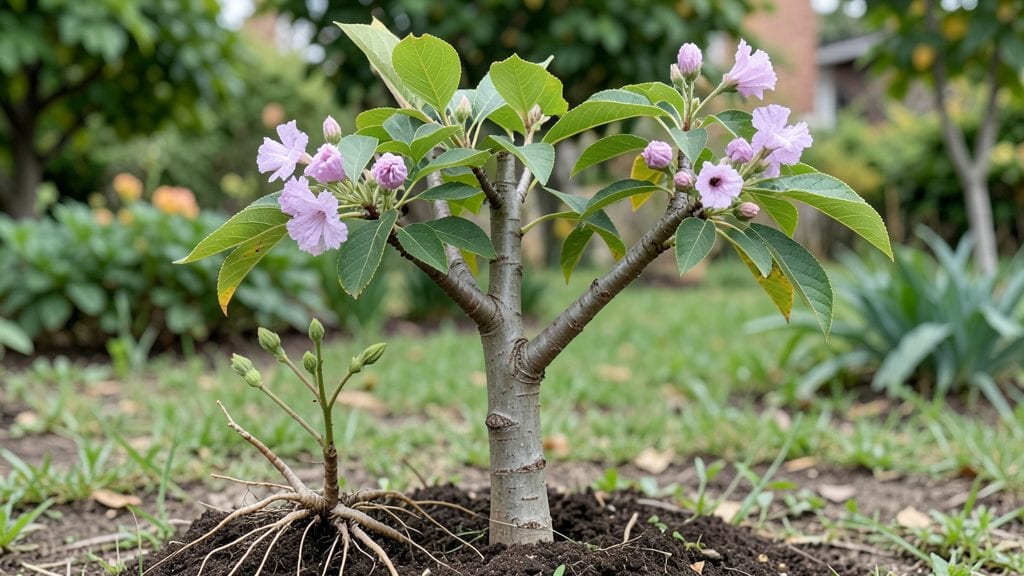
Planting crepe myrtles at the right distance ensures they grow strong, bloom vibrantly, and stay disease-free 🌸—a 6-foot spacing for dwarf varieties or 20 feet for towering standards is the key.
Struggling to decide how far apart to plant crepe myrtles? Proper spacing isn’t just about aesthetics—it ensures your trees thrive with sunlight, airflow, and minimal competition for nutrients. Get the science-backed distances to avoid overcrowding and maximize your garden’s beauty.
Crepe myrtles love full sun, but too little space means they’ll fight for light, leading to sparse blooms and weak branches. Meanwhile, giving them room to breathe prevents fungal issues like powdery mildew, which thrives in damp, crowded conditions.
In this guide, I’ll walk you through the exact spacing needed for each variety, how to adjust for your garden’s sunlight, and simple tricks to keep your crepe myrtles looking their best for years to come.


Optimal crepe myrtle planting distance by variety and growth habit
Getting the crepe myrtle planting distance right is crucial for healthy growth and stunning blooms. These trees vary dramatically in size—from compact dwarf varieties to towering standard trees—so spacing depends entirely on the type you choose.
Plant too close, and you’ll face competition for water and nutrients; too far apart, and your garden will look sparse. Let’s break down the ideal spacing for each growth habit and popular varieties.
Crepe myrtles aren’t just about height—their root spread is almost as wide as their canopy. This means you’ll need to account for both the tree’s mature width and its horizontal roots. For example, a 15-foot-tall standard variety might spread 10 feet wide, requiring 12-15 feet between plants.
Ignoring root spread leads to overcrowded roots, stunted growth, and even disease. Always measure twice before digging!
Comparison Table for crepe myrtle planting distance by variety:
| Variety | Growth Habit | Mature Height | Mature Width | Recommended Spacing | Notes |
|---|---|---|---|---|---|
| 'Natchez' | Standard | 20-30 ft | 15-20 ft | 18-25 ft apart | Needs wide spacing for full bloom potential |
| 'Muskogee' | Semi-Dwarf | 10-15 ft | 10-12 ft | 12-15 ft apart | Great for medium-sized yards |
| 'Arapaho' | Dwarf | 6-10 ft | 6-8 ft | 8-10 ft apart | Perfect for small spaces or containers |
| 'Tonto' | Semi-Dwarf | 12-15 ft | 10-12 ft | 12-15 ft apart | Drought-tolerant; ideal for xeric landscapes |
| 'Catawba' | Standard | 20-25 ft | 15-18 ft | 20-25 ft apart | Dark bark variety; needs ample space |
For dwarf varieties like 'Arapaho,' you can tuck them into smaller gardens or even large containers, but always leave 8-10 feet between plants. These compact trees are perfect for urban landscapes or patios, where space is limited but you still want that crepe myrtle beauty.
Just remember: even dwarf varieties need room to breathe—crowding them will lead to weak stems and fewer blooms.
When planting semi-dwarf varieties, such as 'Muskogee,' aim for 12-15 feet
How to adjust planting distance for sun exposure and air circulation
Crepe myrtles love full sun, but their planting distance should shift based on your garden’s light conditions and airflow. Too close in shade? They’ll stretch awkwardly, searching for sunlight.
Too close in sun? They’ll compete for nutrients and invite fungal diseases like powdery mildew. The key is balancing sunlight access with proper airflow—and it starts with evaluating your microclimate.
I’ve learned the hard way that partial shade changes the game. In full sun areas, crepe myrtles need wider spacing—15-25 feet for standard varieties—to avoid overcrowding and ensure each tree gets its 6+ hours of sunlight.
But in partial shade, where sunlight filters through taller trees or buildings, you can reduce spacing to 10-15 feet—just enough to prevent root competition while still allowing light to reach inner branches.
Here’s the catch: air circulation is just as critical as sunlight. Crepe myrtles with poor airflow develop powdery mildew faster, especially in humid climates. If your garden is naturally shady and damp, space trees 20-30 feet apart to improve airflow, even if they’re dwarf varieties.
Think of it like a breathing room for your trees—it’s not just about space; it’s about their health.
✅ Crepe Myrtle Spacing by Sun & Airflow
Standard: 15-25 ft
Dwarf: 10-15 ft
Standard: 10-15 ft
Dwarf: 8-12 ft
All Varieties: 20-30 ft
(Prevents mildew)
Adjust based on mature size and local climate.
Before you dig, take a microclimate audit of your garden. Walk through your yard at different times of day and note where sunlight hits—and where it doesn’t. Use a sunlight tracker app or simply observe shadows at 10 AM, noon, and 4 PM.
If you notice areas with dappled shade (like under a large oak), those spots are perfect for dwarf crepe myrtles spaced 8-12 feet apart. For full sun zones, stick to the wider spacing to avoid future pruning headaches.
Don’t forget to consider prevailing winds. If your garden gets strong afternoon breezes, orient your crepe myrtles to face the wind—this natural airflow helps dry foliage faster, reducing the risk of fungal spores taking hold.
I once planted a row of ‘Natchez’ crepe myrtles facing north in a windy area, and within a year, the powdery mildew was nearly nonexistent compared to my neighbor’s south-facing row. A little planning goes a long way!
Pro tip: If you’re unsure about your garden’s airflow, try the “tissue test”. Hold a piece of white tissue paper near your planting spot for a few minutes—if it stays dry, airflow is good.
If it’s damp, you’ll need to increase spacing or add windbreaks like shrubs or lattice. Your crepe myrtles will thank you with healthier blooms and fewer pests.
Finally, remember that soil type plays a role too. In clay-heavy soil, roots spread wider to find nutrients, so increase spacing by 20-30%. In sandy soil, roots stay shallower, allowing for slightly closer planting.
Always amend your soil with compost before planting to encourage strong root growth—healthy roots mean your trees can handle slightly tighter spacing if needed.