Diseases
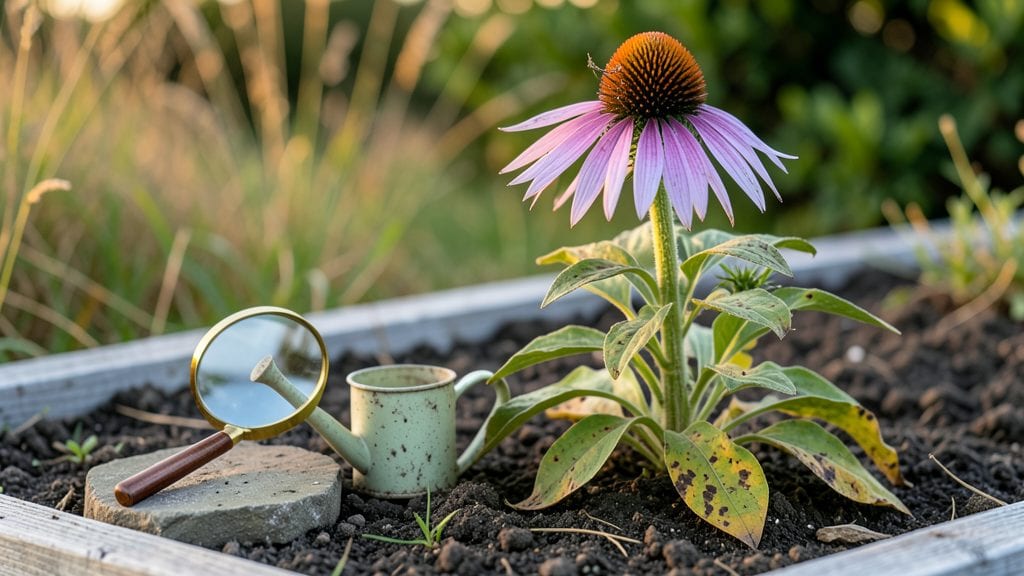
Echinacea plant diseases commonly involve powdery mildew, rust, and bacterial leaf spot, which cause weakened stems and yellowing foliage. Catching these issues early and using organic treatments like neem oil or copper sprays can stop their progression.
Echinacea plants are especially vulnerable to fungal and bacterial infections when stressed by overcrowding or poor air circulation. Powdery mildew appears as white, dusty patches on leaves, while rust creates orange-brown spots that spread quickly in humid conditions. Bacterial leaf spot shows up as dark, water-soaked marks that can lead to leaf drop if untreated. 🌱 The key to prevention lies in maintaining healthy soil, proper spacing between plants, and regular inspections during the growing season.
For existing infections, organic fungicides like neem oil or copper-based sprays disrupt fungal growth without harming beneficial insects. I've found that applying these treatments in the early morning gives the solution time to dry before evening dew forms, maximizing effectiveness.
Rotating crops and avoiding overhead watering also reduces disease risk by minimizing moisture on foliage.
💡 In This Article
- Identifying Common Echinacea Plant Diseases
- Organic Disease Prevention for Echinacea Gardens
Identifying common echinacea plant diseases
Here's what's actually happening when your echinacea shows signs of distress: each disease has distinct visual markers that reveal its fungal or bacterial origin. Powdery mildew starts as faint white specks on upper leaf surfaces that resemble dust or flour, but these spores actually form a thick, cottony mat when conditions are humid.
Under magnification, you'd see these fungal hyphae growing in a web-like pattern that smothers leaf tissue, blocking sunlight and photosynthesis.
The orange-brown pustules of echinacea rust are unmistakable once they appear, but they begin as tiny yellow spots that darken as the pathogen releases spores. These spores need free moisture to germinate, which is why rust spreads explosively during 60-90% humidity conditions—like those found in crowded gardens with poor airflow.
The disease thrives in temperatures between 60-75°F, making late spring and early summer peak infection periods.
Bacterial leaf spot presents differently with its dark, water-soaked lesions that have yellow halos, often appearing along leaf veins first. What makes this particularly damaging is how bacteria enter through stomata (leaf pores) and spread through the plant's vascular system, causing wilting even in well-watered plants.
The slimy bacterial ooze you might see on infected leaves contains millions of cells that can splash onto healthy foliage during rain.
What most people don't realize is how environmental stress creates perfect conditions for these pathogens. Overcrowded plants with less than 18 inches of spacing create microclimates where humidity lingers, while overhead irrigation keeps leaves wet for more than 2-3 hours after watering.
Even well-meaning gardeners can accidentally spread rust spores when moving infected plants without cleaning tools between uses.
For visual identification, examine the undersides of leaves first—this is where many fungal spores initially colonize. Powdery mildew appears grayish on leaf undersides, while rust shows as orange pustules that may rupture when touched.
Bacterial spots often have concentric rings showing disease progression. The key is catching these early when treatments are most effective—before the pathogens establish deep within plant tissues.
Consider these distinguishing features when diagnosing:
- Powdery mildew: White, powdery coating on both leaf surfaces, often starting on younger leaves
- Rust: Orange-brown pustules that may appear on stems and flower heads, especially in shaded areas
- Bacterial leaf spot: Dark, irregular spots with yellow borders that often have a greasy texture when touched
Remember that healthy echinacea plants develop strong resistance—when you see these symptoms, it's often a sign the plant is already compromised by poor growing conditions. The sooner you can identify which pathogen you're dealing with, the more targeted your organic treatment approach can be. 🌿