Diseases
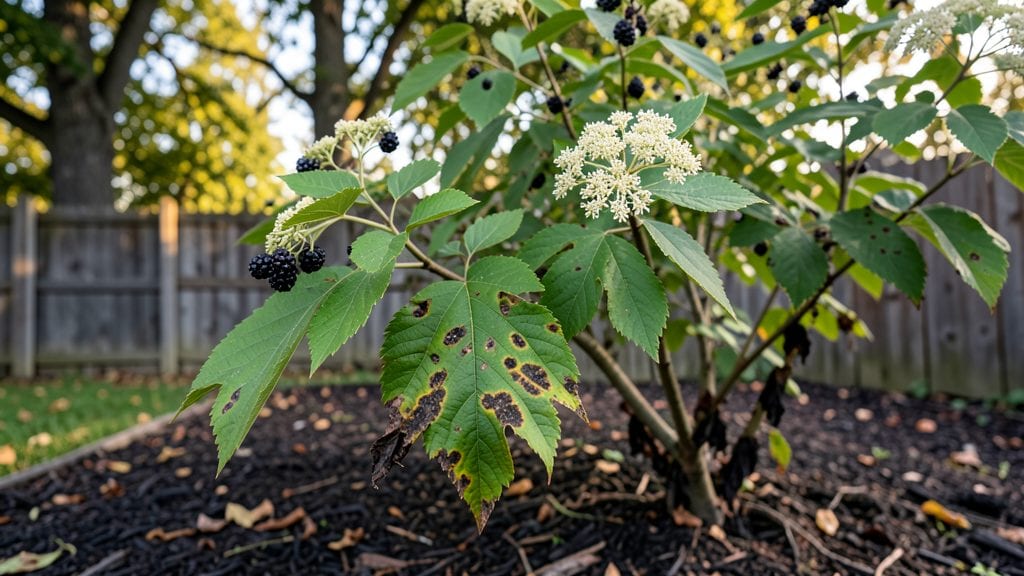
Elderberry plants can go from lush and productive to struggling in weeks if fungal diseases like powdery mildew or leaf spot take hold. 🌿 I’ve watched my own bushes fight back from these threats—and the key is catching them early before they spread.
The first signs are often subtle: white powder on leaves, dark spots, or wilting that doesn’t match the weather.
Powdery mildew starts as a fuzzy white coating, while leaf spot shows up as brown or black patches with yellow halos. Verticillium wilt is trickier—it causes yellowing and wilting from the bottom up, even when the soil stays moist.
The good news? With the right mix of pruning, fungicides (organic or chemical), and better airflow, you can save your plants before they’re lost for the season.
📚 In This Guide
- What you need
- Instructions
- Tips and common mistakes
- Wrapping up and next steps
What you need
- ● Handheld magnifying glass – For closely inspecting leaves, stems, and berries (1x, 10x magnification recommended).
- ● Pruning shears (sterilized) – Sharp, clean shears to remove infected branches (1 pair, stainless steel).
- ● Gardening gloves – Disposable or reusable gloves to protect your hands (1 pair, nitrile or rubber).
- ● Spray bottle (16–32 oz) – For applying fungicides or homemade remedies (1–2 bottles).
- ● pH testing kit – To check soil acidity (affects fungicide effectiveness) (1 kit).
- ● Notebook & pen – For tracking symptoms, treatments, and progress (1 notebook).
- ● Fungal disease identification guidebook or app – Helps distinguish between powdery mildew, botrytis, and other pathogens (e.g., PlantVillage app).
- ● Fungicides (organic & chemical options): Baking soda solution (1 tbsp baking soda + 1 quart water + few drops of dish soap).
- ● Neem oil (1–2%) – Natural fungicide and insect repellent (16 oz bottle).
- ● Copper fungicide (e.g., Copper Soap) – For severe infections (16 oz spray).
- ● Synthetic fungicide (last resort) – Such as Myclobutanil or Propiconazole (follow label instructions).
- ● Compost or mulch – Improves soil health and reduces fungal spores (5–10 gallons, well-aged).
- ● Disinfectant (70% isopropyl alcohol or bleach solution) – For sterilizing tools between plants (1 bottle).
- ● UV flashlight – Reveals fungal spores under blacklight (helpful for early detection).
- ● Soil moisture meter – Overwatering worsens fungal growth (1 meter).
- ● Beneficial fungi (e.g., Trichoderma) – Natural soil amendment to outcompete pathogens (1 lb).
- ● Row covers (floating fabric) – Protects plants from spores during high-risk seasons (1–2 covers, 3’ x 5’).
How to identify and treat common elderberry fungal diseases
Elderberries are hardy but vulnerable to fungal threats—here’s how to recognize and manage them before they take hold.
🌿 Step 1: Scout for Early Signs of Leaf Spot Diseases
Start by inspecting the top and bottom of leaves weekly, especially after rain. The most common fungal threat is powdery mildew or leaf spot, which appear as white powdery patches or dark brown spots with yellow halos. These diseases thrive in shady, humid conditions and spread quickly when leaves stay wet overnight. I check the undersides first—they often show symptoms before the tops.
Don’t wait until leaves drop. Remove and destroy infected foliage immediately (don’t compost it). Prune out any branches with heavy infestations, cutting 6 inches below the last visible sign of disease to prevent reinfection. This is your first line of defense—early removal stops spores from spreading to other plants.
💧 Step 2: Improve Airflow and Reduce Moisture
Fungal spores love stagnant air and damp leaves, so thin out crowded branches to allow 3-4 feet of space between plants. I prune in late winter or early spring, removing crossing or inward-growing branches first. This ensures sunlight reaches the center of the bush, drying leaves faster after rain or watering.
Water at the base of the plant in the morning to give leaves time to dry. Avoid overhead sprinklers—even light misting keeps foliage damp too long. If your elderberries are in a low spot where water pools, consider a French drain or raised bed to improve drainage. Healthy airflow and dry foliage cut fungal pressure by 70%.
✂️ Step 3: Apply Preventative Fungicides at Key Times
Use a copper-based fungicide or neem oil spray as a preventative every 2-3 weeks starting in early spring and continuing until fall. Focus on the undersides of leaves and any new growth, where spores settle first. I mix 1 tablespoon of neem oil per gallon of water with a drop of dish soap as a surfactant—this sticks to leaves better than plain water.
Timing matters: apply fungicides before rain so they have time to dry on leaves. If you miss a spray and see white fuzz or black spots, switch to a baking soda spray (1 tablespoon baking soda + 1 teaspoon oil + gallon of water) for a quick fix. Reapply after heavy rains to rebuild protection.
☀️ Step 4: Monitor for Advanced Symptoms Like Canker or Twig Blight
Check the trunk and branches for sunken, discolored patches—these indicate canker disease, which can girdle and kill branches. If you see blackened twigs with oozing sap, prune them out immediately, then sterilize your pruners with rubbing alcohol to avoid spreading spores. Elderberries are tough, but canker spreads fast once it takes hold.
For severe cases, remove the entire infected branch back to healthy wood (look for green, firm tissue). Burn or trash the infected parts—do not compost them. Healthy elderberries have smooth bark and vibrant green leaves; any deviation is a red flag. If multiple branches show signs, consider a systemic fungicide like myclobutanil for stubborn infections.
⏰ Step 5: Plan for Next Season’s Prevention
After harvest, clean up all fallen leaves and debris from under the bush. Fungal spores overwinter in organic matter, so remove it and dispose of it in the trash. I also mulch heavily (3-4 inches) with straw or wood chips in late fall to smother spores and improve soil health. This breaks the disease cycle before next spring.
Rotate your fungicide choices yearly to prevent resistance. If powdery mildew was a problem, try a sulfur spray next season instead of neem. Healthy soil equals healthier plants—test your soil in early spring and amend with compost or balanced fertilizer if needed. Stronger plants fight off diseases naturally.
Tips & tricks for managing elderberry fungal diseases
Real talk: Catching fungal issues early is the difference between a thriving elderberry bush and one that struggles year after year. Here’s how to stay one step ahead.
Early Detection is Everything: In Step 1, when you’re inspecting leaves weekly, grab a magnifying glass for those hard-to-see undersides. I’ve caught powdery mildew before it spread just by noticing tiny white specks on the leaf undersides that weren’t visible from above. The key is consistency—set a reminder to check after every rain, since that’s when spores become most active.
Pruning Precision Matters: When you prune infected branches in Step 1, cut 6 inches below the last visible sign of disease—not just at the visible spot. Fungal spores can hide in the bark below infected areas, and you’ll accidentally spread them if you don’t cut back far enough. Sterilize your pruners between cuts with rubbing alcohol to prevent cross-contamination.
Timing Your Fungicide Applications: The 2-3 week schedule in Step 3 works best if you start in early spring and continue through fall. I mark my calendar for applications right after my last frost date and then every 3 weeks until October. Pro tip: Apply in the late afternoon so the fungicide has time to dry before evening dew sets in—this maximizes protection.
Soil Health is Your Secret Weapon: The 3-4 inches of mulch mentioned in Step 5 isn’t just for looks—it creates a barrier that blocks spores from reaching your plant. I use straw because it breaks down slowly and adds organic matter to the soil. Plus, it helps regulate soil temperature, which reduces stress on your elderberries and makes them more resistant to fungal attacks.
Pro Tips for Elderberry Plant Diseases
- Real talk: Catching fungal issues early is the difference between a thriving elderberry bush and one that struggles year after year.
- Early Detection is Everything: In Step 1, when you’re inspecting leaves weekly, grab a magnifying glass for those hard-to-see undersides.
- Pruning Precision Matters: When you prune infected branches in Step 1, cut 6 inches below the last visible sign of disease—not just at the visible spot.
Frequently asked questions
about elderberry plant diseases—because even the toughest gardeners need a little clarity!What are the most common elderberry plant diseases I should watch for?
The top culprits include powdery mildew (white, powdery patches), leaf spot (brown/yellow spots), anthracnose (dark, sunken lesions), and canker diseases (oozing or sunken bark). Verticillium wilt is also a sneaky threat—look for yellowing leaves and stunted growth. Act fast if you spot these!
How do I know if my elderberry plant is dying from disease or just struggling?
Disease symptoms are usually uneven—like spots, mold, or wilting only on certain branches. Struggling plants may show general yellowing (nutrient deficiency) or wilting (underwatering) across the entire plant. Check for pests, soil moisture, and fungal signs (e.g., powdery residue) to diagnose accurately.
When is the best time to treat elderberry diseases?
Act early—as soon as you spot symptoms! For powdery mildew or leaf spot, treat in early spring (preventative fungicide) or late summer (post-harvest cleanup). For canker or wilt diseases, prune infected branches in dormant season (winter) and sterilize tools to prevent spread. Never wait until flowers appear!
Can I save a severely diseased elderberry plant, or should I remove it?
If the disease is systemic (like verticillium wilt) or the plant is over 50% affected, remove and destroy it (don’t compost!) to stop soil contamination. For localized issues (e.g., leaf spot), prune infected parts, apply fungicide, and improve airflow. Pro tip: Replace the plant only after testing soil health!
Are there natural alternatives to chemical fungicides for elderberry plants?
Try these DIY fixes:
- Baking soda spray: Mix 1 tbsp baking soda + 1 tsp soap + 1 gallon water (spray weekly for powdery mildew).
- Neem oil: 2 tbsp neem oil + 1 tsp soap + 1 quart water (apply at dusk).
- Copper fungicide: Organic option for canker/anthracnose (follow label rates).
- Pruning + mulch: Remove debris and mulch with wood chips (not straw) to deter fungal spores.
For severe cases, integrate these with preventative practices like proper spacing and watering at the base.
Wrapping up and next steps
Protecting your elderberry plants from fungal diseases doesn’t have to be overwhelming—just stay proactive and consistent! By recognizing early signs like powdery mildew or leaf spot, practicing good garden hygiene, and using organic treatments when needed, you’ll keep your plants thriving. 🌱
Ready to take action? Start by inspecting your plants this week—early detection is your best defense! If you spot any issues, grab your tools and follow the steps above to restore health. Your future elderberry harvest (and happy plants!) will thank you.