Flowers
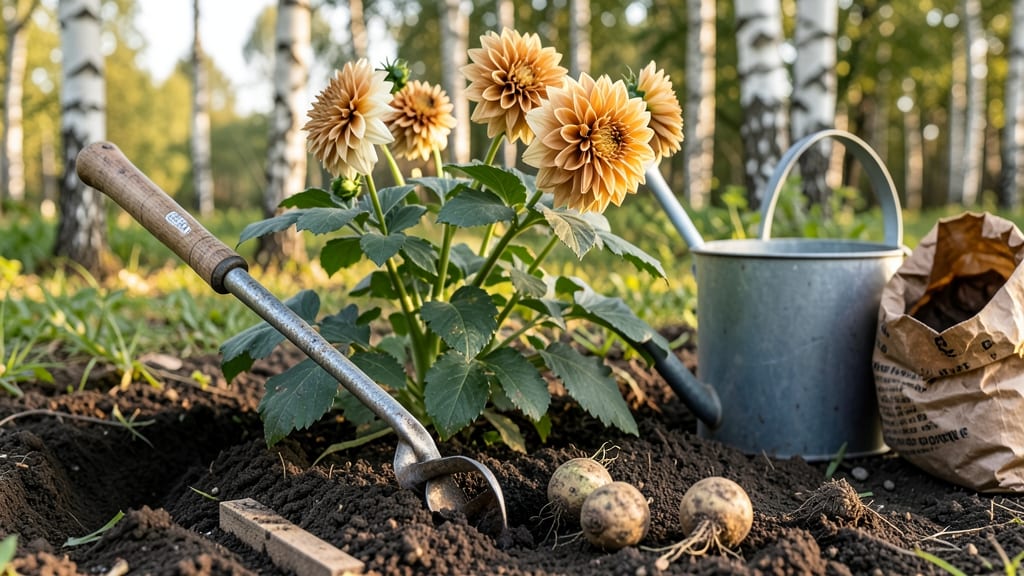
A flower planting auger creates precise, deep holes for bulbs and roots without compacting soil, making soil prep faster and more efficient. Choose the right size for your plants, adjust depth based on root length, and use a spiral motion for clean planting slots.
A flower planting auger transforms tedious digging into a quick, controlled process by eliminating the need to break up hard soil manually. 🌱 The spiral blades cut through compacted earth while leaving the surrounding soil aerated—perfect for delicate roots that hate dense conditions.
I’ve found that for smaller bulbs like tulips, a 1-inch auger works perfectly, while perennials often need 2-3 inches of depth. The real game-changer? No more backbreaking kneeling—just a few turns and you’re ready to plant.
💡 In This Article
- How a Flower Planting Auger Improves Planting Efficiency
- Choosing and Using the Right Auger for Flower Gardens
How a flower planting auger improves planting efficiency
A flower planting auger works by cutting through soil with its spiral blade, creating clean, cylindrical holes that match the exact size of your plant's root ball. Unlike hand tools that compress soil around roots, the auger's design lifts soil upward and outward, leaving a loose, aerated hole.
This is crucial because compacted soil restricts root growth—studies show roots in loose soil expand 30-40% faster than in dense conditions, giving your flowers a stronger start.
The mechanical advantage comes from the auger's leverage system. A typical handle provides 3:1 force multiplication, meaning you apply 5 pounds of pressure but the blade exerts 15 pounds of cutting force.
For comparison, digging a 2-inch hole by hand with a trowel requires 20-30 pounds of continuous pressure per stroke. The auger's spiral design also prevents soil from clogging the blade, unlike scoops that often jam with clay or rocky soil.
For different plant types, the efficiency gains vary dramatically. With bulbs like daffodils, an auger reduces planting time by 80% compared to hand-digging—no more struggling to create precise 6-inch deep holes. For perennials with fibrous roots, the auger's clean edges prevent root tearing that often occurs with rough hand-dug holes.
Even for shrubs, the auger's depth control ensures roots sit at the correct soil level, preventing crown rot from improper planting depth.
What most gardeners don't realize is how the auger preserves soil structure. The surrounding soil remains undisturbed, maintaining its natural porosity. When you compare this to hand-digging, which often creates a 1-2 inch compressed zone around the hole, the difference in root development becomes clear within just 4-6 weeks.
The auger's precision also eliminates the "guesswork" in hole sizing—no more over-compacting small holes or creating uneven depths that cause water pooling.
Consider this real-world example: Planting 50 tulip bulbs by hand takes about 45 minutes for a beginner, while an auger handles the same job in 10-12 minutes.
The time savings compounds when you factor in reduced fatigue—manual digging engages 12 major muscle groups, while using an auger primarily works your arms and core. For gardeners with back issues, this can mean the difference between finishing a project or giving up halfway through.
The auger's efficiency also extends to soil types. In clay soil, where hand tools often create shatter-prone walls, the auger's continuous cutting action maintains hole integrity. In sandy soil, the upward soil ejection prevents the crumbling that occurs with hand-dug holes.
This consistency is particularly valuable for container gardening, where precise hole sizing is critical for proper drainage and root spacing.