Planting
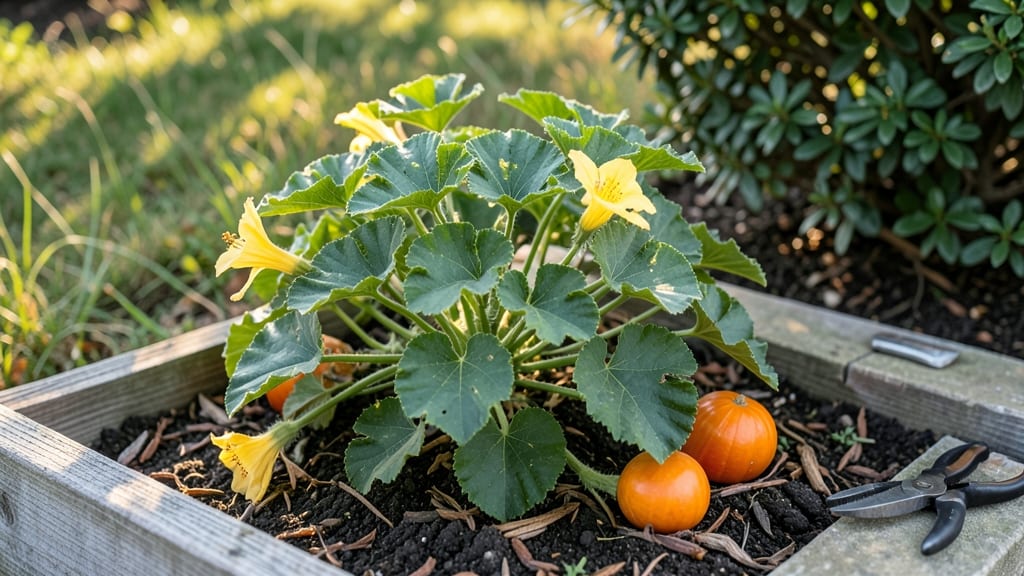
Growing tiny pumpkin plants lets you enjoy compact pumpkins in limited spaces, using varieties like 'Jack Be Little' or 'Munchkin' that stay under 2 feet tall. These need just 4-6 hours of sunlight daily, well-draining soil, and mature in 70-90 days with fruit perfect for containers or vertical gardens.
These miniature pumpkins aren't just space-savers—they're full of flavor too! 🌱 The key to their success lies in their genetics: bred specifically for small spaces, they produce pumpkins as small as a tennis ball but with the same sweet, nutty taste as their larger cousins.
I've found that 'Baby Boo' stays particularly compact while yielding abundant fruit, making it a favorite for balcony gardens. Their fast growth cycle also means you can enjoy fresh pumpkins in just two months, perfect for quick harvests or decorative projects.
What sets these varieties apart is their adaptability. They thrive in containers as small as 5-gallon buckets when paired with proper support, like trellises or cages. This makes them ideal for urban gardeners or anyone with limited yard space.
Just remember to choose containers with drainage holes and use a light, airy potting mix—these plants hate soggy roots. The trade-off? You'll sacrifice slightly larger pumpkins, but the convenience and charm of growing them anywhere more than make up for it.
💡 In This Article
- Best Mini Pumpkin Varieties for Small Gardens
- Container Gardening Tips for Mini Pumpkins
Best mini pumpkin varieties for small gardens
Mini pumpkin varieties like 'Baby Boo' and 'Wee-B-Little Orange' achieve their compact size through selective breeding that targets specific genetic traits.
These cultivars produce vines that stay under 2 feet tall while still developing edible fruit, thanks to their determinate growth habit—meaning they grow in a bush-like shape rather than sprawling vines.
The 'Baby Boo' variety, for example, typically reaches just 12-18 inches in height, making it ideal for containers or small garden plots. 🌿
The key to their productivity in tight spaces lies in their high fruit-to-vine ratio. While traditional pumpkins need sprawling areas to develop, these mini varieties focus their energy on producing 3-5 pumpkins per plant that range from 3-6 inches in diameter.
'Wee-B-Little Orange' produces particularly vibrant orange fruits that mature in about 85 days, perfect for both culinary use and decoration. Their shallow root systems also make them more adaptable to container environments compared to larger varieties.
Climate plays a crucial role in their success. These mini pumpkins thrive in USDA zones 3-10, handling both cooler northern climates and warmer southern regions.
The secret is their fast maturation cycle—most varieties reach harvest in 70-90 days, allowing them to complete their growth before heat stress becomes an issue.
In cooler climates, starting seeds indoors 4-6 weeks before last frost gives them a head start, while warmer regions can plant directly after soil temperatures reach 60°F.
What makes these varieties particularly interesting is their dual-purpose nature. The fruits are edible—young pumpkins can be roasted or used in soups—while the mature ones make excellent decorations. Their sweet, dense flesh (similar to butternut squash) makes them a gourmet choice for small-scale harvests.
The trade-off is yield size, but the convenience of growing them anywhere—balconies, patios, or even hanging baskets—makes them a favorite among urban gardeners.
For those in dry climates, varieties like 'Munchkin' (which produces 4-6 pound pumpkins) are excellent choices, while 'Jack Be Little' (weighing 1-2 pounds) suits wetter regions better.
The secret to their adaptability lies in their shallow but extensive root systems, which allow them to absorb moisture efficiently from containers. This makes them far more resilient than larger pumpkin varieties in drought conditions.
One often-overlooked factor is their pollination efficiency. Mini pumpkins often self-pollinate more reliably than larger varieties, reducing the need for bees in container settings. This makes them ideal for patio gardens where bee traffic might be limited.
The flowers themselves are bright orange, adding visual appeal while attracting beneficial insects when planted near other pollinator-friendly crops. 🌸
If you're choosing between varieties, consider your space and goals: 'Baby Boo' for maximum compactness, 'Wee-B-Little Orange' for vibrant color, or 'Munchkin' for larger mini-pumpkins. All three prove that you don't need a large garden to grow pumpkins—just the right variety and a little creativity.
The results are both practical and rewarding, with harvests that fit perfectly in your palm or on your dinner table.