
Companion Plants
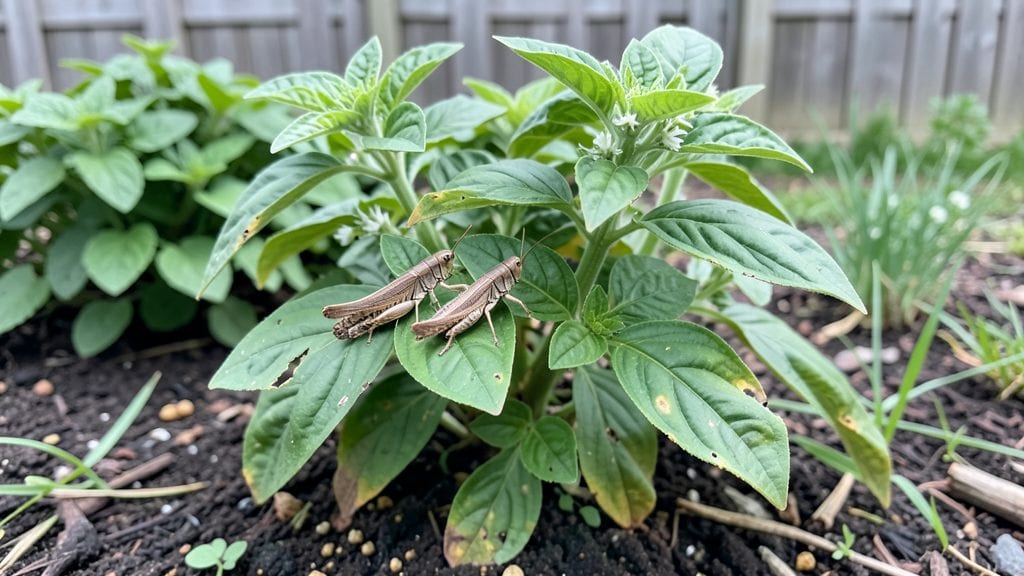
Grasshoppers on plants are common garden pests that feed aggressively on leaves, stems, and seeds, often stripping plants bare if not addressed quickly. These hoppers thrive when drought, overgrown vegetation, or predator shortages create ideal conditions, so organic solutions like neem oil sprays or strategic companion planting become essential for long-term control.
Grasshoppers don't just appear randomly—they're drawn to lush, nutrient-rich plants like corn, grasses, and legumes, which provide both food and shelter. 🌱 Their nymphs (young grasshoppers) are especially destructive because they lack wings and stay close to the ground, chewing through tender shoots.
The key to prevention is reducing their habitat appeal: keep your garden well-watered, remove weeds, and introduce natural predators like spiders or birds. Even a small change, like adding marigolds or basil, can disrupt their feeding patterns by confusing their scent trails.
💡 In This Article
- Why Grasshoppers Target Specific Plants
- Natural Grasshopper Control Methods for Gardens
Why grasshoppers target specific plants
Grasshoppers don't choose plants randomly—they're drawn to species with high moisture content and nitrogen-rich foliage, particularly corn, grasses, and legumes. These plants emit volatile organic compounds (VOCs) that grasshoppers detect through their antennae, acting like an invisible dinner bell.
For example, corn plants release benzaldehyde and hexanal compounds when stressed, which grasshoppers find irresistible. Their mandibles can slice through plant tissue with 100 pounds of pressure per square inch, making tender young leaves their first target.
The lifecycle stages of grasshoppers amplify their damage potential. Eggs hatch into nymphs that lack wings, forcing them to stay near the ground where they consume 50% more plant material than adults.
These nymphs prefer broadleaf plants like beans and clover because their high protein content fuels rapid growth. 🌱 What's fascinating is how grasshoppers use visual cues too—their compound eyes detect movement and green hues, making newly sprouted plants particularly vulnerable.
This dual sensory approach explains why freshly planted gardens become buffet zones overnight.
Environmental triggers create perfect storm conditions for infestations. Drought stress causes plants to produce more sugars in their leaves, making them 20-30% more attractive to grasshoppers. Overcrowded vegetation provides shelter and breeding grounds, while lack of natural predators (like spiders or birds) removes the food chain's checks and balances.
Even a 5% reduction in rainfall can double grasshopper populations by extending their egg-laying season. The result? Your garden becomes a high-protein salad bar for these hoppers.
Here's what actually happens at the molecular level: Grasshoppers inject saliva containing digestive enzymes that break down plant cell walls before consumption. This pre-digestion process creates visible "windowpanes" in leaves—semi-transparent patches where enzymes have dissolved the chlorophyll. 🌿 The damage isn't just cosmetic; it disrupts photosynthesis, stunting plant growth.
What most gardeners don't realize is that grasshoppers prefer plants with high silica content (like wheat) because the abrasive texture helps wear down their mandibles, which they need to replace regularly.
Seasonal behavior patterns add another layer to their targeting strategy. Adult grasshoppers migrate in late summer when food becomes scarce, often traveling up to 15 miles per day in search of fresh foliage. Their ability to detect electromagnetic fields from healthy plants makes them excellent navigators.
This explains why some gardens experience sudden infestations even when neighboring properties remain unaffected—the hoppers are following invisible chemical trails to the most nutritious patches.
The key to understanding their preferences lies in their three-stage feeding process:
- Probing: Testing plants with antennae for chemical signals
- Chewing: Removing 1-2% of leaf area daily (enough to stress plants)
- Migration: Moving to new plants when current food sources degrade