Picking
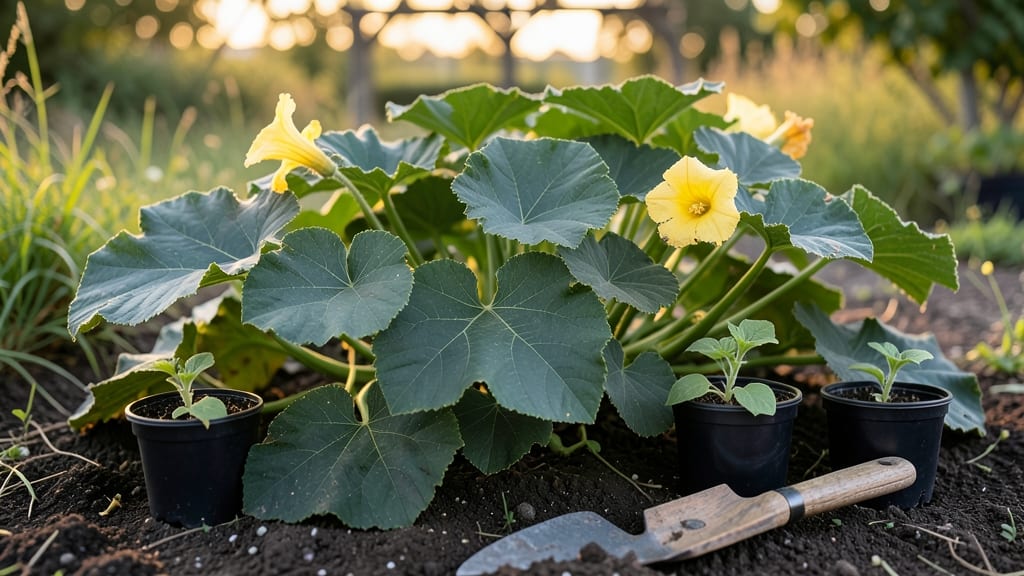
Planting honeynut squash requires warm soil and full sun, starting seeds indoors 2-3 weeks before the last frost or directly sowing after temperatures exceed 60°F. Space plants 3-4 feet apart in well-draining soil with compost for optimal growth and yield.
Honeynut squash thrives when planted in well-warmed soil, as cooler temperatures slow germination and stunt early growth. 🌱 The ideal planting window varies by region, but aiming for soil temperatures above 60°F ensures strong root development.
I’ve found that adding compost not only improves drainage but also introduces beneficial microbes that boost plant health. This variety’s vines spread widely, so proper spacing prevents competition for nutrients and reduces disease risk from overcrowding.
For best results, choose a sunny spot with at least 6-8 hours of direct sunlight daily—these squash need ample energy for their heavy fruit production. If your soil drains poorly, consider raised beds or mounding soil to prevent rot, which is a common issue with squash varieties.
Mulching after planting helps retain moisture and keeps roots cool during hot afternoons.
💡 In This Article
- Ideal Honeynut Squash Growing Conditions
- Step-by-Step Honeynut Squash Planting Guide
Ideal honeynut squash growing conditions
Honeynut squash seeds need soil temperatures above 60°F to germinate because their enzymes activate only in warmth. Below this threshold, germination slows dramatically, sometimes taking 2-3 weeks instead of the usual 5-10 days.
The plant's roots are particularly sensitive to cold, which is why waiting for consistent warmth prevents stunted growth and weak stems. 🌱 Think of it like a car engine that won't start in freezing temperatures—your squash seeds need that thermal kick to spring into action.
The plant's sprawling vines demand 6-8 hours of direct sunlight daily because photosynthesis fuels their rapid growth and heavy fruit production. Without sufficient light, vines grow leggy and produce fewer squash, while leaves turn pale and thin.
This variety's broad leaves convert sunlight into energy at a rate of about 1.5 grams of glucose per square foot per hour—similar to other summer squash but with higher sugar content in the fruit. The more sunlight, the sweeter and more abundant the harvest.
Well-draining soil is critical because honeynut squash roots are shallow and prone to rot in soggy conditions. Ideal soil has a pH between 6.0 and 7.0, slightly acidic to neutral, which allows nutrients like nitrogen and phosphorus to be readily available.
Adding 2-3 inches of compost before planting improves structure while introducing beneficial microbes that break down organic matter into plant-accessible nutrients. These microbes also help suppress harmful pathogens that thrive in compacted, waterlogged soil.
Organic matter like compost doesn't just feed the plants—it creates air pockets that improve oxygen flow to roots. Without this, roots suffocate and can't absorb water or nutrients efficiently.
The texture should resemble a well-drained cake batter: firm enough to hold shape but light enough to allow water to drain freely. In heavy clay soils, amending with 50% sand or perlite can transform compacted ground into ideal growing conditions.
One often-overlooked detail is the soil's moisture retention capacity. Honeynut squash needs consistent moisture but hates "wet feet"—roots should never sit in standing water. Mulching with 2-3 inches of straw or shredded leaves keeps soil temperatures stable while preventing evaporation.
This mulch layer also blocks weeds that compete for nutrients, giving your squash plants an unfair advantage in the garden ecosystem. 🌿
For regions with unpredictable weather, consider using black plastic mulch to warm the soil faster in spring. Studies show this can raise soil temperatures by 5-10°F compared to unmulched ground, accelerating germination by 3-5 days.
The trade-off? Monitor soil moisture closely, as plastic mulch can dry out soil faster than organic alternatives. Balance is key—just like Goldilocks' porridge, your squash needs conditions that are "just right."