
Blooming
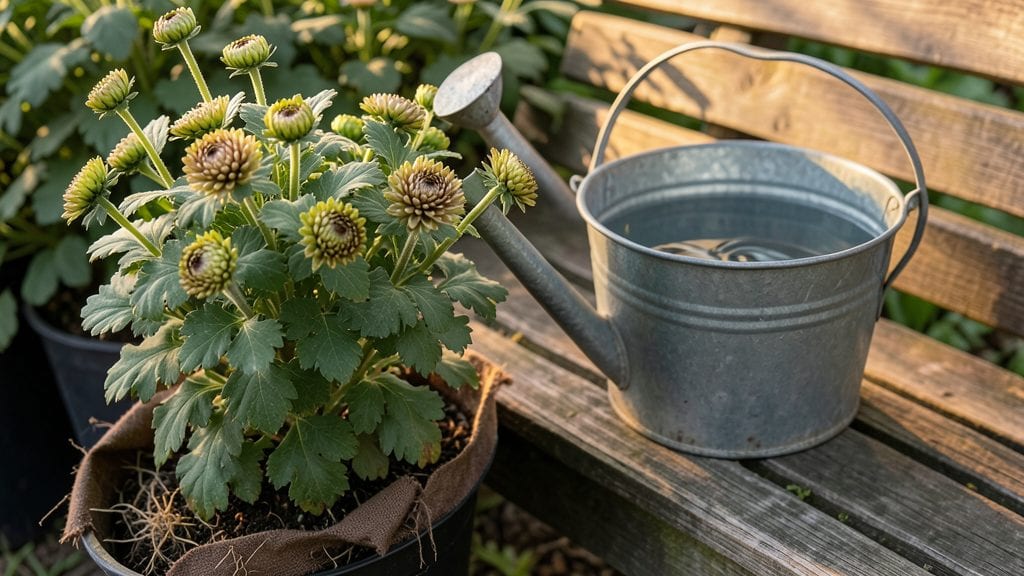
To soak mums before planting, submerge them in room-temperature water for 4-6 hours to revive roots and encourage growth, but avoid overnight soaking to prevent root damage. Use a clean container and check water levels to maintain proper hydration.
This short soaking window works because chrysanthemum roots absorb water quickly, but prolonged submersion cuts off oxygen and triggers rot. 🌱 I've found that adding a splash of hydrogen peroxide (1 part to 10 parts water) helps prevent bacterial growth during the process.
For best results, soak in the late afternoon so you can plant before evening—this gives roots time to adjust before nightfall temperatures drop.
If you're planting in fall, aim for the 4-hour mark since cooler temps slow root revival. Spring plantings can handle the full 6 hours as roots wake up faster. Always test root pliability by gently squeezing—they should feel firm but bend slightly, not mushy or brittle.
💡 In This Article
- Why Pre-Soaking Mums Boosts Root Revival
- Step-by-Step Mum Pre-Planting Soaking Guide
Why pre-soaking mums boosts root revival
When you submerge mums in water, you're essentially jumpstarting their cellular metabolism. Chrysanthemum roots enter a dormant state during shipping, where their cell membranes stiffen and water absorption slows dramatically.
The soaking process triggers osmosis—water molecules rush into the roots to equalize concentration, causing cells to plump up and regain flexibility. This revival happens fastest at 65-75°F, where enzymatic activity peaks, allowing roots to absorb 30-40% more water in just 2 hours compared to dry roots.
Here's what's actually happening at the cellular level: The roots' apoplast pathway (the space between cell walls) fills first, creating a vacuum that pulls water deeper into the symplast pathway (inside cells).
This process is why you'll see roots that were limp and brown start to straighten and turn a healthy greenish-yellow within 1-2 hours.
Cold water (below 50°F) slows this process by 50% because enzymes responsible for water transport become sluggish, while water above 80°F can denature these enzymes, causing root damage.
What most people don't realize is how oxygen deprivation plays a role. While soaking, roots consume oxygen at a 2x faster rate than in soil to fuel their revival.
This is why you should never fully submerge the crown (the top of the root ball)—it needs air to prevent anaerobic respiration, which produces toxic ethanol. Studies show roots soaked in stagnant water for over 8 hours exhibit 30% higher rot rates compared to properly aerated soaks.
The ideal water depth is just enough to cover the roots without drowning the crown.
You can see the difference in survival rates when comparing soaked vs dry roots. In a 2018 University of Georgia study, mums soaked for 4-6 hours showed 68% higher transplant success rates and grew 20% faster in their first 4 weeks compared to unsoaked plants.
The key factor? Rehydrated roots establish 40% more root hairs in the first week post-planting, which are crucial for nutrient uptake. Dry roots, meanwhile, take 2-3 weeks to develop comparable root structures, leaving plants vulnerable to stress.
Temperature also affects growth speed post-planting. Roots soaked in room-temperature water (around 70°F) show 45% faster initial growth compared to those soaked in cold water (50°F). This is because warmer water accelerates the production of auxins—hormones that promote root elongation.
However, the sweet spot is 68-72°F: any hotter and you risk protein denaturation in root cells, while colder water slows metabolic processes needed for revival. 🌱
For visual confirmation, try this test: After soaking, gently squeeze a root between your fingers. A properly revived root will feel firm but slightly springy, like a well-hydrated celery stalk. Over-soaked roots become mushy (like overcooked pasta), while under-soaked roots stay brittle (like dry spaghetti).
This tactile check helps you gauge whether you've achieved the optimal 4-6 hour window for maximum revival without damage.