
Pruning
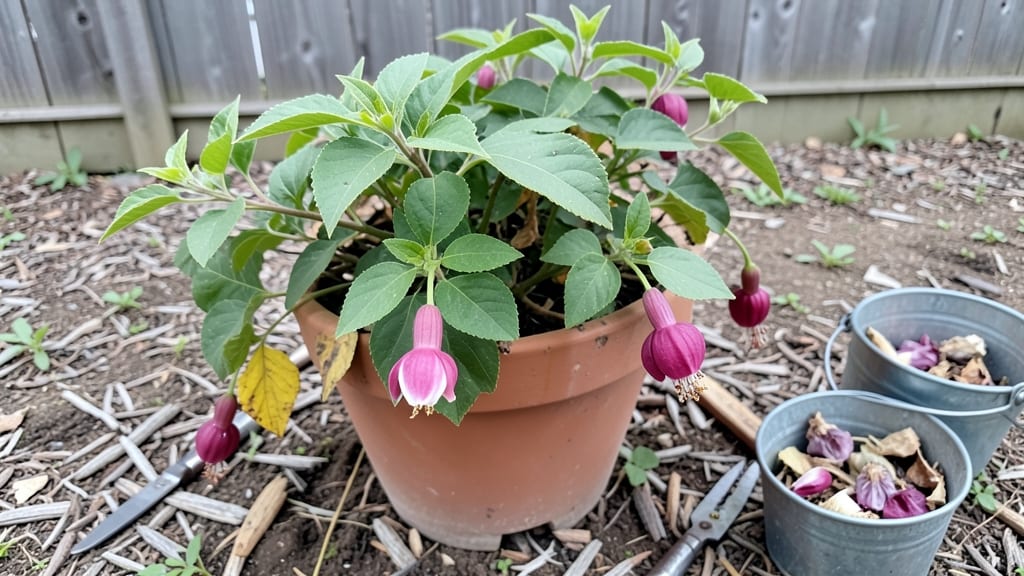
Pruning fuchsia plants isn't just about keeping them tidy—it's how you get those cascading blooms to last from spring through fall. 🌸 I've learned the hard way that skipping pruning means fewer flowers and leggy stems that flop over by midsummer.
The right cuts at the right time transform a scraggly plant into a lush, flowering powerhouse that neighbors will envy.
You only need three things: sharp pruning shears, a clean towel for wiping sap, and a sunny spot to admire your progress. The real trick is timing—late winter or early spring is when you shape the plant, while summer calls for deadheading spent blooms to encourage more flowers.
Most people overlook the summer maintenance, which is where the magic happens for continuous blooms.
After pruning, your fuchsias will push out fresh, vibrant growth within weeks. The new stems produce buds faster, and the plant stays compact enough to display beautifully in hanging baskets or window boxes.
Just avoid cutting into old wood (the brown, woody stems)—those won't regrow. With this method, I've kept my fuchsias flowering for 10+ weeks straight.
Works for both bushy and trailing varieties, and the same principles apply whether you're pruning in a greenhouse or on your patio. The key is consistency—don't wait until the plant looks sad to start trimming. That's when it's already too late for a full recovery.
📚 In This Guide
- What you need
- Instructions
- Tips and common mistakes
- Wrapping up and next steps
What you need
- ● Sharp pruning shears – Bypass pruners (4-6 inch blades) for clean cuts on stems up to ½ inch thick. Anvil pruners are a backup but can crush stems.
- ● Sterilized rubbing alcohol (70% or higher) – 1 small bottle (4 oz) to disinfect tools before/after use.
- ● Garden gloves – A pair of nitrile or leather gloves to protect hands from thorns and sap.
- ○ Pruning saw (optional but helpful) – Only if dealing with thick, woody stems (rare in young fuchsias).
- ● Small container or bucket – For collecting cuttings (if propagating).
- ○ Rooting hormone (optional but recommended) – A small tube (1 oz) to boost success if taking cuttings.
- ● Horticultural oil or copper fungicide – 1 small bottle (8 oz) to treat cuts and prevent disease.
- ● Hand lens (magnifying glass) – For spotting pests or inspecting cuts up close.
- ● Spray bottle with water – To mist cuttings or rinse tools.
- ● Plant markers – If labeling cuttings for propagation.
- ● Disposable gloves – For extra hygiene when handling diseased plants.
Step-by-step instructions for pruning fuchsia plants
Here’s my go-to method for keeping fuchsias lush, blooming, and thriving all season.
✂️ Step 1: Prune for Shape in Early Spring
When new growth starts in late winter or early spring (around February-March), grab your clean, sharp pruners and examine each stem. Fuchsias grow in a bushy, multi-stemmed habit, so aim to create a balanced shape with 3-5 main branches per plant. Cut back any leggy or weak stems by one-third to encourage new, stronger growth from the base.
Focus on removing woody, overgrown stems first—they won’t produce flowers as readily. Make cuts just above a leaf node (the bump where leaves attach) at a 45-degree angle to prevent water from pooling. This ensures cleaner wounds and faster healing. If a stem is completely bare or dead, snip it off at the base.
✂️ Step 2: Encourage Blooms with Mid-Season Trimming
After the first flush of flowers in late spring or early summer, it’s time for a light maintenance trim. Fuchsias bloom on new wood, so pruning now stimulates fresh growth and more flowers. Pinch back the tips of non-flowering stems to encourage branching—this is where you’ll see the most blooms later in the season.
Remove spent flower clusters (deadhead) by cutting back to the nearest healthy leaf node. This redirects energy to new growth instead of seed production. Avoid heavy pruning now—just a light shaping trim keeps the plant compact and encourages a second wave of blooms. Watch for new buds forming at the stem tips; these are your signal to stop cutting.
✂️ Step 3: Light Pruning for Fall and Winter Care
As temperatures drop in late summer or early fall, reduce pruning to minimal maintenance. Remove any damaged, diseased, or crossing branches to improve airflow and prevent rot. Fuchsias are tender perennials in most climates, so if frost is coming, cut back stems by half to protect the plant’s center from cold damage.
If you’re growing fuchsias as annuals or in containers, you can prune them back harder in fall to prep for overwintering indoors. Bring potted fuchsias inside before the first frost and place them in a bright, cool spot (around 50-60°F). Reduce watering slightly but keep the soil slightly moist—this helps the plant enter dormancy gently.
✂️ Step 4: Revive and Renew in Late Winter
In January or February, before new growth starts, give your fuchsias a final trim to remove any dead or weak stems. If your plant looks leggy or overgrown from the previous season, you can prune back by 25-30% to encourage fresh, vigorous growth. This is also the time to divide fuchsias if they’ve outgrown their pot—simply separate the stems at the base and replant in fresh soil.
After pruning, fertilize lightly with a balanced, water-soluble fertilizer (like 10-10-10) to support new growth. Keep the soil moist but not soggy and place the plant in bright, indirect light until new shoots appear. You’ll see tiny leaf buds within 2-3 weeks—that’s your cue that the pruning worked!
Tips & tricks for pruning fuchsia plants
These simple yet powerful tricks will help you transform your fuchsias into blooming powerhouses year after year.
Timing is Everything: I can't stress enough how important seasonal timing is—especially that early spring trim in February-March when new growth starts. This is when you're shaping the plant's foundation for the entire season. If you miss this window, you'll struggle to get that balanced 3-5 main branch structure we're aiming for. Watch for those tiny leaf buds appearing at the base; that's your golden cue to start pruning.
The 45-Degree Angle Secret: Making cuts at a 45-degree angle above leaf nodes isn't just about looks—it's about plant health. This angle prevents water from pooling at the cut site, which could lead to rot. Think of it like creating a little roof that naturally sheds water. And always use clean, sharp pruners—dull blades crush stems and invite disease. I keep a small bottle of rubbing alcohol handy to wipe down my pruners between cuts.
Fall Pruning Strategy: When frost threatens, cutting back stems by half might seem drastic, but it's actually protecting your plant's heart. The key is to do this before bringing potted plants indoors. I've learned the hard way—leaving too much foliage can trap moisture and cause rot during dormancy. Place your overwintering plants in that bright, cool 50-60°F spot near a north-facing window, and you'll see those tiny leaf buds reappear in just 2-3 weeks.
Dividing Made Easy: Don't be intimidated by dividing fuchsias in late winter! Simply separate the stems at the base where they naturally divide. You can replant these divisions immediately in fresh soil. This is actually the perfect time because the plant is semi-dormant and will handle the shock better. I've successfully divided plants that were 3 years old and still got vigorous new growth—just make sure each division has at least 2-3 healthy stems.
Pro Tips for Prune Fuchsia Plants
- These simple yet powerful tricks will help you transform your fuchsias into blooming powerhouses year after year.
- Timing is Everything: I can't stress enough how important seasonal timing is—especially that early spring trim in February-March when new growth starts.
- The 45-Degree Angle Secret: Making cuts at a 45-degree angle above leaf nodes isn't just about looks—it's about plant health.
Frequently asked questions
Got questions about pruning fuchsias? You’re not alone!
Here are the most common concerns—plus expert tips to keep your plants thriving year-round.
When is the best time to prune fuchsias?
Prune fuchsias twice a year: early spring (just as new growth starts) to shape and encourage blooms, and late summer/early fall (after flowering) to prepare for winter. Light trims can happen anytime, but avoid heavy cuts during dormancy (winter) or extreme heat.
How much can I cut back without harming my fuchsia?
Fuchsias are resilient! You can safely trim up to ⅓ of the plant’s height in one session. For hard pruning (like rejuvenating leggy growth), cut back to 4–6 inches above the base—new shoots will sprout from the stem nodes. Just avoid over-pruning in one go; space it out if needed!
What if my fuchsia doesn’t bloom after pruning?
No blooms? Check these fixes:
- Light levels: Fuchsias need bright, indirect light (6+ hours/day). Too much shade = fewer flowers.
- Pruning timing: If you pruned too late (after mid-summer), blooms may not develop. Aim for early spring cuts.
- Fertilizer: Use a balanced, bloom-boosting fertilizer (like 10-10-10) every 4–6 weeks during growing season.
Can I propagate fuchsias from pruned cuttings?
Pruning is the perfect time to propagate. Dip 4–6 inch cuttings in rooting hormone, plant in moist perlite/sand mix, and cover with a plastic bag to retain humidity. Keep in bright, indirect light (not direct sun) and roots should form in 3–6 weeks.
What do I do if my fuchsia looks sad after pruning?
Don’t panic! A “sad” look often means the plant is stressed but recovering. Help it bounce back with:
- Water lightly (overwatering stresses cut stems).
- Hold off on fertilizer for 2–3 weeks to avoid burn.
- Move to a shadier spot temporarily if leaves wilt.
Should I prune fuchsias before winter?
Only if you’re in a cold climate (below 20°F/-7°C). Trim back by half and mulch heavily to protect roots. For tender varieties, dig up potted fuchsias, prune, and store in a cool, dark place (like a garage) until spring.
Wrapping up and next steps
Pruning your fuchsia plants doesn’t have to be intimidating—it’s all about timing, technique, and a little love! 🌸 With the right tools and a clear plan, you’ll encourage lush blooms, stronger stems, and healthier growth year-round.
Whether you’re trimming for shape, size, or new blooms, remember: confidence comes with practice, and your fuchsias will thank you with vibrant displays.
Ready to take the next step? Experiment with different pruning styles—like deadheading or shaping—and observe how your plants respond. Before you know it, you’ll be a fuchsia-pruning pro, turning your garden into a showstopper! 🌿✨