Pruning
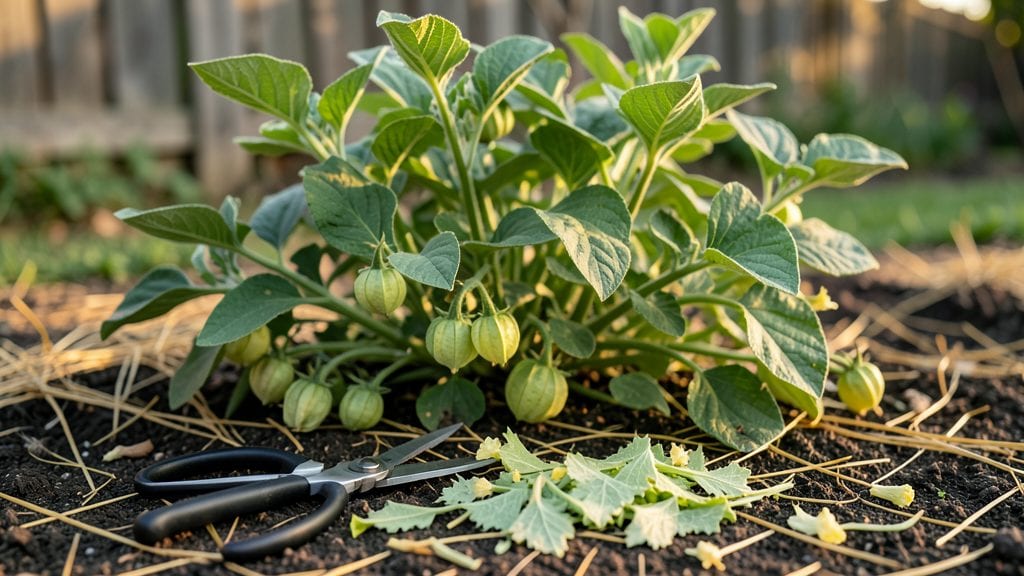
Pruning tomatillo plants might seem tricky, but it’s the secret to bushier growth and a harvest that stretches from summer into fall. ✨ I learned the hard way—skipping pruning means fewer fruits and leggy plants. The key is timing and knowing exactly where to cut.
You’ll need sharp pruners (clean them between cuts), a sunny day, and about 15 minutes once you get the hang of it. Focus on removing suckers—those little shoots growing between the main stem and branches—below the first flower cluster. This redirects energy to fruit production, not just leafy growth.
After pruning, your plant will reward you with thicker stems, more branches, and clusters of those tangy, lime-green tomatillos. The first harvest comes faster, and the plant keeps producing for weeks longer than unpruned ones. Just avoid cutting into woody stems—stick to green growth only.
Works for both container-grown and in-ground plants, and the same rules apply whether you’re growing in Zone 8 or 10. Once you see the difference, you’ll never go back to letting them grow wild. Let’s get those plants shaped right!
📚 In This Guide
- What you need
- Instructions
- Tips and common mistakes
- Wrapping up and next steps
What you need
- ● Pruning shears or sharp bypass pruners – Choose sterilized, sharp tools (size: 5-7 inches) to avoid damaging stems or spreading disease. 💡 Pro tip: Disinfect with rubbing alcohol between cuts!
- ● Garden gloves – A pair of nitrile or leather gloves to protect your hands from thorns and sap.
- ○ Clean, sharp knife or secateurs – For larger branches (optional backup if pruners aren’t available).
- ● Garden twine or plant ties – 10-15 feet of twine (if staking or training vines).
- ● Compost or mulch – A small bag (5-10 lbs) to cover pruned areas and retain moisture.
- ● Watering can or hose – To hydrate plants before and after pruning.
- ○ Plant growth regulator (optional) – Like seaweed extract or diluted hydrogen peroxide (1:9 ratio) to promote faster healing.
- ● Labeling tags – If you’re experimenting with different pruning techniques, mark plants for tracking.
- ● Disposable pruning bags – To collect and dispose of diseased or overgrown foliage.
- ● Sunscreen & hat – Because pruning in the sun is no joke! 😎
Step-by-Step instructions for pruning tomatillo plants
Here's how to keep your tomatillos productive and healthy—no fancy tools needed.
🌿 Step 1: Wait Until Plants Establish Strong Growth
Prune only after your tomatillos have developed 4-6 true leaves and a strong central stem. This usually happens 4-6 weeks after transplanting, when the plant looks sturdy enough to handle trimming. Early pruning stresses young plants and can slow fruit production.
Check the stem base for small, hairy shoots—these are the first signs of side branches forming. If you see leggy growth reaching for light but no side branches yet, wait another week. You'll know it's time when the plant has at least 12 inches of height and multiple leaf clusters.
✂️ Step 2: Prune to Encourage Bushier Growth
Use clean, sharp pruning shears to cut just above a leaf node where new branches will grow. Remove 1/3 of the top growth to redirect energy toward side shoots. This is called "pinching," and it's what turns your tomatillos from skinny stalks into bushy, fruit-laden plants.
Focus on removing the topmost set of leaves—this signals the plant to grow outward instead of upward. Avoid cutting into the main stem unless it's diseased. You'll see new side shoots emerge within 7-10 days of pruning. These are your future fruit-bearing branches.
🌱 Step 3: Maintain Pruning Through the Season
Continue pruning every 2-3 weeks during active growth to keep the plant compact. Remove any suckers (small shoots in the leaf axils) unless you're saving seeds—these compete with fruit production. Pinch back any stems that grow taller than 18 inches to prevent them from flopping over.
Watch for yellowing leaves or stunted growth—these are signs you're pruning too aggressively. Healthy tomatillos should always have at least 3-4 leaves per stem. If you notice fewer than 2 leaves per branch, back off on pruning for a month to let the plant recover.
⏰ Step 4: Adjust Pruning for Harvest Seasons
In spring and summer, prune aggressively to maximize fruit production. Cut back any spent flower clusters (those without green tomatillos forming) to encourage new blooms. This keeps the plant focused on current harvests rather than maintaining old growth.
In fall and winter, reduce pruning to light maintenance only. Tomatillos slow down in cooler weather, so trim only dead or diseased branches. You'll see slower regrowth in these seasons, but the plant stores energy for next year's growth. Stop pruning entirely 4-6 weeks before your first frost to let the plant harden off.
💧 Step 5: Post-Pruning Care for Recovery
Water deeply the day after pruning to help the plant recover. Tomatillos need 1-1.5 inches of water per week, but avoid overhead watering after trimming—it can spread disease through fresh cuts. Instead, water at the base of the plant in the morning to let foliage dry quickly.
Apply a balanced fertilizer (like 10-10-10) one week after pruning to support new growth. You'll notice faster regrowth and more vigorous side shoots within 10-14 days. If you see new leaves curling or wilting, reduce water slightly—the plant may be stressed from the pruning.
Tips & tricks for pruning tomatillo plants
Here's what I've learned after years of growing tomatillos—these tricks will help you avoid common mistakes and get the bushiest, most productive plants.
Timing is Everything: I can't stress enough how important the 4-6 week waiting period is before pruning. I once pruned too early after just 3 weeks, and my plants struggled to recover. Wait until you see those small, hairy shoots at the stem base—they're your signal that the plant is ready. Also, if your plants reach 12 inches without side branches, give them another week. Patience here pays off with stronger growth.
The Pinching Technique: When you remove that 1/3 of top growth in Step 2, make sure your cut is clean and just above a leaf node. I learned this the hard way by making jagged cuts that led to disease. Use sharp pruning shears and cut at a 45-degree angle to help water run off. The goal is to encourage new side shoots, so focus on the topmost set of leaves—this is where the plant will put its energy. You should see new growth within 7-10 days if done correctly.
Seasonal Adjustments: In spring and summer, I prune aggressively every 2-3 weeks to maximize fruit production. But here's the trick: in fall and winter, I switch to light maintenance only. The key is stopping pruning 4-6 weeks before frost—this gives your plants time to harden off. I've seen plants that were pruned too late struggle with frost damage, so mark your calendar if you're in a cold climate. The plant needs time to recover and store energy for next season.
Recovery Care: After pruning, deep watering is non-negotiable. I water at the base in the morning to prevent disease, and I always apply a balanced fertilizer like 10-10-10 one week later. Watch for new leaves curling or wilting—this is your plant's way of saying it's stressed. If you see fewer than 2 leaves per branch, back off on pruning for a month. The goal is to maintain 3-4 leaves per stem at all times. This recovery period is when you'll see the most vigorous side shoots emerge.
Pro Tips for Prune Tomatillo Plants
- Here's what I've learned after years of growing tomatillos—these tricks will help you avoid common mistakes and get the bushiest, most productive plants.
- Timing is Everything: I can't stress enough how important the 4-6 week waiting period is before pruning.
- The Pinching Technique: When you remove that 1/3 of top growth in Step 2, make sure your cut is clean and just above a leaf node.
Frequently asked questions
Got questions about pruning tomatillos? You’re not alone! Here are answers to the most common concerns—so you can prune like a pro and keep those fruity harvests rolling in.
When is the best time to prune tomatillo plants?
Prune early and often—start when plants are young (around 6–12 inches tall) to encourage bushier growth. After flowering, trim suckers (side shoots) regularly to redirect energy to fruit production. Avoid heavy pruning during hot spells, as it can stress plants.
How much should I cut off when pruning?
Remove only the suckers (shoots growing between the main stem and branches) and any yellowing or diseased leaves. Never trim more than 1/3 of the plant at once. Think “light touch”—focus on shaping, not drastic cuts!
Can I prune tomatillos after they’ve already fruited?
Yes! Light pruning (removing dead leaves or spent flowers) can still boost next year’s harvest. Avoid heavy cuts late in the season, though, as it may reduce winter hardiness. Stop pruning 4–6 weeks before frost to let plants harden off.
What if my tomatillos don’t produce fruit after pruning?
Check for these issues: underwatering, poor soil, or over-pruning. Tomatillos need consistent moisture and balanced fertilizer (high in phosphorus). If you’ve pruned too aggressively, give the plant time to recover—it may rebound with next season’s growth.
Do I need to sterilize my pruners between cuts?
Absolutely!
Wipe blades with rubbing alcohol (70% or higher) before and after each plant to prevent spreading disease (like bacterial spot). Tomatillos are sensitive to fungal/bacterial infections—sterilizing tools is a game-changer for healthy plants.
Wrapping up and next steps
Pruning your tomatillo plants is a simple yet powerful way to boost productivity, improve airflow, and enjoy a year-round harvest of flavorful fruits! By following these steps—removing suckers, thinning leaves, and shaping your plant—you’ll encourage bushier growth and healthier yields. 🌱
Now that you’re armed with the know-how, roll up your sleeves and get pruning! Start with your oldest plants first, and soon, you’ll be savoring fresh tomatillos in salsas, soups, and more. Happy gardening—and happy harvesting! 🎉
Next step: Mark your calendar for regular pruning sessions (every 2–4 weeks) to keep your tomatillos thriving all season long!