
Pruning
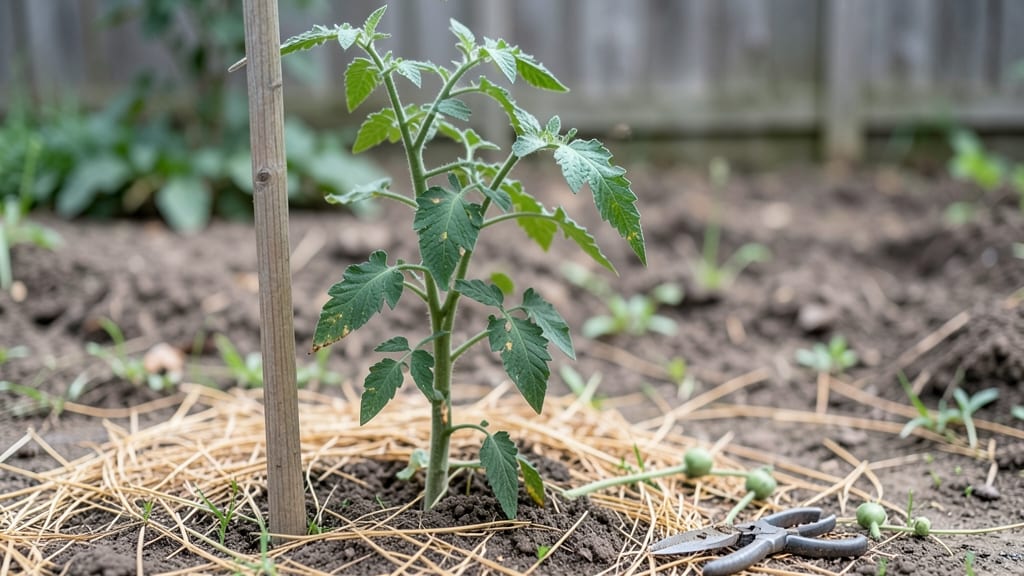
Pruning young tomato plants transforms spindly stems into sturdy, productive bushes—something I learned the hard way after my first season of tangled vines and half-rotten fruit. The right cuts at the right time make all the difference, and I’ve narrowed it down to three simple techniques that work every time.
You don’t need fancy tools or years of experience, just a pair of clean shears and a clear understanding of where to cut.
Start when plants reach about 12 inches tall, focusing on three key areas: removing suckers (those little shoots between the main stem and branches), trimming lower leaves to improve airflow, and pinching back the top growth if your variety tends to sprawl.
This isn’t about hacking away—it’s about guiding the plant’s energy where you want it: into stronger stems and bigger fruit. I’ve seen plants double in bushiness after just one careful pruning session, and the difference in harvest is night and day.
What you’ll end up with is a tomato plant that’s stronger, healthier, and far more productive than one left to grow wild. The air circulates better, diseases have fewer places to hide, and the plant puts its energy into fruit instead of extra foliage.
Plus, pruned plants ripen faster and produce fruit for weeks longer than unpruned ones. The best part? You’ll spend less time staking and more time enjoying the results.
This method works for both determinate (bush) and indeterminate (vining) varieties, though indeterminate types need more frequent attention. Whether you’re growing in the ground, containers, or a small backyard plot, these cuts will give you the bushiest, most reliable tomato plants you’ve ever grown. Ready to get started?
📚 In This Guide
- What you need
- Instructions
- Tips and common mistakes
- Wrapping up and next steps
What you need
- ● Sharp pruning shears or scissors: Clean, sterilized, and bypass-pruned (for precision cuts). Avoid dull tools—🔪they crush stems instead of cutting cleanly.
- ● Gloves: Garden gloves (nitrile or leather) to protect hands from thorns and dirt.
- ○ Disinfectant (optional but recommended): Rubbing alcohol (70% isopropyl) or a 10% bleach solution to sterilize tools between cuts.
- ● Small bucket or bag: For collecting pruned leaves/stems (compost them later!).
- ○ Water & spray bottle (optional): To mist plants post-pruning if they look stressed.
- ● Healthy young tomato plants: Ideally 6–12 inches tall with 3–5 true leaves (not seedlings).
- ● Good weather: Prune on a mild, cloudy day (avoid extreme heat or frost).
- ● Patience: Take your time—rushing leads to uneven cuts or damage.
- ● Growth hormone powder: (e.g., rooting hormone) to speed up healing if making large cuts.
- ● Plant support (cage/stake): Install stakes before pruning to avoid disturbing roots later.
- ● Notebook & pen: To track pruning dates and plant progress.
Step-by-step instructions for pruning young tomato plants
Here's the simple pruning method I use to create strong, productive tomato plants from the start.
Identify and Remove Suckers for Bushier Growth
Suckers are the small shoots that grow in the crotch between the main stem and a branch. They appear about 2-3 inches below the leaf junction and look like tiny offshoots. Pinch these off with your fingers or use clean pruning shears to make a clean cut just above the sucker's base.
I start pruning when plants reach about 12-18 inches tall and have several sets of true leaves. Removing suckers early directs the plant's energy into stronger main stems and branches rather than weak side growth. If you miss a sucker, it can grow into a thick, woody branch that competes with your main fruit-bearing stems.
Prune Lower Leaves to Improve Airflow and Light
Remove the bottom 6-8 inches of leaves from the main stem when the plant is about 2 feet tall. This creates space between the plant and the soil, reducing disease risk from splashing water and improving airflow. Use your fingers to gently twist off leaves or make a clean cut just above the leaf stem.
Here's the thing—don't go overboard. You're not trying to create a bare stem; just open up the lower portion. Leaves higher up should stay intact to continue photosynthesis. If your plant looks stressed after pruning, you've removed too much foliage.
Thin Overcrowded Branches for Better Fruit Production
Once your tomato plant has 3-4 main branches, examine where they meet the central stem. If two branches grow too close together, one will shade the other and produce fewer fruits. Use pruning shears to remove the weaker branch at its base, leaving only the stronger, more upright growth.
I always keep the branch that grows more directly upward or has a stronger connection to the main stem. This creates a more open plant structure that lets sunlight reach all parts. After pruning, step back and visualize how light will move through the plant—you should see clear pathways to the center.
Maintain Pruning Through the Growing Season
Continue removing suckers as they appear throughout the season, focusing on the lower half of the plant first. Once your tomato plant reaches 4-5 feet tall, you can stop pruning new suckers on the lower stem to let it start flowering and fruiting. Keep pruning suckers on the upper portion to maintain an open growth habit.
Real talk: Pruning takes about 5-10 minutes per plant every week during the growing season. Set a reminder on your phone or tie a string around the plant as a visual cue. The more consistently you prune, the stronger and more productive your tomatoes will be by harvest time.
Tips & tricks for pruning young tomato plants
A few simple techniques can make all the difference in growing stronger, more productive tomato plants.
Timing is Everything: I start pruning when plants reach about 12-18 inches tall, but don't wait too long. Young plants below this height can handle pruning too, but they're more delicate. The key is to begin before suckers grow too large—once they reach pencil thickness, they're much harder to remove cleanly. I check plants every 3-4 days during their early growth phase to catch suckers early.
The Right Tools Make All the Difference: While you can pinch suckers with your fingers, clean pruning shears give you more control, especially for larger suckers. I use small, sharp shears designed for gardening—never kitchen scissors or dull tools. Sterilize your shears with rubbing alcohol between plants to prevent spreading disease. For lower leaves, I find twisting them off by hand works best without damaging the stem.
Visual Cues for Better Pruning: When removing suckers in Step 1, look for the small "V" shape where the sucker meets the main stem. This is your target—cut just above this junction to prevent the sucker from growing back. For Step 2, when removing lower leaves, imagine creating a "skirt" about 6-8 inches above the soil. This opens up airflow while keeping the plant's energy-producing foliage intact. After pruning branches in Step 3, step back and visualize sunlight paths—you should see clear lines to the plant's center.
Consistency Pays Off: The 5-10 minutes per plant you spend weekly adds up to big rewards. I set a weekly reminder on my phone because even experienced gardeners sometimes skip this step when busy. Focus on the lower half of the plant first, then move upward as the plant grows. Remember, you're shaping the plant's future fruit production—every cut directs energy where you want it to go.
Pro Tips for Prune Young Tomato Plants
- A few simple techniques can make all the difference in growing stronger, more productive tomato plants.
- Timing is Everything: I start pruning when plants reach about 12-18 inches tall, but don't wait too long.
- The Right Tools Make All the Difference: While you can pinch suckers with your fingers, clean pruning shears give you more control, especially for larger suckers.
Frequently asked questions
Got questions about pruning young tomato plants? Here are answers to the most common ones to help you grow a thriving, productive garden!
When is the best time to start pruning young tomato plants?
Prune your young tomato plants once they reach 12–18 inches tall and have at least 4–5 sets of true leaves. This is typically 4–6 weeks after transplanting (or when seedlings are 6–8 weeks old). Early pruning encourages stronger stems and better airflow, reducing disease risk. Avoid pruning too early—wait until plants are sturdy enough to handle the stress.
Do I need to prune determinate tomato varieties?
Determinate (bush) tomatoes usually don’t require pruning since they grow in a compact shape and produce fruit along the entire plant. However, you can lightly prune to remove:
- Suckers growing between the main stem and branches (if overcrowded).
- Lower leaves touching the soil (to prevent disease).
- Damaged or yellowing foliage.
What should I do if my tomato plant looks stressed after pruning?
If your plant wilts, drops leaves, or grows slowly after pruning, it’s likely adjusting to stress. To help it recover:
- Water deeply but avoid overwatering (soil should stay moist but not soggy).
- Provide shade for a day or two if temperatures are extreme.
- Avoid fertilizing immediately—wait 1–2 weeks to let roots recover.
- Monitor for pests (like aphids) that thrive on stressed plants.
Can I prune tomato plants too much?
Yes! Over-pruning can weaken your plant, reduce fruit production, and leave it vulnerable to pests/diseases. Follow these guidelines to avoid overdoing it:
- Never remove more than 1/3 of the foliage at once.
- Stop pruning 4–6 weeks before harvest to let energy focus on fruit.
- Avoid pruning during heatwaves or drought—plants need energy to recover.
- Indeterminate varieties can handle regular, light pruning; determinate types need minimal trimming.
What can I do with the pruned tomato plant clippings?
Don’t toss those clippings! Here’s how to repurpose them:
- Compost them (if disease-free) to enrich your soil later.
- Use as mulch around the base of other plants (avoid piling near stems).
- Make a tomato fertilizer tea by soaking clippings in water for 24 hours, then diluting with water (1:10 ratio) to feed plants.
- Discard if diseased (e.g., spots, mold)—never compost or reuse infected plant material.
Wrapping up and next steps
Pruning young tomato plants might seem intimidating at first, but with the right cuts and a little confidence, you’ll soon be growing stronger, bushier, and more productive plants.
Remember, the key is to encourage growth, not overdo it—focus on removing suckers early, pruning lower leaves, and trimming excess foliage. 🌱
Now that you’re armed with these techniques, grab your pruners and give your tomato plants the care they deserve! Ready to see those vines flourish? Check out our next guide on fertilizing for even bigger harvests.