Pruning
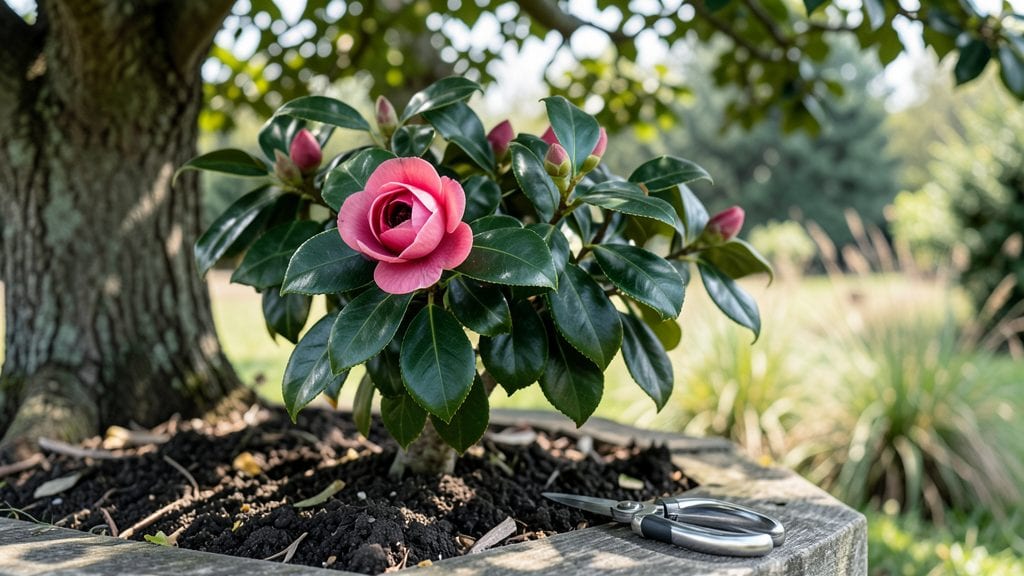
Pruning Japonica plants transforms them from wild, unruly shrubs into showstopping focal points in your garden. ✨ I’ve pruned Camellia japonicas for years, and these three strategic cuts—timed just right—keep them lush, blooming, and disease-free without sacrificing their natural beauty.
The key isn’t just when you cut, but how you shape the plant to encourage healthy growth year-round.
Most gardeners mess this up by pruning at the wrong time or cutting too aggressively, which stunts blooms or invites pests. My method focuses on three cuts: a light cleanup in late winter, a shaping trim after flowering, and a rejuvenation prune in early summer.
You’ll only need basic tools—a pair of sharp bypass pruners, gloves, and a bucket for clippings—and the process takes less than an hour per plant. The payoff? Thicker foliage, more abundant blooms, and a shape that stays elegant all season.
After pruning, Japonicas bounce back with surprising speed—new growth appears within weeks, and the plant directs energy toward stronger stems and bigger flowers.
The secret is making clean cuts just above outward-facing buds, avoiding "topping" (cutting back to bare wood), and never pruning when the plant is stressed, like during drought or extreme heat. Your goal is to open up the center for airflow while maintaining the plant’s natural silhouette.
This technique works for Camellia japonica, gardenias, and other Japonica varieties, whether you’re dealing with a mature shrub or a young plant. Even if you’ve avoided pruning before, these cuts are forgiving—just follow the "thirds rule" (never remove more than one-third of the plant’s foliage at once).
Let’s get those shears sharp and turn your Japonicas into a garden centerpiece.
Root Causes Of Overgrowth
Your Japonica plant may be sending up wild, unruly growth for a few key reasons—all tied to its natural biology and how it responds to its environment. Understanding these triggers helps you prune with precision, not panic. Let’s break down the science behind why your plant might be acting up.
Japonica plants (like Hibiscus syriacus or Hydrangea macrophylla) are fast growers, thanks to a surge of auxin and cytokinin hormones during spring and summer. These plant powerhouses tell stems to elongate and leaves to multiply—often faster than you’d like.
- Why it happens: Warmth, moisture, and sunlight trigger auxin production, which stretches stems upward. If your plant isn’t pruned regularly, it prioritizes vertical growth over bushiness.
- Actionable fix: Pinch back new growth tips in early summer to redirect energy into lateral branches. This mimics natural pruning seen in wild Japonica species.
- Pro tip: 💡 Use a pair of clean, sharp pruners to avoid crushing stems—this prevents stress signals that could trigger even more growth.
Japonica plants thrive on a structured pruning schedule, but skipping cuts at the wrong time can lead to chaotic regrowth. These plants have a dormant period (late fall/winter) and a flushing phase (spring/summer) where they’re most responsive to pruning.
| Pruning Mistake | Why It Causes Overgrowth | Solution |
|---|---|---|
| Pruning too late in summer | New shoots have 6–8 weeks to harden off before winter. Late cuts mean tender growth won’t survive frost, leading to leggy, weak regrowth the next season. | Stick to late winter/early spring (just as buds swell) for structural cuts. |
| Skipping summer pinch-backs | Without mid-season pruning, auxin hormones overproduce, sending energy to a few dominant stems instead of a balanced bush. | Do a light pinch of new growth in June/July to encourage branching. |
| Heavy pruning in fall | Fall cuts remove the plant’s energy reserves before winter, forcing it to push weak, sparse growth in spring. | Limit fall pruning to dead or diseased wood only. |
Japonica plants are resilient, but environmental imbalances can send them into overdrive—think of it as their way of compensating for stress. Common culprits include:
- Too much nitrogen: Rich, nitrogen-heavy soil (like fresh compost or over-fertilized beds) fuels leafy, leggy growth at the expense of flowers and structure. Test your soil—ideal levels for Japonica are 0.1–0.2% nitrogen.
- Inconsistent watering: Drought stress causes abscisic acid (a stress hormone) to spike, which can trigger rapid, water-seeking growth. Conversely, overwatering leads to root suffocation, forcing the plant to push new shoots above ground.
- Poor airflow: Dense foliage or crowded plantings trap humidity, inviting fungal diseases (like powdery mildew). The plant responds by growing longer, sparser stems to escape the canopy.
Actionable fix: Adjust care to stabilize the plant:
- ✂️ Thin out dense areas to improve airflow.
- 💧 Water deeply but infrequently (1–1.5 inches per week).
- 🌿 Use a balanced fertilizer (e.g., 10-10-10) in spring, avoiding high-nitrogen blends.
When Japonica plants are under siege from pests (like aphids or Japanese beetles) or diseases (such as bacterial leaf spot), they often respond with compensatory growth—sending up new shoots to replace damaged leaves or stems. This can create a wild, uneven appearance.
- Why it happens:
- Aphids suck sap, starving the plant of nutrients, which triggers ethylene gas production—a stress signal that prompts rapid regrowth.
- Fungal infections block stomata (leaf pores), forcing the plant to grow longer stems to access sunlight.
- Actionable fix:
- 🔍 Inspect leaves for holes, discoloration, or sticky residue (aphid honeydew).
- 🛡️ Treat with neem oil or insecticidal soap for pests; copper fungicide for diseases.
- 🌿 Remove heavily infested growth immediately to stop the cycle.
Key takeaway: Overgrowth in Japonica plants is rarely random—it’s a response to hormonal signals, missed care cues, or environmental stress. By identifying the root cause (and pruning at the right time), you’ll transform chaotic growth into a structured, flourishing shrub year-round.
Fixing Common Pruning Mistakes
Pruning your Japonica (or Camellia japonica) can feel like a balancing act—too much or too little, and your plant may suffer. But don’t worry! With the right fixes, you can restore health and shape while keeping future pruning stress-free.
Below, we’ve mapped common issues to practical solutions, complete with prevention tips to avoid repeating mistakes.
Cause: Cutting back too aggressively (especially in one session) or removing more than 25% of foliage at once.
How to Fix It: 🍳 Step 1: Assess the Damage
- If your plant looks skeletal or has long, leafless stems, it’s been over-pruned. Check for new growth at the base—this signals recovery potential.
👨🍳 Step 2: Lighten the Load
- Stop cutting for now! Instead, focus on encouraging regrowth by:
- Watering deeply (but not soggy) to support recovery.
- Fertilizing with a balanced, slow-release fertilizer (e.g., 10-10-10) to boost energy.
🥘 Step 3: Prune Strategically Next Season
- Next pruning season (late winter/early spring), only trim dead or crossing branches. Avoid heavy cuts—opt for light shaping to stimulate new buds.
💡 Prevention Tips:
- Follow the "25% rule": Never remove more than a quarter of the foliage in one session.
- Space cuts out—prune in stages over 2–3 weeks if needed.
- Use sharp, clean shears to prevent tearing, which stresses the plant further.
Cause: Pruning at the wrong time (e.g., after blooming or during dormancy) disrupts flower buds.
How to Fix It: 🔥 Step 1: Identify Your Plant’s Cycle
- Japonica blooms on old wood (last year’s growth). If you pruned after flowers appeared, you may have removed next year’s buds.
🍎 Step 2: Adjust Future Pruning
- Best time to prune: Late winter to early spring (just as new growth begins, before buds swell).
- If you missed the window, wait until after blooming to do light cleanup pruning (removing only dead/diseased wood).
🎯 Step 3: Encourage Blooms
- After pruning, apply a phosphorus-rich fertilizer (e.g., 5-10-5) to promote flowering.
- Avoid heavy pruning—stick to structural shaping to preserve bud zones.
✨ Prevention Tips:
- Mark your calendar! Prune 6–8 weeks before expected bloom time (varies by variety).
- If unsure, prune minimally—better to under-prune than overdo it.
- Observe your plant’s blooming pattern—some Japonicas bloom in fall/winter, others in spring.
Cause: Too much shade, poor nutrition, or pruning too high (cutting back to old, bare wood).
How to Fix It: 🔪 Step 1: Trim for Structure
- Remove the top 1–2 inches of the tallest stems to encourage bushier growth.
- Cut just above a leaf node (where new buds form) at a 45-degree angle to prevent water pooling.
🌱 Step 2: Boost Light & Nutrition
- Move the plant to a sunnier spot (but avoid harsh afternoon sun).
- Fertilize monthly with a high-nitrogen fertilizer (e.g., 30-10-10) during growing season (spring–summer).
⏰ Step 3: Pinch Young Shoots
- For new growth, pinch back the tips of leggy stems to promote branching.
💡 Prevention Tips:
- **Never "top" your Japonica—avoid cutting the main stem drastically.
- Prune in layers: Start with light cuts, then gradually shape over years.
- Support weak stems with a small stake if needed.
Cause: Overcrowded branches (poor airflow) or pruning with dirty tools, spreading spores.
How to Fix It: 🧴 Step 1: Clean Up Immediately
- Remove all infected leaves/stems (sterilize shears with rubbing alcohol between cuts).
- Disinfect the plant with a copper fungicide or baking soda spray (1 tbsp baking soda + 1 quart water + a drop of dish soap).
🌿 Step 2: Improve Airflow
- Thin out dense branches to allow sunlight and air circulation.
- Space pruning cuts—don’t bunch them in one area.
🚫 Step 3: Prevent Recurrence
- Water at the base (avoid wetting foliage).
- Prune in dry weather to let cuts heal faster.
🔥 Prevention Tips:
- Sanitize tools before and after pruning.
- Avoid pruning during wet spells—wait for dry days.
- Choose disease-resistant varieties if fungal issues persist.
Final Pro Tip: 🌟 Keep a pruning journal**! Note when you cut, how much you removed, and your plant’s response. Over time, you’ll spot patterns and refine your technique.
Now that you’ve got the fixes, your Japonica will be bushier, healthier, and blooming beautifully—with minimal stress! 🌸
Frequently asked questions
When is the best time to prune my Japonica plants to encourage blooms?
Prune late winter to early spring (just as buds begin to swell) for most Japonica varieties. This timing ensures you don’t remove next year’s flower buds, which form on old wood. For varieties that bloom in fall/winter, wait until after blooming for a light cleanup trim. Never prune during dormancy or after flowers appear unless it’s only for removing dead/diseased wood.
How do I know if I’ve pruned my Japonica too aggressively?
You’ve over-pruned if your plant looks skeletal with long, leafless stems or shows no signs of new growth 6–8 weeks after cutting. Japonicas should recover with new shoots within 4–6 weeks if pruned correctly. If not, stop pruning and focus on watering deeply and fertilizing with a balanced 10-10-10 blend to encourage regrowth.
Can I shape my Japonica into a specific form, like a tree or hedge?
Japonicas respond well to shaping when pruned gradually. For a tree form, select a central leader and remove competing branches, cutting just above outward-facing buds. For hedges, use a 45-degree angle cut to encourage bushiness. Prune in stages over 2–3 years to avoid stress. Always avoid cutting more than 25% of foliage in one session.
What should I do with the pruned branches after cutting?
Collect pruned branches in a bucket and dispose of them properly. Never leave clippings on the ground—this can harbor pests or diseases. For healthy plants, you can compost small, disease-free branches. Larger stems can be chopped for mulch or used as plant supports. Always sterilize your tools with rubbing alcohol before and after pruning to prevent cross-contamination.
Why does my Japonica keep growing leggy stems after pruning?
Leggy growth usually means your plant is stretching for light or reacting to stress. To fix it, move the plant to a sunnier spot (but avoid harsh afternoon sun) and pinch back the tips of new growth to encourage branching. Fertilize with a high-nitrogen blend (e.g., 30-10-10) during spring/summer to support leafy growth. Avoid heavy pruning in fall, as this can trigger weak, leggy regrowth.