Diseases
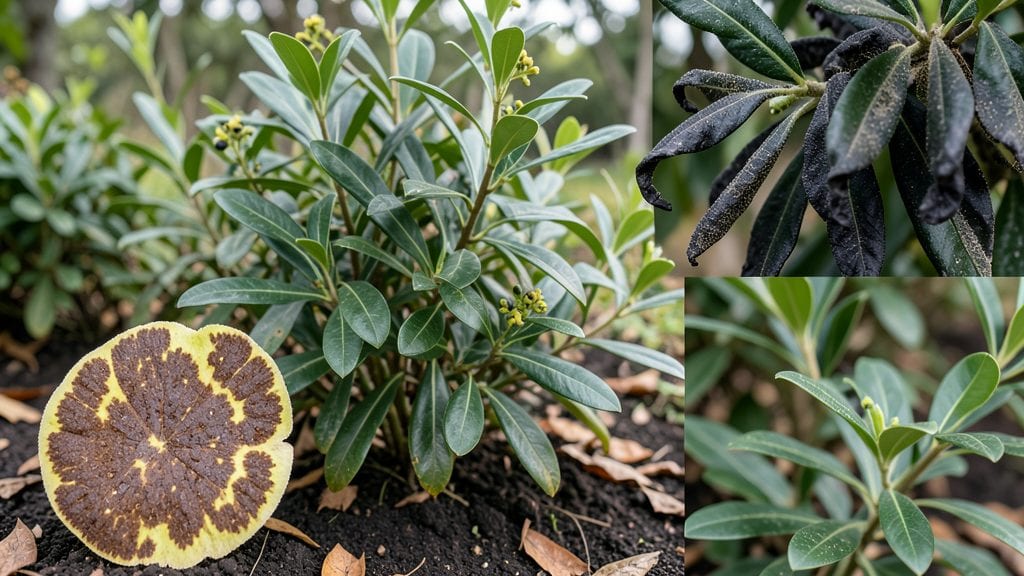
Laurel plant diseases can turn your glossy evergreen into a sad, spotted mess if you don’t catch them early. I’ve seen powdery mildew turn my bay laurel leaves white in just two weeks—until I learned the telltale signs and acted fast.
The key is knowing what to look for before the damage spreads beyond saving.
Most problems start with poor air circulation, overwatering, or stress from heat or pests. Fungal infections like leaf spot show up as brown or black splotches, while bacterial issues create oozy, yellowing patches.
Even environmental factors—like soggy soil or sudden temperature swings—can weaken plants enough to invite trouble. The good news? Many fixes are simple once you identify the culprit.
With the right approach, you can stop diseases in their tracks—pruning infected leaves, adjusting watering habits, or applying organic sprays like neem oil. I’ve saved multiple laurels by acting within days of spotting symptoms, and you can too. Let’s get your plants back to their healthy, vibrant selves.
Whether you’re dealing with a single browning leaf or full-blown mildew, early action makes all the difference. This guide covers the most common foes and how to tackle them—so you can keep your laurels thriving year-round.
Root Causes Behind Plant Struggles
Laurel plants, with their glossy leaves and elegant foliage, can quickly become a gardener’s nightmare when diseases strike. But why do these issues pop up in the first place? The answer often lies in a mix of environmental stress, poor care practices, and unseen microbial invaders.
Understanding these triggers is the first step to prevention—and saving your prized greenery.
Laurel plants thrive in well-drained soil, but when they sit in soggy conditions, their roots suffocate. Fungal diseases like root rot (Phytophthora) and bacterial leaf spot (Xanthomonas) flourish in waterlogged environments because excess moisture creates the perfect breeding ground for pathogens.
Poor drainage also weakens the plant’s natural defenses, making it easier for infections to take hold.
🔹 Why it happens:
- Stagnant water around roots blocks oxygen, stressing the plant and inviting fungal spores.
- Compacted or clay-heavy soil doesn’t allow excess water to escape, trapping moisture.
- Overzealous watering (especially in humid climates) keeps leaves damp, promoting bacterial and fungal spread.
💡 Pro tip: Test your soil’s drainage by digging a hole, filling it with water, and timing how long it takes to drain. If it’s slower than 4 hours, amend with perlite or sand to improve airflow.
Fungal diseases like powdery mildew (Erysiphe) and anthracnose (Colletotrichum) spread via airborne spores, which land on laurel leaves and thrive in warm, humid conditions. These spores are everywhere—soil, wind, even nearby infected plants—but they only cause trouble when conditions are just right.
🔹 Why it happens:
- High humidity (above 75%) creates a damp leaf surface, allowing spores to germinate.
- Poor air circulation (e.g., overcrowded plants) traps spores near the foliage.
- Stressed plants (from drought, nutrient deficiency, or transplant shock) have weaker immune systems.
💡 Pro tip: Space laurels 3–5 feet apart for airflow and avoid overhead watering. Early morning watering (when leaves dry quickly) reduces humidity risks.
Insects like aphids, spider mites, and scale don’t just sap sap—they also create entry points for diseases. These pests damage leaves and stems, leaving wounds where bacteria and fungi can invade.
For example, aphid saliva can transmit viral diseases, while scale insects excrete honeydew, a sticky substance that fosters sooty mold.
🔹 Why it happens:
- Pest infestations reduce the plant’s ability to photosynthesize, weakening its defenses.
- Honeydew buildup attracts ants and encourages fungal growth on leaves.
- Chemical stress from overusing pesticides can kill beneficial insects that control pests naturally.
💡 Pro tip: Introduce ladybugs or lacewings to combat aphids, or spray neem oil (a natural pesticide) to disrupt pest life cycles without harming the plant.
A laurel plant starved of essential nutrients—like nitrogen, magnesium, or iron—becomes vulnerable to diseases. For instance, yellowing leaves (chlorosis) from iron deficiency can signal stress, making the plant more susceptible to fungal infections like leaf spot (Cercospora).
🔹 Why it happens:
- Soil pH imbalances (e.g., alkaline soil locks out iron and manganese).
- Poor soil quality lacks organic matter, reducing microbial diversity that helps suppress diseases.
- Over-fertilizing with synthetic salts burns roots, stressing the plant.
💡 Pro tip: Test your soil’s pH (ideal for laurels: 5.5–7.0) and amend with compost or chelated iron if needed. Use organic fertilizers like fish emulsion for slow-release nutrients.
Even well-meaning pruning can introduce diseases if tools aren’t sterilized. Cuts and scrapes on stems or leaves create open wounds where bacterial cankers (Pseudomonas) or silver leaf disease (Chondrostereum) can enter. Additionally, handling leaves with wet gloves or tools can spread pathogens from plant to plant.
🔹 Why it happens:
- Dirty pruning tools transfer bacteria/fungi between cuts.
- Ragged cuts instead of clean pruning leave jagged edges that heal poorly.
- Pruning during wet weather keeps wounds damp, inviting infections.
💡 Pro tip: Sterilize shears with 70% rubbing alcohol or a bleach solution (1 part bleach to 9 parts water) between cuts. Prune on dry days and seal large wounds with pruning sealant.
Quick Fixes for Laurel Leaf Troubles
When your laurel plant starts showing signs of distress—whether it’s yellowing leaves, black spots, or wilting branches—acting fast can save it from permanent damage. Below are practical, step-by-step solutions tailored to the most common diseases affecting laurel plants, along with prevention tips to keep your greenery thriving.
Fungal diseases like powdery mildew, leaf spot, or root rot thrive in damp, poorly ventilated conditions. Here’s how to tackle them:
🔥 Treat Powdery Mildew (White Fuzzy Coating)
- Prune affected leaves 🔪 – Remove heavily infected foliage immediately to prevent spread.
- Apply neem oil spray 🍳 – Mix 1 tsp neem oil + 1 tsp mild soap + 1 quart water.
Spray early morning or late evening (avoid direct sunlight). 3. Improve airflow 🌬️ – Space plants apart and trim overgrown branches to reduce humidity around leaves. 4. Prevent recurrence ✨ – Water at the base only (avoid wetting leaves) and avoid overhead irrigation.
🍳 Fix Leaf Spot (Black or Brown Spots)
- Remove infected leaves 🧹 – Snip off spots with sterilized scissors (wipe with rubbing alcohol between cuts).
- Use a copper fungicide 🛡️ – Spray a store-bought or homemade copper solution (1 tsp copper sulfate + 1 gallon water) every 7–10 days until symptoms fade.
- Adjust watering habits 💧 – Water deeply but infrequently—laurel plants prefer dry soil between waterings.
- Sterilize tools 🧼 – Clean pruners and pots with bleach solution (1:9 bleach:water) to prevent reinfection.
👨🍳 Stop Root Rot (Mushy Stems & Yellowing)
- Check soil moisture 🌱 – Stick your finger 2 inches deep—if damp, stop watering immediately.
- Repot in fresh soil 🏺 – Remove the plant, trim rotted roots (healthy roots are firm; bad roots are mushy), and repot in well-draining mix (add perlite or sand).
- Improve drainage 🚿 – Ensure pots have drainage holes and elevate them on feet or pebbles to prevent waterlogging.
- Avoid over-fertilizing 🚫 – Too much nitrogen encourages soft, rot-prone growth. Use a balanced fertilizer (10-10-10) sparingly.
Bacterial infections like bacterial leaf spot or canker are trickier but manageable with aggressive action:
🔪 Cure Bacterial Leaf Spot (Water-Soaked Spots)
- Destroy severely infected leaves 🗑️ – Do not compost—bag and discard to prevent spread.
- Apply copper-based bactericide 🛡️ – Use copper hydroxide or fixed copper spray (follow label instructions).
- Sterilize everything 🧼 – Wash hands, tools, and pots with soapy water and bleach.
- Prevent spread 🌿 – Isolate the plant until fully recovered and avoid overhead watering.
🌿 Fix Laurel Canker (Sunken Lesions on Stems)
- Prune cankered branches ⏰ – Cut 6 inches below the lesion with sterilized tools.
- Seal wounds with pruning paste 🩹 – Apply tree wound sealant to prevent secondary infections.
- Boost plant health 💪 – Feed with low-nitrogen fertilizer (e.g., 5-10-10) to strengthen immunity.
- Monitor for reinfection 👀 – Keep an eye out for new lesions and repeat treatments if needed.
- Water wisely 💧 – Deep and infrequent is key.
Early morning watering reduces fungal risk. - Space plants properly 🌿 – 3–4 feet apart ensures airflow and minimizes humidity buildup. - Clean up debris 🧹 – Remove fallen leaves and prunings to eliminate disease hiding spots. - Test soil drainage 🏗️ – If water pools after 30 minutes, amend soil with compost or sand. - Rotate treatments 🔄 – Alternate between neem oil, copper, and baking soda spray to prevent resistance.
By following these targeted fixes, your laurel plant can bounce back from disease—and with a few preventive habits, you’ll keep it looking lush and disease-free for years! 🌿✨
Frequently asked questions about laurel plant diseases
What are the first signs my laurel plant might have a fungal disease?
Watch for white powdery coatings (powdery mildew), dark brown/black spots with yellow halos (leaf spot), or yellowing leaves with mushy stems (root rot). These are classic red flags—act within days to prevent spread. Start by removing infected leaves and improving airflow around the plant.
Can I use household items to treat bacterial infections on my laurel?
Yes! For bacterial leaf spot, mix 1 teaspoon baking soda + 1 quart water + a drop of dish soap and spray every 7 days until symptoms fade. Always sterilize tools and avoid overhead watering to prevent reinfection. For stubborn cases, copper-based sprays work better than DIY solutions.
Why does my laurel keep getting powdery mildew even after treatment?
This usually means high humidity or poor airflow. Space plants 3–5 feet apart, prune dense foliage, and water at the base (never overhead). If mildew persists, switch to a sulfur-based fungicide or neem oil—rotate treatments to avoid resistance.
Is it safe to prune infected branches without sterilizing my tools first?
Never! Dirty tools spread diseases faster. Wipe blades with 70% rubbing alcohol or a 1:9 bleach-water mix between cuts. For severe infections, disinfect tools with Lysol wipes or a dedicated garden sanitizer to kill spores.
How do I know if my laurel’s yellow leaves are from disease or nutrient deficiency?
Check the pattern: Yellowing with brown spots = disease (like leaf spot). Uniform yellowing = deficiency (often iron or nitrogen). Test soil pH (laurels prefer 5.5–7.0) and amend with compost or chelated iron if needed. Disease symptoms often include spots or wilting.