
Diseases
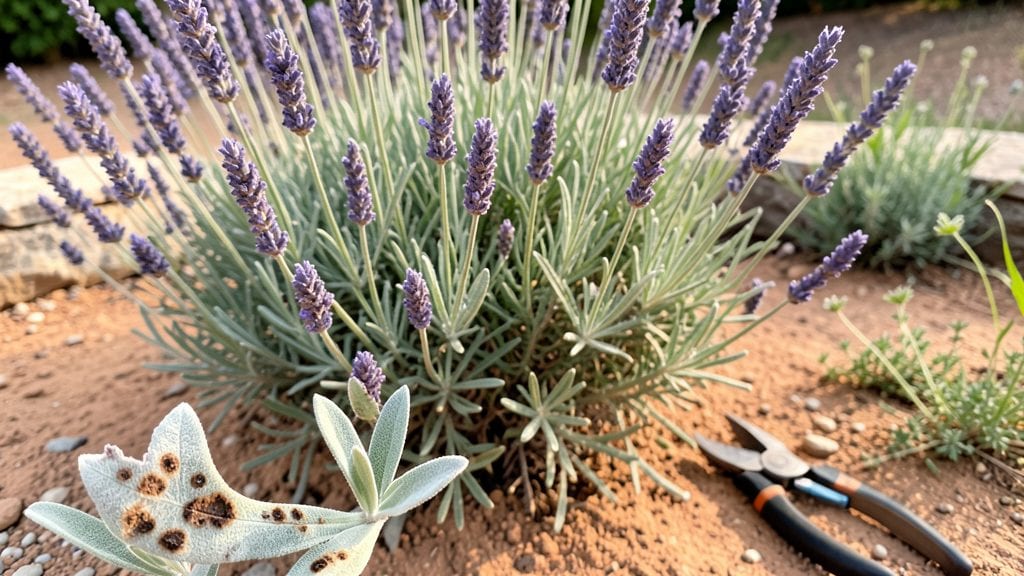
Lavender plant diseases like powdery mildew and root rot can turn your fragrant bushes into sad, wilted shadows—unless you catch them fast. 🌿 I’ve seen lavender go from thriving purple perfection to a sad, gray mess in just a few weeks, and the key to saving it is knowing the early warning signs before the damage gets out of hand.
The most common culprits—fungal infections and bacterial rot—love damp conditions, so proper spacing and airflow are your first line of defense. I learned the hard way that overcrowded lavender plants invite trouble, but with the right pruning and soil prep, you can keep them healthy all season long.
The good news? Most issues respond quickly to simple fixes once you spot them.
You’ll learn to recognize the telltale signs—white powder on leaves, blackened stems, or leaves that turn yellow and drop—so you can act before the problem spreads.
With the right organic treatments and preventive care, you’ll have lavender that stays vibrant, fragrant, and free of disease, no matter how humid your summer gets.
This isn’t just about fixing problems—it’s about keeping your lavender thriving year after year with minimal effort. Whether you’re dealing with a new infection or just want to prevent future issues, these strategies work fast and keep your garden looking its best.
Root Causes of Lavender Woes
Lavender’s hardy nature makes it resilient, but when diseases strike, they often tie back to a few key triggers. Understanding these underlying factors helps you take proactive steps to protect your plants.
Let’s break down the science behind why lavender succumbs to fungal and bacterial infections—and how environmental and human factors collude to create the perfect storm for trouble.
Fungi thrive in moisture, and lavender’s woody stems and tight foliage trap humidity like a sponge. When soil stays soggy or leaves remain damp for prolonged periods, spores germinate and spread rapidly.
- Why it happens: - Poor drainage: Compacted or clay-heavy soil prevents excess water from escaping, leaving roots waterlogged. Fungi like Phytophthora or Botrytis (gray mold) exploit this environment. - Overhead watering: Splashing water onto leaves creates a film that fungi latch onto.
Unlike broadleaf plants, lavender’s narrow leaves dry slowly, extending the window for infection. - High humidity: Lavender prefers dry air (ideal humidity: 40–60%). When humidity climbs above 70%, fungal spores become airborne and infect vulnerable plants within hours.
- Actionable fix:
- Plant lavender in well-draining soil amended with perlite or sand.
- Water at the base only, using drip irrigation or soaker hoses to avoid wetting foliage.
- Space plants 18–24 inches apart to improve airflow and reduce humidity pockets.
Lavender’s resistance hinges on robust health. When deprived of essential nutrients or over-fertilized, its immune system falters, making it an easy target for pathogens.
- Why it happens: - Nitrogen overload: Too much nitrogen (common in lawn fertilizers) promotes lush, soft growth that’s prone to fungal infections like Rust (Puccinia spp.).
Lavender needs low nitrogen (use a 5-10-5 or 7-7-7 fertilizer max). - Deficiencies in micronutrients: Lack of magnesium, calcium, or boron weakens cell walls, allowing bacteria (e.g., Xanthomonas) to invade. Yellowing leaves or stunted growth?
Your lavender’s crying out for help. - Root damage: Over-pruning roots during transplanting or compacted soil restricts nutrient uptake, leaving plants susceptible to root rot.
- Actionable fix:
- Test soil pH (ideal: 6.0–7.5) and amend with compost or lime if needed.
- Use a balanced, slow-release fertilizer in early spring, avoiding high-nitrogen blends.
- Mulch lightly with gravel (not organic mulch) to deter soil-borne diseases while retaining moisture.
Pests like aphids, spider mites, and scale insects don’t just sap lavender’s vitality—they create wounds that bacteria and fungi exploit. Their honeydew secretions also foster sooty mold, a secondary fungal invader.
- Why it happens: - Aphids: These sap-sucking insects inject toxins that weaken stems, making them prime targets for bacterial blight (Pseudomonas). - Spider mites: Their feeding disrupts leaf surfaces, allowing fungal spores to adhere more easily.
Hot, dry conditions (their favorite) also stress lavender, lowering its resistance. - Scale insects: Their waxy shells trap moisture against the plant, creating a damp microclimate for Botrytis to take hold.
- Actionable fix:
- Inspect plants weekly for pests, especially on the undersides of leaves.
- Blast off pests with a strong stream of water or use neem oil (1 tsp per quart of water) as a preventative spray.
- Introduce beneficial predators like ladybugs or lacewings to control outbreaks naturally.
Lavender’s native to Mediterranean climates, where temperatures stay mild year-round. Sudden freezes or heatwaves disrupt its natural defenses, leaving it vulnerable to opportunistic pathogens.
- Why it happens:
- Late spring frosts: New growth emerging after winter is tender and susceptible to Fusarium wilt, a fungal disease that clogs water-conducting vessels.
- Heat stress: Temperatures above 90°F (32°C) for prolonged periods cause lavender to wilts, opening stomata (pores) and inviting bacterial entry.
- Frost heave: Freeze-thaw cycles damage roots, creating entry points for soil-borne diseases like Verticillium wilt.
- Actionable fix:
- Plant lavender in sheltered locations (e.g., near south-facing walls) to buffer temperature extremes.
- Mulch with gravel or pebbles to insulate roots in winter and reflect heat in summer.
- Avoid planting in low-lying areas where cold air pools, increasing frost risk.
Lavender’s airy growth habit is a red flag for gardeners who cram plants too closely together. Poor airflow stifles evaporation, keeping foliage damp and creating a fungal buffet.
- Why it happens: - Stagnant air: Humidity lingers between stems, accelerating spore germination.
Diseases like powdery mildew spread 10x faster in crowded conditions. - Shared pathogens: Overlapping branches allow spores to jump from plant to plant via wind or splashing water. - Competition for resources: Roots compete for water and nutrients, weakening individual plants and lowering their disease resistance.
- Actionable fix:
- Space lavender 18–36 inches apart, depending on the variety (dwarf types need less room).
- Prune regularly to open the canopy and improve airflow, especially after flowering.
- Avoid planting lavender near high-humidity crops like tomatoes or basil, which attract shared pests and diseases.
Even the best-intentioned gardener can accidentally invite disaster. Tools, soil, and improper handling spread pathogens faster than you’d think.
- Why it happens:
- Dirty pruners: Cutting infected stems with contaminated tools transfers spores to healthy plants. Bacterial leaf spot spreads this way in seconds.
- Reusing infected soil: Planting lavender in soil from a previously diseased area reintroduces pathogens like Phytophthora.
- Ignoring deadheading: Spending lavender heads left on the plant harbor fungal spores over winter, ready to infect new growth in spring.
- Actionable fix:
- Sanitize tools between cuts with 70% isopropyl alcohol or a 10% bleach solution.
- Sterilize soil by baking it at 180°F (82°C) for 30 minutes or using pasteurized potting mix.
- Remove all plant debris after pruning and compost it separately (or bag it for disposal).
Quick Fixes for Sick Lavender
When your lavender plants show signs of distress—whether it’s wilting, spots, or stunted growth—acting fast is key. Below are practical, step-by-step solutions tailored to the most common lavender diseases, along with prevention tips to keep your plants thriving. Think of this as your lavender plant first-aid kit!
🍄 Powdery Mildew
Fix it: 1. 🧼 Prune and Clean: Remove heavily infected leaves and stems with sterilized scissors (wipe with rubbing alcohol between cuts). Dispose of debris in the trash—not the compost!
- 💦 Spray with Fungicide: Use a neem oil solution (1 tsp neem oil + 1 tsp mild soap + 1 quart water) or a baking soda spray (1 tbsp baking soda + 1 quart water + a few drops of soap).
Spray both sides of leaves in the early morning or evening to avoid sunburn. 3. 🌬️ Improve Airflow: Thin out overcrowded plants and space them 12–18 inches apart to reduce humidity.
Prevent it:
- ✨ Space plants properly to allow sunlight and airflow.
- 🌞 Water at the base (avoid overhead watering) and early in the day so leaves dry quickly.
- 🌱 Plant in full sun (6+ hours daily)—fungi love shady, damp conditions.
🍅 Root and Stem Rot (Phytophthora, Pythium)
Fix it: 1. 🚰 Stop Watering Immediately: Let the soil dry out completely before watering again. If the soil stays soggy, move the plant to a well-draining spot or a container with fresh, dry potting mix.
- ✂️ Trim Damaged Roots: Gently remove the plant, trim black, mushy roots with sterilized shears, and replant in sterile, fast-draining soil (mix in perlite or sand).
- 🌡️ Fungicide Treatment: Apply a copper-based fungicide or hydrogen peroxide spray (3% solution, diluted 1:1 with water) to the soil and roots.
Prevent it:
- 💡 Use raised beds or containers if your garden has poor drainage.
- 🌧️ Water deeply but infrequently—lavender hates "wet feet."
- 🌱 Choose well-draining soil (sandy or rocky) and amend clay soil with grit.
🍓 Bacterial Leaf Spot
Fix it: 1. 🗑️ Remove Infected Foliage: Snip off yellow or brown spots with sterilized tools and destroy them (do not compost).
- 🧴 Copper Soap Spray: Mix 1 tbsp copper sulfate + 1 tsp dish soap + 1 gallon water and spray every 7–10 days until new growth appears.
- 🌿 Boost Plant Health: Feed with a balanced fertilizer (10-10-10) to strengthen defenses.
Prevent it:
- 🌡️ Avoid overhead watering—use drip irrigation or water at the base.
- 🧼 Sterilize tools before and after pruning.
- 🌱 Space plants to prevent splashing water from spreading bacteria.
🌱 Bacterial Wilts (Fusarium, Ralstonia)
Fix it:
- ⚠️ Sadly, wilted lavender from bacteria often can’t be saved. Dig up and destroy the plant (do not compost) to prevent spread.
- 🔄 Replace Soil: If multiple plants are infected, remove and replace the top 6 inches of soil or repot in fresh, sterile mix.
Prevent it:
- 🌱 Buy disease-resistant varieties (e.g., ‘Hidcote’ or ‘Munstead’).
- 🌡️ Rotate crops—don’t plant lavender in the same spot year after year.
- 🚫 Avoid overwatering—bacteria thrive in stressed, soggy plants.
(Often secondary invaders when plants are weakened by disease!)
🐜 Aphids & Spider Mites
Fix it:
- 💦 Blast Off Pests: Spray plants with a strong stream of water to knock off pests.
- 🌿 Soap Spray: Mix 1 tbsp castile soap + 1 quart water and spray directly on pests (reapply every 3–4 days).
- 🐝 Encourage Predators: Ladybugs and lacewings love munching on aphids—plant marigolds nearby to attract them!
Prevent it:
- 🌱 Inspect new plants before bringing them home.
- 🌿 Prune regularly to remove hiding spots for pests.
- 🌞 Sunlight Check: Lavender needs full sun—move it if it’s in shade.
- 💧 Water Wisely: Drought-tolerant plants hate soggy soil—water only when the top 2 inches of soil are dry.
- 🌿 Prune for Airflow: Trim back overgrown stems to improve circulation.
- 🌱 Feed Lightly: Use a low-nitrogen fertilizer (5-5-5) in early spring.
💡 Pro Tip: If your lavender is chronically sick, it might be in the wrong spot! Lavender thrives in poor, rocky soil—rich garden soil can make it too lush and prone to disease. Amend with sand or gravel if needed!
By following these fixes, your lavender should bounce back—or at least give you a fighting chance to save it. And remember: prevention is the best cure! 🌿✨
Frequently asked questions about lavender plant diseases
Why does my lavender get white powdery spots even when I water it properly?
That’s likely powdery mildew, a fungal disease that thrives in humid conditions despite proper watering. The issue often stems from poor airflow—crowded plants or shaded spots trap moisture. Prune to improve circulation, space plants 18-24 inches apart, and apply a baking soda spray (1 tbsp baking soda + 1 quart water + soap) weekly until it clears.
Can I save lavender with blackened stems and mushy roots?
If the roots are black and squishy, it’s probably root rot from overwatering or poor drainage. Remove the plant, trim all diseased roots with sterilized shears, and replant in fresh, gritty soil (mix in perlite). Stop watering until the soil dries completely—lavender prefers drought to soggy conditions.
How do I know if my lavender’s yellow leaves are from disease or just stress?
Check for spots, wilting, or stunted growth—those are disease red flags. If leaves are just yellow with no other symptoms, it’s likely nutrient deficiency (often nitrogen or magnesium) or overwatering. Test your soil pH (ideal: 6.0-7.5) and feed with a balanced, low-nitrogen fertilizer (5-10-5).
Is neem oil safe to use on flowering lavender?
Yes, but apply it early in the morning or late evening to avoid harming bees. Use a 1% neem oil solution (1 tsp neem oil + 1 tsp mild soap + 1 quart water) and spray only the undersides of leaves where fungal spores hide. Avoid spraying during bloom to protect pollinators.
Why do my potted lavender plants get sick more often than garden ones?
Potted lavender often suffers from compacted roots or poor drainage in containers. Use pots with drainage holes, plant in fast-draining soil mixes (60% mineral soil, 30% perlite, 10% compost), and water only when the top 2 inches are dry. Overcrowded pots also trap humidity—prune regularly to maintain airflow.