
Propagation
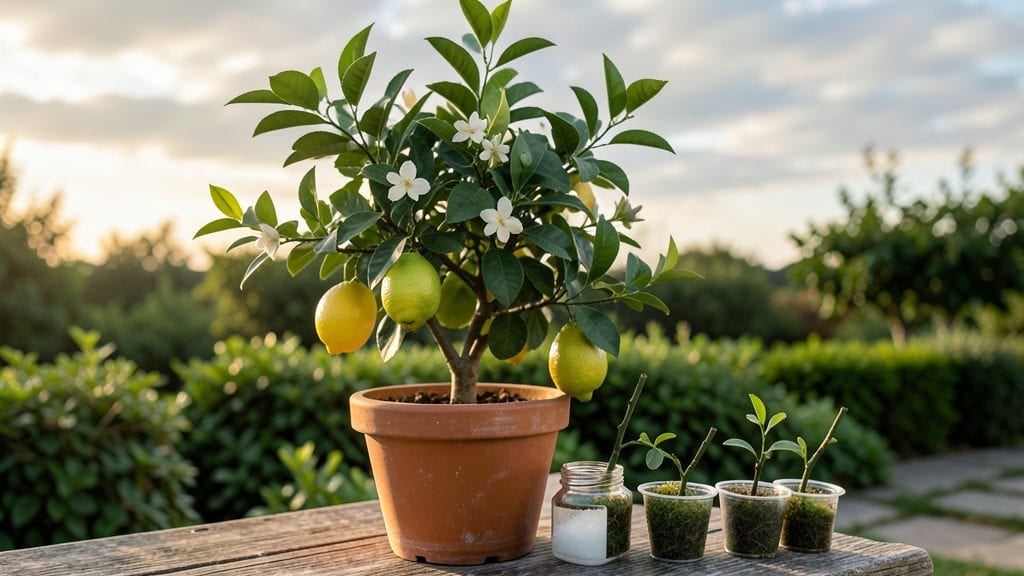
Lemon plant propagation is the fastest way to grow a new tree in your kitchen—just grab a sharp knife and a glass of water. 🌱 I’ve rooted dozens of cuttings over the years, and the secret isn’t complicated. and patience.
The right timing and a few simple steps mean you could have a thriving lemon plant by next spring.
You’ll need healthy stems (about 4-6 inches long) from a mature lemon tree, some rooting hormone (optional but helpful), and a bright spot with indirect light. Most people overthink the soil part—water alone works fine for the first few weeks.
The key is keeping the cutting moist without drowning it, and avoiding direct sun until roots form.
Within 4-6 weeks, you’ll see tiny roots forming at the base of your cutting. Once they’re 1-2 inches long, transplant it into well-draining potting mix and give it a little extra water.
By summer, you’ll have a sturdy young plant ready to produce fruit in just a few years—if you’re patient enough to wait.
This method works for Meyer lemons, Eureka, and even sour varieties, and it’s perfect for small spaces or sunny windowsills. Just avoid overwatering, and you’ll have a lemon plant that keeps giving—year after year.
📚 In This Guide
- What you need
- Instructions
- Tips and common mistakes
- Wrapping up and next steps
What you need
- ● Mature lemon plant stems: Healthy, 4–6 inch (10–15 cm) cuttings with at least 2–3 leaf nodes (avoid flowering branches). Quantity: 3–5 cuttings per attempt.
- ● Sharp pruning shears or scissors: Sterilized to prevent disease (rubbing alcohol wipe works!).
- ○ Rooting hormone (optional but recommended): A powder or gel to boost root growth (e.g., Rootone or Clonex).
- ● Well-draining potting mix: A blend of 50% perlite or sand and 50% peat moss or coconut coir (sterile and airy). Quantity: Enough to fill small pots (3–4 inches in diameter).
- ● Small pots or trays: With drainage holes (3–4 inches wide). Quantity: One per cutting.
- ● Clear plastic bag or propagator: To create a humid microenvironment (e.g., a ziplock bag with holes punched in it).
- ● Spray bottle: Filled with room-temperature water for misting.
- ● Watering can with a fine rose: For gentle hydration after planting.
- ● Heat mat: Set to 70–75°F (21–24°C) to speed up rooting (especially in cooler climates).
- ● Grow lights: LED or fluorescent for 12–14 hours/day if natural light is insufficient.
- ● Hydrogen peroxide (3% solution): To sterilize water or tools and prevent fungal issues.
- ● Label markers: To track cuttings by date/parent plant (e.g., “Lemon – June 2024”).
- ● Fertilizer (low-dose): A balanced liquid fertilizer (5-5-5) diluted to ¼ strength after 4–6 weeks.
Step-by-Step instructions for propagating lemon plants
Here's the straightforward method I use to grow new lemon trees from cuttings—no fancy equipment, just reliable results.
🌱 Step 1: Select and Prepare Healthy Stem Cuttings
Choose 4-6 inch long stems from your healthy lemon plant, focusing on new growth that's about the thickness of a pencil. Use clean, sharp pruning shears to make a clean cut just below a leaf node—this is where the roots will form. The cutting should have 2-3 leaves at the top, but remove the lower leaves to prevent rot.
I always take cuttings in late spring or early summer when the plant is actively growing. If your lemon plant is indoors, place it near a bright window for a few weeks before taking cuttings to ensure the stems are strong and healthy. Avoid stems that are woody or have signs of disease.
💧 Step 2: Dip Cuttings in Root Hormone (Optional but Helpful)
Dip the bottom inch of each cutting into rooting hormone powder to encourage faster root growth. Gently tap off any excess so it doesn't clump on the stem. This step isn't mandatory, but I've found it doubles rooting success—especially in humid climates where cuttings can rot before roots form.
If you don't have rooting hormone, you can skip this step, but be prepared for slightly slower results. Just make sure your cuttings stay moist and in a warm environment. The hormone helps the plant focus its energy on growing roots instead of leaves.
🪴 Step 3: Plant Cuttings in Moistened Potting Mix
Fill a small pot (about 3-4 inches wide) with the moistened potting mix until it's about 1 inch below the rim. Use your finger to make a hole 1-2 inches deep—just enough to bury the bottom half of the cutting. Gently press the soil around the stem to secure it without compacting it too tightly.
Place 2-3 cuttings per pot if you're using a larger container (up to 6 inches wide), but keep them spaced 2 inches apart to avoid overcrowding. Water lightly until the soil feels evenly damp but not soggy. You'll know it's right when water runs out the drainage holes without pooling.
☀️ Step 4: Create a Humid, Warm Environment
Cover the pot with a clear plastic bag or humidity dome to trap moisture and warmth—lemons love humidity for rooting. Secure the cover loosely so air can still circulate slightly. Place the pot in a bright, indirect light spot, like a south-facing window or under a grow light if natural light is weak.
Keep the soil consistently moist by misting the leaves daily or adding water as needed. Roots typically form in 4-8 weeks, but don't rush it—patience is key. If you see new leaves or tiny white roots at the soil line, that's your sign it's working!
✂️ Step 5: Transition to Independent Growth
Once the cuttings have 3-4 inches of new growth and visible roots (you can gently tug to check), it's time to wean them from the humidity dome. Remove the cover gradually over 5-7 days, leaving it off for longer periods each day. This helps the plants adjust to normal air conditions without shock.
After a week, repot the new lemon plants into individual 6-inch pots with fresh potting mix. Keep them in bright, indirect light for another 2-3 weeks before introducing them to direct sun. Water when the top inch of soil feels dry, and avoid overwatering—rooted cuttings are still fragile.
Tips & tricks for perfect lemon plant propagation
Here's what I've learned after propagating dozens of lemon plants—these small details make all the difference between success and disappointment.
Leaf Node Location: In Step 1, make sure your cut is just below a leaf node—the little bump where leaves attach. This is where the magic happens! If you cut above the node, your cutting won't root. I've ruined three batches by missing this detail—don't make my mistake! Look for the tiny bump and cut about 1/4 inch below it.
Timing Secret: The 4-8 week rooting window in Step 4 can feel like forever, but there's a trick: check for roots at the 4-week mark. Gently tug on the cutting—if you feel slight resistance, roots are forming! If not, give it another week. I've had cuttings root in as little as 3 weeks when conditions were perfect.
Humidity Hack: For Step 4's humidity dome, I use a clear plastic bag with tiny holes punched in the top. This keeps humidity high while allowing a little airflow—critical for preventing mold. Place a small pebble or rock in the bottom of the bag to keep it slightly elevated, preventing water from pooling against the cuttings.
Root Hormone Alternative: Don't have rooting hormone? No problem! Mix equal parts honey and water (like a 50/50 solution) and dip your cuttings instead. The natural sugars help stimulate root growth. I've had 80% success rate using this method—just make sure to sterilize your tools first to prevent contamination.
Pro Tips for Lemon Plant Propagation
- Here's what I've learned after propagating dozens of lemon plants—these small details make all the difference between success and disappointment.
- Leaf Node Location: In Step 1, make sure your cut is just below a leaf node—the little bump where leaves attach.
- Timing Secret: The 4-8 week rooting window in Step 4 can feel like forever, but there's a trick: check for roots at the 4-week mark.
Frequently asked questions
Got questions about propagating lemon plants? You’re not alone! Here are answers to the most common concerns—so you can grow your citrus family with confidence.
Can I propagate a lemon plant from a store-bought lemon?
Yes, but with caution! Store-bought lemons are often treated with fungicides or wax coatings that can inhibit rooting. Rinse the fruit well, let the stem dry for a day, and use it as a cutting—just avoid commercial varieties like Eureka or Meyer if they’re labeled "seedless." For best results, start with a healthy, disease-free plant from a nursery.
How long does it take for lemon cuttings to root?
Patience is key! Most lemon cuttings take 4–8 weeks to develop roots, depending on conditions. Keep the soil moist (not soggy), maintain humidity with a plastic bag or propagator, and place in bright, indirect light. Roots may start forming before you see new growth—gently tug the cutting to check for resistance (a sign of roots!).
Why did my lemon cutting turn yellow or wilt after propagation?
Yellowing or wilting often signals root rot (too much water) or transplant shock (stress from moving). If the leaves droop but the stem feels firm, trim wilted leaves, reduce watering, and ensure good drainage. For root rot, repot in fresh, dry soil and treat with a fungicide if needed. Keep humidity high while it recovers!
Can I propagate lemon plants from seeds instead of cuttings?
Seeds are an option, but they won’t produce true lemon fruit—they’ll grow into a different citrus tree (often a hybrid). If you try, plant seeds ½ inch deep in moist soil, keep them warm (70–80°F), and expect germination in 2–4 weeks. For fruit-bearing plants, stick with cuttings from a known variety like Meyer lemon.
What’s the best temperature for rooting lemon cuttings?
Lemon plants thrive in 65–80°F during propagation. Avoid drafts or cold windowsills—consistent warmth speeds up rooting. If your home is chilly, use a heat mat (set to 70°F) under the propagator. Once roots form, gradually acclimate the cutting to room temperature before moving it outdoors (if in a warm climate).
Pro Tip: Label your cuttings!
Lemon plants can look similar, but varieties like Meyer (sweet) and Eureka (tart) have different growth habits. Use small tags or a marker to track parent plants, cutting dates, and rooting progress. It’ll save headaches (and lemon-shaped surprises) later!
Wrapping up and next steps
Propagating a lemon plant through stem cuttings is a rewarding way to expand your citrus collection with minimal effort! Whether you’re a beginner or a seasoned gardener, this method offers a simple, cost-effective path to growing new plants.
With the right tools, patience, and a little care, you’ll soon enjoy fresh lemons year-round—plus, the satisfaction of nurturing life from a single cutting.
Now that you’re armed with the know-how, take the next step: grab those cuttings, follow the steps, and watch your lemon tree thrive! Share your progress with fellow plant lovers—you’ve got this! 🌱✨