
Watering
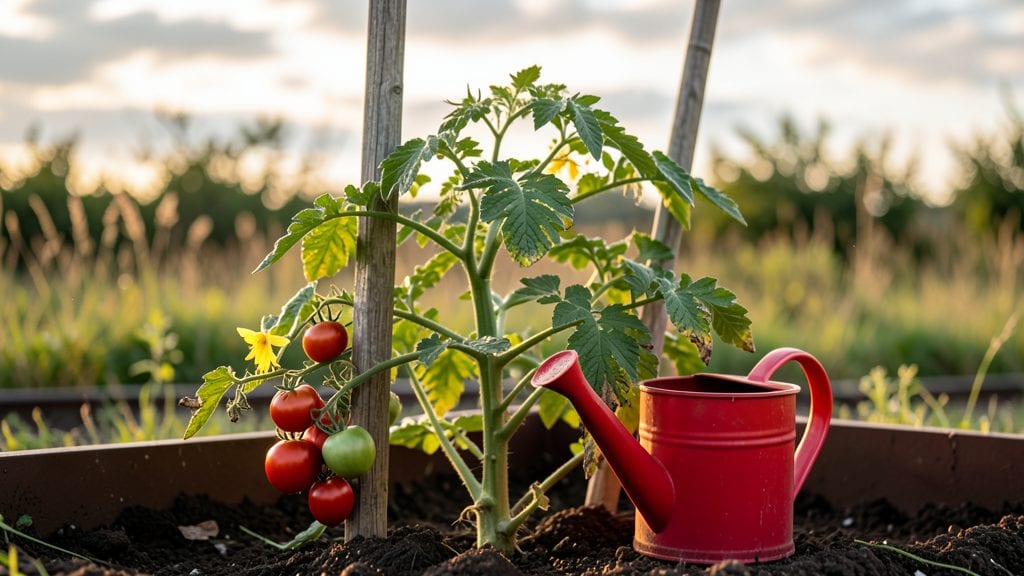
Overwatering tomato plants turns your garden into a swamp before you even notice. 🌱 I’ve seen healthy, vibrant plants go from thriving to drooping in days just because the soil stayed soggy too long.
The first sign? Leaves that yellow at the bottom while the plant still looks upright—it’s not drought, it’s drowning.
Most gardeners overwater because they think tomatoes need constant moisture, but roots need air too. Too much water crowds out oxygen, and within days, root rot sets in. The soil might feel damp, but if you stick your finger in and it’s still wet after 24 hours, you’re overdoing it.
Mulching helps, but even then, check the soil before watering—it’s the only way to know for sure.
Fixing it starts with cutting back on water and improving drainage. Let the top inch of soil dry out between waterings, and if your pots or beds don’t drain well, add perlite or compost to loosen the mix.
Within a week, you’ll see new green leaves pushing through, and the plant will bounce back—if you catch it early enough.
Prevention is easier than recovery. A moisture meter takes the guesswork out of it, and watering in the morning gives plants time to dry out. Once you adjust, your tomatoes will reward you with stronger stems, bigger fruit, and fewer surprises. Trust the soil, not the schedule.
Common Causes Of Overwatering
Overwatering tomato plants is a classic gardening mistake—one that can quickly turn your lush green vines into a sad, soggy mess. 🌱💦 But why does it happen so often? The truth is, there are several key factors at play, often tied to well-intentioned (but misguided) gardening habits.
Let’s break down the science and the sneaky reasons your tomatoes might be getting too much love—literally.
Tomatoes thrive in well-draining soil, but if your garden beds or containers are packed with heavy clay, compacted dirt, or lack organic matter, water pools around the roots instead of draining away. Here’s what’s happening:
- Root suffocation: When soil stays waterlogged, oxygen can’t reach the roots, forcing them to "drown" in anaerobic conditions. This triggers root rot, a fungal infection that cuts off nutrient uptake.
- Nutrient leaching: Excess water washes away essential nutrients like nitrogen, potassium, and phosphorus—even if you’re fertilizing regularly.
- pH imbalance: Soggy soil can alter pH levels, making nutrients less available to plants. Tomatoes prefer a slightly acidic pH (6.2–6.8); overwatering can push it toward neutral or alkaline, locking out key minerals.
Pro tip: Test your soil’s drainage by digging a 6-inch hole, filling it with water, and timing how long it takes to drain. If it’s slower than 4 hours, amend with compost, perlite, or coarse sand to improve airflow. 💡
Tomatoes hate moisture swings. Skipping water for days then drowning them in a single session confuses their root systems and encourages shallow growth. Here’s the science:
- Surface roots: When soil dries out, tomato roots grow closer to the surface to seek moisture. These shallow roots are highly sensitive to overwatering because they’re not anchored deep enough to stabilize the plant.
- Osmotic stress: Rapid water changes cause roots to absorb too much at once, diluting the soil’s nutrient concentration around them. This leads to nutrient burn, where roots effectively "poison" themselves with imbalanced salts.
- Fungal blooms: Wet foliage from overhead watering creates the perfect humid environment for Blight and Powdery Mildew, which thrive in stagnant moisture.
Fix it: Water deeply but infrequently—aim for 1–1.5 inches per week (including rain) and use a soaker hose or drip irrigation to deliver water at the base, not the leaves. 🌡️
If you’re growing tomatoes in containers, the problem might be the pot itself. Many gardeners assume bigger = better, but the wrong container can turn your watering routine into a disaster.
| Issue | Why It Causes Overwatering |
|---|---|
| No drainage holes | Water sits at the bottom, creating a permanent soggy zone where roots rot. Even "self-watering" pots can fail if not monitored. |
| Too small for the plant | Roots become root-bound, circling the pot and starving for oxygen. When you water, the compacted soil can’t absorb excess, leading to runoff. |
| Cheap, non-breathable materials | Plastic or glazed ceramic pots retain moisture longer than fabric or terracotta, which allows evaporation. This tricks you into thinking the plant needs more water. |
Solution: Choose pots with multiple drainage holes and a minimum size of 5+ gallons for dwarf varieties or 15+ gallons for indeterminate tomatoes. Elevate pots on feet or saucers to prevent water from pooling underneath. ✨
Even the most experienced gardeners fall into the "more water = better" trap when humidity or rain is already high. Here’s how weather plays a role:
- High humidity: Air saturated with moisture slows evaporation, making soil stay damp longer than it appears. A hygrometer can help track humidity—aim for 40–70% for tomato health.
- Recent rain: Many gardeners overcompensate after a downpour, not realizing tomatoes can survive short dry spells (they’re drought-tolerant once established!).
- Cloud cover: Shady or overcast days reduce evaporation, so soil stays moist longer. Adjust watering by half on gloomy days.
Action step: Check soil moisture with your finger—stick it 2 inches deep. If it’s damp, wait. If it’s dry, water thoroughly. Use a moisture meter for precision. 🎯
Overwatering often stems from good intentions gone wrong—but now that you know the science, you can tweak your routine to give your tomatoes the perfect balance of hydration. Next up: how to spot the signs before it’s too late! 🚨
Fixing Overwatered Tomato Plants
Now that you’ve spotted the signs of overwatering, it’s time to take action before your tomato plants throw in the towel. The good news? With the right steps, you can nurse them back to health and prevent future soggy soil disasters.
Here’s how to tackle the problem, cause by cause, with practical fixes and prevention tips to keep your plants thriving.
Cause: Compacted, waterlogged soil cuts off oxygen to roots, leading to rot or fungal infections.
How to Fix It:
- 🔥 Pause Watering Immediately Let the top 1–2 inches of soil dry out completely before watering again. Stick your finger in the soil—if it’s damp past your first knuckle, wait another day.
- 🍳 Loosen the Soil Gently Use a fork or trowel to aerate the soil around the base of the plant (avoid stabbing roots). This helps water drain faster and oxygen reach the roots. Pro tip: If your soil is clay-heavy, mix in compost or perlite to improve drainage.
- 👨🍳 Elevate the Plant (If Needed) For container-grown tomatoes, lift the pot slightly off the ground or place it on a drip tray with pebbles to encourage airflow underneath.
- ⏰ Monitor for 3–5 Days Resume watering only when the soil feels dry to the touch. Overcompensating with deep watering can worsen root stress.
Prevention:
- 💡 Use raised beds or containers with drainage holes.
- 🌡️ Water deeply but infrequently—aim for 1–1.5 inches per week, adjusting for rain.
- ✨ Test your soil’s drainage by filling a hole near the plant with water. If it doesn’t drain within 30 minutes, amend the soil.
Cause: Overwatering leaches calcium from the soil, causing those telltale black, sunken spots on fruit.
How to Fix It:
- 🔪 Trim Affected Fruit Remove severely damaged tomatoes to redirect the plant’s energy to healthier growth.
- 🥘 Boost Calcium Quickly
- Spray leaves with a calcium solution (1 tbsp calcium chloride or crushed eggshells per gallon of water) every 3–4 days.
- 💡 Soil remedy: Work 2–3 tbsp of crushed eggshells or bone meal into the top 2 inches of soil around the plant.
- 🎯 Adjust Watering Habits Water consistently—avoid alternating between drought and deluge. Mulch with straw or wood chips to keep moisture levels stable.
Prevention:
- 📊 Maintain pH balance (6.0–6.8) with a soil test kit.
- 💪 Use a balanced fertilizer (10-10-10) every 2–3 weeks during fruiting.
- 🥗 Avoid heavy nitrogen (like fresh manure), which can worsen calcium leaching.
Cause: Excess moisture creates the perfect breeding ground for early blight, late blight, or powdery mildew.
How to Fix It:
- 🌡️ Prune for Airflow Remove lower leaves touching the soil and thin crowded foliage to improve circulation. Pro tip: Sanitize pruners with rubbing alcohol between cuts.
- 🔥 Fungal Sprays
- Baking soda spray: Mix 1 tbsp baking soda + 1 tsp dish soap + 1 gallon water. Spray every 7–10 days.
- Copper fungicide (like Bordeaux mixture) for severe cases—follow label instructions.
- 👨🍳 Water at the Base Avoid overhead watering; use a soaker hose or drip irrigation to keep leaves dry.
Prevention:
- ✨ Space plants 18–24 inches apart for airflow.
- 🌱 Rotate crops—don’t plant tomatoes in the same spot yearly.
- 🔥 Remove infected leaves immediately and dispose of them in the trash (not compost).
Cause: If roots are black, mushy, or smell foul, root rot has set in. Act fast!
How to Fix It:
- 🔪 Trim Damaged Roots Gently remove the plant, rinse the roots, and snip off any black/mushy sections with sterilized scissors.
- 🍳 Repot in Fresh Soil
- Use a well-draining potting mix (50% potting soil + 50% perlite/pumice).
- Add 1 tbsp hydrogen peroxide (3%) per gallon of water to the mix to fight fungus.
- 👨🍳 Adjust Care
- No watering for 3–5 days to let roots recover.
- 🌡️ Move to shade for a week to reduce stress.
Prevention:
- 💡 Use containers with drainage holes—never let plants sit in saucers of water.
- 🎯 Avoid watering on a schedule—check soil moisture daily.
Once your tomatoes are back on track, prevent future overwatering with these habits:
- 📊 Test soil moisture with a moisture meter or your finger (1–2 inches deep).
- 💪 Mulch heavily (3–4 inches) with straw or wood chips to retain moisture without drowning roots.
- 🌱 Choose drought-tolerant varieties like ‘Solar Fire’ or ‘Heatmaster’ if your climate is unpredictable.
Remember: Tomatoes are resilient! With these fixes, your plants should bounce back in 1–2 weeks. Keep an eye on them, adjust as needed, and soon you’ll be harvesting plump, juicy tomatoes instead of sad, wilted leaves. 🍅💦
Frequently asked questions
Why do my tomato leaves turn yellow from the bottom up when I water them?
Yellowing bottom leaves are a classic sign of overwatering. When soil stays too wet, roots suffocate from lack of oxygen, preventing nutrient uptake. This often starts with older leaves turning yellow while the plant still looks upright—it’s not thirsty, it’s drowning. Check soil moisture 2 inches deep before watering again.
How often should I water tomato plants to avoid overwatering?
Tomatoes need 1–1.5 inches of water per week (including rain), but timing matters more than frequency. Water deeply 2–3 times per week in hot weather, then reduce to once every 5–7 days in cooler months. Always let the top inch of soil dry out between waterings to prevent soggy roots.
Can I save a tomato plant with root rot from overwatering?
Yes, but act fast! Trim away black/mushy roots, repot in fresh, well-draining soil (mix potting soil with perlite), and withhold water for 3–5 days to let roots recover. Move the plant to shade and avoid overhead watering. With proper care, new growth should appear within 1–2 weeks.
What’s the best way to test if my tomato soil is too wet?
Use the finger test: Stick your index finger 2 inches deep into the soil. If it feels damp, wait another day. For containers, lift the pot—if it’s heavy with moisture, hold off on watering. A moisture meter ($10–$20) takes the guesswork out of it.
Will mulch help prevent overwatering in my tomato garden?
Mulch helps regulate moisture but won’t prevent overwatering alone. Use straw or wood chips (3–4 inches thick) to slow evaporation and keep roots cool. However, always check soil moisture before watering—mulch can trick you into thinking the soil is drier than it is.