Watering
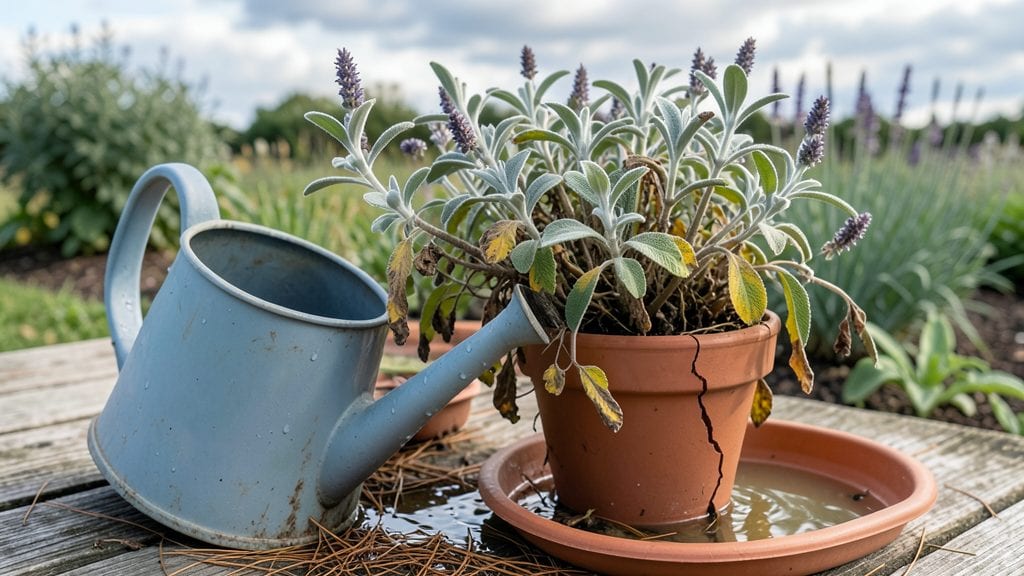
When your sage plant’s leaves turn yellow and droop, it’s a classic sign of overwatering—but here’s the good news: it’s fixable. I’ve nursed back more than a few soggy sage plants by adjusting watering habits and giving roots room to breathe.
The key is acting fast before root rot sets in.
First, stop watering entirely until the top 2 inches of soil feel dry to the touch. Sage thrives on neglect, not coddling—most people drown it by keeping soil too moist.
If the roots smell foul or look mushy, trim away the damaged parts and repot in fresh, well-draining soil mixed with perlite. This alone can turn a dying plant around in just a few weeks.
You’ll see new growth within 10-14 days if you’ve caught it early, with leaves regaining their deep green color and crisp texture. The secret is patience: sage recovers faster when you let it dry out completely between waterings.
Once it’s back on track, keep it in a pot with drainage holes and water only when the soil is bone-dry.
This method works for potted sage, whether it’s on your kitchen windowsill or patio. The same principles apply to other drought-tolerant herbs like rosemary and thyme. Let’s get that plant back to its vibrant self!
What Triggers Excess Moisture
An overwatered sage plant doesn’t happen by accident—it’s usually the result of well-intentioned but misguided care. Understanding the root causes (literally and figuratively) will help you adjust your routine and save your plant from soggy soil syndrome.
Let’s break down the most common reasons why sage plants drown in their own pots.
Sage (Salvia officinalis) is a drought-tolerant herb native to the Mediterranean, where it thrives in dry, rocky conditions. Yet, many gardeners fall into the trap of watering on a schedule rather than checking the plant’s actual needs. Here’s why this backfires:
- Overzealous routines: Watering every few days—even if the soil isn’t dry—leads to permanent sogginess. Sage roots need well-draining soil and time to dry out between waterings. If the top 1–2 inches of soil are still moist, hold off!
- Ignoring seasonal shifts: In cooler months, sage grows slower and needs far less water. Many gardeners keep summer watering habits year-round, assuming the plant’s thirst doesn’t change. Pro tip: Reduce watering by half in fall/winter unless your sage is in a high-heat location.
- Mistaking thirst for wilting: Sage often drops leaves when underwatered, but overwatering causes yellowing, mushy stems, and a foul odor. Confusing these signs leads to compounding the problem.
If your sage’s pot lacks drainage holes or uses heavy, water-retentive soil, excess moisture has nowhere to go. Here’s the science behind the struggle:
- Compacted or clay-heavy soil: Sage roots suffocate in dense soils that trap water. The plant’s fibrous roots need oxygen to function, but waterlogged soil displaces air, leading to root rot (a fungal infection caused by Pythium or Phytophthora).
- No escape for excess water: Pots without drainage holes act like mini bathtubs, forcing water to pool at the bottom. Even if you water lightly, the soil stays saturated for days, creating the perfect conditions for anaerobic bacteria to thrive.
- Overpotting without adjustments: Larger pots hold more water, which evaporates slower. If you repot sage into a bigger container without reducing watering frequency, the roots drown in their own space.
Quick fix: If your pot lacks drainage, add a layer of pebbles or broken pottery at the bottom before repotting with a well-draining mix (e.g., 60% potting soil + 30% perlite + 10% sand).
Sage plants are not tropical—they despise humidity and stagnant air. When environmental conditions clash with their natural preferences, overwatering becomes inevitable. Here’s how:
- High humidity + poor airflow: In humid climates (or homes with poor ventilation), moisture lingers in the air and soil. Sage leaves transpire less efficiently (release water vapor), so the plant retains excess water longer. Solution: Place sage near a fan or open window to improve airflow.
- Cold temperatures + wet soil: Chilly weather slows evaporation, keeping soil damp for extended periods. Combine this with overwatering, and you’ve created a recipe for root rot. Adjustment: Move potted sage to a sheltered, sunny spot in winter.
- Indoor lighting tricks: North-facing windows or artificial grow lights with low intensity reduce the plant’s ability to photosynthesize and regulate moisture. Weaker plants can’t handle water stress, making them more susceptible to overwatering damage.
Not all soils are created equal—and neither are fertilizers. Sage is fussy about its growing medium, and feeding it incorrectly can lead to waterlogged roots. Here’s how:
- Heavy or organic-rich soil: Compost-heavy or garden soil retains moisture like a sponge, choking sage roots. Sage prefers lean, mineral-rich soil that drains quickly. Swap for: A cactus/succulent mix or a blend with coarse sand.
- Over-fertilizing with nitrogen: Too much nitrogen (common in balanced fertilizers) promotes lush, soft growth—which holds more water. Sage is a perennial herb, not a fast-growing annual, so it doesn’t need frequent feeding. Fix: Use a low-nitrogen, high-phosphorus fertilizer (like 5-10-10) once in early spring.
- Fresh mulch or compost piles: Adding thick layers of mulch or compost traps moisture against the soil surface, creating a greenhouse effect. Sage hates soggy bases, so keep mulch light and away from the stem.
💡 Pro Tip: If you’re unsure whether your sage is overwatered, do the "finger test"—stick your index finger 1–2 inches into the soil. If it feels damp, wait. If it’s dry at 1 inch but wet below, your plant is thirsty for air, not water.
Revive Your Dying Sage Plant
If your sage plant is looking sad with droopy, yellowing leaves, don’t panic—it’s likely just overwatered. The good news? With the right care, you can nurse it back to health in no time.
Below, we’ll break down the most common causes of an overwatered sage plant and provide practical, step-by-step solutions to get it thriving again. Plus, we’ll share prevention tips to keep your sage happy long-term!
Yellow leaves are a classic sign of overwatering. Sage plants hate soggy roots, and excess moisture cuts off oxygen, leading to root rot and nutrient deficiencies.
🍳 Step 1: Stop Watering Immediately
- Why? Sage plants prefer dry soil between waterings.
Overwatering suffocates roots and invites fungal diseases. - How? - Pause watering for 3–5 days to let the soil dry out. - If the soil feels damp just below the surface, wait longer—sage can handle drought better than soggy conditions.
👨🍳 Step 2: Check the Soil Moisture
- Why? Some soils hold moisture longer than others.
Clay or peat-based mixes stay wet for days, while sandy soil dries quickly. - How? - Stick your finger 1–2 inches deep into the soil. - If it’s moist, hold off on watering. If it’s bone-dry, your plant may just need a light drink next time.
🥘 Step 3: Repot in Well-Draining Soil (If Needed)
- Why? If your sage has been in the same pot for months, the soil may have compacted or lost its structure, trapping excess water.
- How?
- Gently remove the plant and inspect the roots.
If they look mushy or black, trim the damaged parts with sterilized scissors. - Repot in a terracotta or ceramic pot (they dry faster than plastic) with a mix of: - 60% cactus/succulent soil - 30% perlite or pumice (for drainage) - 10% sand or coarse grit
Droopy leaves usually mean the roots are struggling—either from overwatering or compacted soil. Here’s how to perk it up.
🔪 Step 1: Prune Damaged Foliage
- Why? Removing dead or mushy leaves helps the plant focus energy on recovery.
- How?
- Snip off any yellow, brown, or black leaves at the base with clean pruners.
- Avoid cutting into green but wilted stems—these may recover.
⏰ Step 2: Adjust Your Watering Schedule
- Why? Sage thrives on infrequent, deep watering rather than light, frequent drinks.
- How?
- Water only when the top 2–3 inches of soil are completely dry.
- In summer, this might mean every 7–10 days.
In winter, every 3–4 weeks (or less). - Pro Tip: 💡 Use the “finger test”—stick your finger in the soil before watering. If it’s dry, water; if it’s damp, wait.
🌡️ Step 4: Improve Airflow & Light
- Why? Stagnant air and low light slow recovery by promoting fungal growth.
- How?
- Move your sage to a bright, sunny spot (at least 6 hours of direct sunlight daily).
- If indoors, place it near a south- or west-facing window.
- Increase airflow by:
- Moving it away from walls or other plants.
- Using a small fan (on low) for 10–15 minutes daily to mimic outdoor breezes.
Once your sage is back in shape, keep it healthy with these long-term strategies.
🎯 Tip 1: Choose the Right Pot
- Why? The wrong container traps moisture, leading to root rot.
- How?
- Use pots with drainage holes (non-negotiable!).
- Opt for terracotta or ceramic—they dry faster than plastic.
- Size matters: A pot 1–2 inches larger than the root ball is ideal.
✨ Tip 2: Water at the Right Time
- Why? Morning watering gives leaves time to dry, reducing fungal risks.
- How?
- Water early in the day (between 7–9 AM).
- Avoid evening watering, as damp foliage overnight invites powdery mildew.
💡 Tip 3: Monitor Soil Health
- Why? Over time, soil compacts and loses drainage.
- How?
- Refresh the top 1–2 inches of soil every 3–6 months with a mix of:
- 50% fresh cactus/succulent soil
- 30% perlite
- 20% coarse sand
- Bonus: 🌱 Add a thin layer of gravel on top to slow evaporation and improve drainage.
- Refresh the top 1–2 inches of soil every 3–6 months with a mix of:
🚫 Tip 4: Avoid Common Mistakes
- ❌ Mistaking thirst for wilting – Sage often wilts when underwatered, not overwatered. Check soil first!
- ❌ Using a spray bottle – Sage hates humidity on its leaves.
Water at the base only. - ❌ Fertilizing a stressed plant – Wait until new growth appears before adding nutrients.
With these fixes, your sage should bounce back in 2–4 weeks. Remember, sage is a drought-tolerant herb—it’s better to underwater slightly than to drown it. Once revived, enjoy its fragrant leaves for cooking or garnishing!
Frequently asked questions
How can I tell if my sage plant is overwatered vs. underwatered?
Check the leaves and soil: overwatered sage has yellowing leaves, mushy stems, and soil that stays damp for days. Underwatered sage wilts with brown, crispy edges and dry soil. Stick your finger 1-2 inches deep—if it's moist, you're overwatering; if bone-dry, it needs hydration.
Can I save my sage plant if the roots are already rotting?
Yes, but act fast! Trim away all mushy, black roots with sterilized scissors, then repot in fresh, well-draining soil with perlite. Water lightly only when the top 2 inches are completely dry. With proper care, new roots should form within 2-3 weeks.
Why does my sage plant keep getting overwatered even when I think I'm being careful?
Common culprits: no drainage holes in the pot, heavy soil that retains moisture, or watering on a schedule instead of checking soil moisture. Sage thrives in dry conditions—use terracotta pots, mix in perlite, and water only when the soil is completely dry.
How often should I water my sage plant after it recovers?
Once revived, water your sage every 7-10 days in summer and every 3-4 weeks in winter. Always check the top 2 inches of soil first—water only when it's bone-dry. Morning watering prevents fungal issues from overnight dampness.
Can I use my overwatered sage leaves for cooking?
Only if they're green and firm—avoid yellow, mushy, or blackened leaves. Trim healthy leaves from the top and use them as usual. Overwatered leaves lose flavor and may taste bitter. Once your plant recovers, you'll get back that classic sage aroma!