Watering
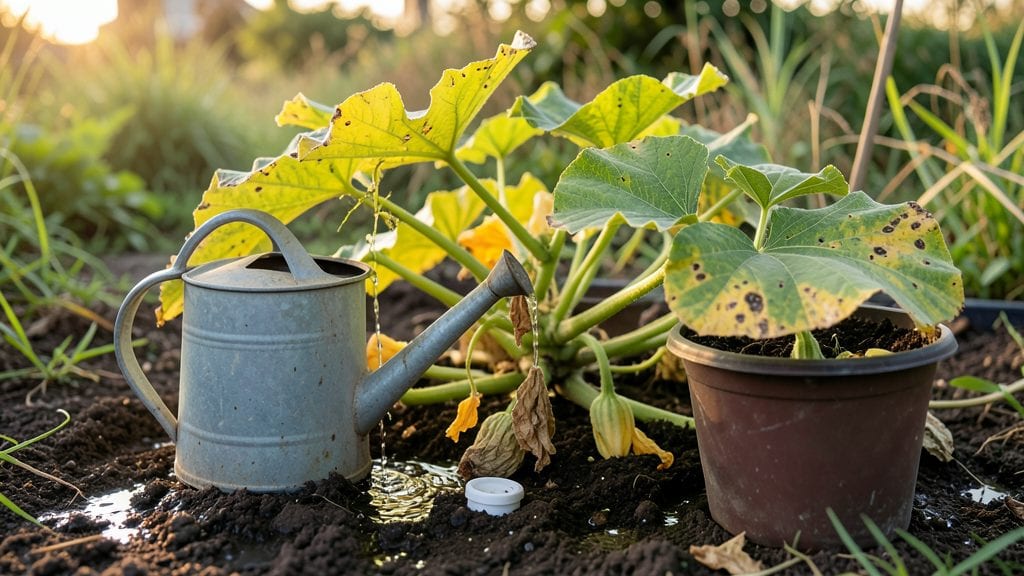
When your squash plants look more like soggy sponges than thriving vines, you're dealing with overwatering—and it’s fixable. 🌱 I’ve nursed back plants that seemed hopeless, and the key starts with stopping the water first.
The moment you notice yellowing leaves or stems that feel mushy to the touch, that’s your plant screaming for help.
Most gardeners overdo it because squash plants do need moisture, but soggy soil smothers roots and invites fungal diseases like powdery mildew. The fix?
Let the top 2 inches of soil dry out completely between waterings, and if your garden beds lack drainage, add a 2-inch layer of compost or coarse sand to improve airflow. Prune any blackened or mushy leaves immediately—they’re just slowing recovery.
Within a week of proper care, you’ll see new green growth pushing through, and your plants will start focusing energy on fruit instead of fighting rot. The real win? You’ll train yourself to water only when the soil is dry, not on a schedule.
That’s how you go from nearly losing your harvest to enjoying plump, healthy squash all season.
This works for both bush and vining varieties, whether you’re growing zucchini, pumpkins, or winter squash. The only thing that changes is how much space you give them to dry out—bush types recover faster in smaller containers. Let’s turn that soggy mess into a comeback story.
The Hidden Triggers Behind Soggy Squash
When your squash plants start looking more like soggy sponges than thriving vines, the culprit is often overwatering—but it’s rarely just about the amount of water. Instead, a mix of environmental, soil, and even human factors conspire to drown your plants.
Understanding these triggers is the first step to saving your harvest. Let’s break it down.
Squash plants thrive in well-draining soil, but if your garden beds or containers lack proper drainage, water pools around the roots instead of draining away. This creates anaerobic conditions—where oxygen is scarce—causing root rot and fungal infections like Phytophthora.
Even if you water lightly, compacted or clay-heavy soil can trap moisture like a sponge, suffocating roots.
💡 Why it matters: Roots need oxygen to absorb nutrients. Without it, they weaken, and the plant can’t support vines or fruit.
Watering squash plants on a strict schedule—especially without checking soil moisture—is a fast track to overwatering. These plants prefer consistent moisture but hate soggy feet. If you water every day (or even every other day in hot climates), you risk saturating the soil, preventing roots from breathing.
📊 Science check: Squash plants typically need 1–1.5 inches of water per week, delivered deeply but infrequently. Shallow, frequent watering mimics a rainstorm and keeps the topsoil damp longer than necessary.
Squash plants are sensitive to humidity. In hot, muggy conditions (like summer afternoons or tropical climates), excess moisture lingers in the air and soil, slowing evaporation.
Combine that with regular watering, and you’ve got a recipe for fungal diseases like downy mildew or powdery mildew, which thrive in damp environments.
⚠️ Watch for: Yellowing leaves, white powdery spots, or wilting despite wet soil—all signs your plants are drowning in humidity.
If you’re growing squash in pots, drainage holes alone aren’t enough. Without a caching layer (like gravel or perlite at the bottom), water collects at the root zone, leading to rot. Even "self-watering" containers can trap excess moisture if not monitored.
🔧 Fix it fast: Ensure pots have multiple drainage holes and use a lightweight potting mix with 30–40% perlite or vermiculite to improve airflow.
Watering from above (like with a hose or sprinkler) does more than wet the soil—it spreads fungal spores across leaves and stems. When combined with poor drainage, this creates the perfect storm: leaf spot diseases take hold, and roots suffocate from saturated soil.
🌧️ Better method: Use drip irrigation or soaker hoses to deliver water directly to the soil, keeping foliage dry.
Heavy foot traffic, machinery, or natural soil composition can compact the root zone, reducing porosity. Compacted soil repels water at first but then holds it like a brick, preventing roots from accessing oxygen. This is especially common in clay or silt-heavy soils.
🔥 Test your soil: Dig a 6-inch hole—if water pools instead of draining within 30 minutes, your soil is too dense.
Mulch isn’t just for weeds—it’s a moisture regulator. Without it, soil dries out too quickly (leading to overwatering) or stays too wet (leading to rot). Organic mulch (like straw or wood chips) helps balance moisture levels while improving soil structure over time.
🌿 Pro tip: Apply 2–3 inches of mulch around squash plants, keeping it 2 inches away from the stem to prevent rot.
Revive Your Squash Plants Now
If your squash plants are drowning in excess moisture, don’t panic—there’s still hope! The key is acting fast to drain the soil, improve airflow, and adjust your watering habits. Below, we’ve broken down the most common causes of overwatering and matched them with simple, effective fixes.
Follow these steps to nurse your plants back to health and prevent future waterlogging.
Signs: Yellowing leaves, mushy stems, or soil that stays soggy for days.
Overwatering suffocates roots by cutting off oxygen, leading to rot and disease. Here’s how to fix it:
🔥 Step 1: Stop Watering Immediately
- Why? More water = more drowning. Let the soil dry out before taking further action.
- How? Pause all irrigation (including rainwater if possible) for 2–3 days. If the ground is still saturated, extend this to a week.
🍳 Step 2: Improve Drainage Fast
- Dig deeper: Use a trowel or garden fork to loosen compacted soil around the base of the plant. This helps water drain away from roots.
- Add organic matter: Mix in compost or coconut coir to break up heavy clay soil.
Aim for a 2–3 inch layer around the plant’s drip line (where water naturally falls). - Raise the bed (if needed): For containers or heavily waterlogged spots, elevate the plant slightly with a shovel or bricks to encourage runoff.
👨🍳 Step 3: Prune Damaged Foliage
- Snip away: Remove yellow, wilted, or blackened leaves with clean scissors. This reduces stress on the plant and prevents fungal spread.
- Focus on healthy growth: Trim only the affected areas—never cut more than 20% of the plant at once.
🥘 Step 4: Boost Air Circulation
- Space plants out: If your squash is crowded, thin out nearby plants to allow airflow.
Good circulation = faster drying. - Use a fan (optional): Place a small oscillating fan on low near the plant for 1–2 hours daily to speed up evaporation.
Signs: Water pools on top, roots appear black or slimy, or the soil smells foul.
Heavy, clay-like soil traps moisture like a sponge. To fix it:
💡 Pro Tip: The "Squeeze Test"
- Grab a handful of soil. If it holds its shape when squeezed, it’s too dense. If it crumbles easily, drainage is likely good.
✨ Fix It:
- Amend the soil: Work in perlite, vermiculite, or sand (coarse, not fine) to create air pockets. Aim for 10–20% amendment by volume.
- Mulch properly: Use straw or shredded leaves (not wood chips) to cover the soil.
This keeps moisture from evaporating too quickly but also prevents compaction. - Avoid heavy fertilizers: High nitrogen can encourage leafy (but weak) growth, making plants more susceptible to rot. Switch to a balanced 10-10-10 or low-nitrogen fertilizer until the plant recovers.
Signs: Water sits in the saucer for hours, roots grow out of drainage holes, or the plant tips over easily.
Containers are notorious for overwatering if they lack escape routes. Here’s how to correct it:
🔪 Step 1: Check the Drainage Holes
- Are they clogged? Poke a skewer through the holes to clear debris. If the pot has none, drill 3–4 holes in the bottom.
- Elevate the pot: Place it on feet or a wire rack to prevent water from pooling underneath.
🏗️ Step 2: Repot if Necessary
- Upgrade the container: If the pot is small or lacks depth, move the plant to a larger one with drainage.
Choose fabric grow bags or terracotta for better airflow. - Refresh the soil: Remove the old soil (especially if it’s waterlogged) and replace it with a well-draining potting mix (look for labels like "fast-draining" or "container blend").
⏰ Step 3: Adjust Your Watering Routine
- Water only when the top 1–2 inches of soil are dry. Stick your finger in—if it’s damp, wait.
- Bottom-watering trick: Place the pot in a tray of water for 10–15 minutes, then drain.
This encourages roots to grow downward and reduces surface moisture.
Once your squash plants are back on track, follow these habits to avoid future overwatering:
- 📊 Water deeply but infrequently: Squash plants prefer 1–1.5 inches of water per week, delivered in long, slow sessions (early morning is best). - 💪 Use a moisture meter: These $10 tools tell you exactly when to water—no guesswork. - 🥗 Choose the right varieties: Some squash (like butternut or acorn) tolerate moisture better than others.
Opt for drought-resistant hybrids if your soil stays wet. - 🎯 Monitor weather forecasts: Skip watering if rain is predicted. Use a clear plastic cover to shield plants temporarily if needed.
With these fixes, your squash plants should bounce back in 7–14 days, depending on the damage. Keep an eye on new growth, and soon you’ll be harvesting plump, healthy fruits instead of sad, soggy leaves. 🎉
Frequently asked questions
Why do my squash leaves turn yellow when I water them regularly?
Yellowing leaves often signal root suffocation from excess moisture. Squash plants need well-draining soil—when roots sit in soggy conditions, they can't absorb oxygen, leading to nutrient starvation. Check if the soil stays wet for more than 24 hours after watering, and consider amending with compost or perlite to improve drainage.
Can I still save my squash plant if the stem feels mushy?
Yes, but act fast! A mushy stem means root rot has likely set in. Stop watering immediately, trim away any blackened or mushy growth with clean scissors, and repot in fresh, well-draining soil. If the rot is severe (stem hollow or smelly), the plant may not recover—but try it anyway, as squash vines are resilient.
How often should I water squash plants to avoid overwatering?
Squash plants thrive on 1–1.5 inches of water per week, delivered deeply but infrequently. Instead of daily light watering, aim for long, slow sessions early in the morning. Stick your finger 2 inches deep—if the soil feels dry, it’s time to water. Mulching with straw helps regulate moisture levels.
What’s the difference between overwatering and underwatering in squash?
Overwatered squash shows yellowing leaves, mushy stems, and fungal spots, while underwatered plants have crispy edges, wilting, and dry soil. The key difference? Overwatered plants stay soggy, while underwatered ones feel bone-dry. Always check the soil moisture before deciding—if it’s damp, hold off on watering.
Will overwatered squash still produce fruit?
If the roots are severely damaged, the plant may focus energy on recovery instead of fruiting. However, if you catch overwatering early and revive the plant, it can still produce smaller yields. Prioritize fixing drainage and pruning damaged foliage—healthy roots mean better fruit production down the line.