
Watering
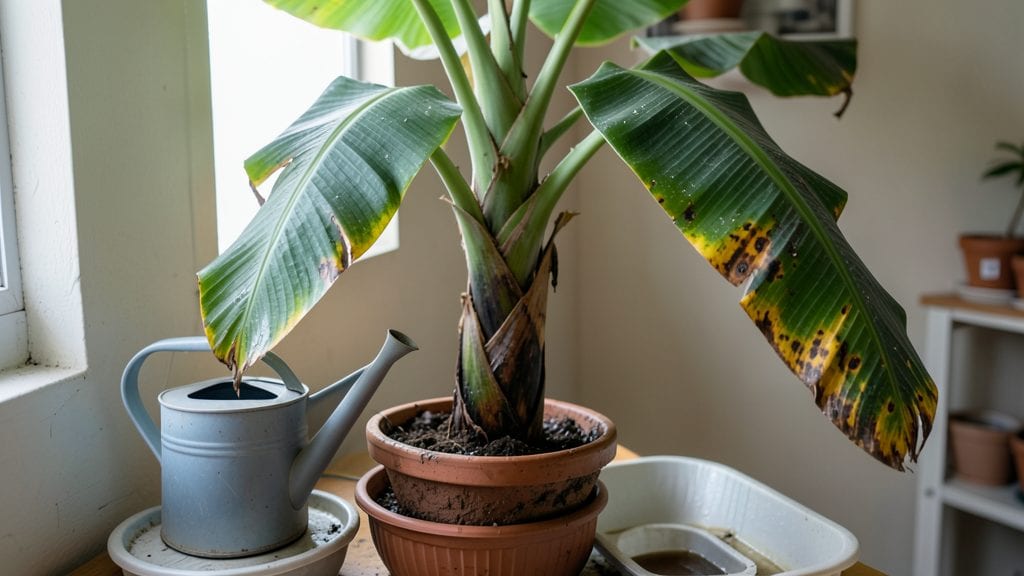
If your banana plant’s yellowing leaves and mushy stems are a sign of overwatering, that soggy soil is silently suffocating its roots—and the fix starts with cutting back now. before root rot takes over. The good news? Banana plants are tough once you get the watering right.
First, stop watering entirely for 3-5 days to let the roots dry out. Then, check the pot—if it has no drainage holes, upgrade immediately. Banana plants need well-draining soil (think 60% potting mix, 40% perlite or orchid bark) and water only when the top 2 inches feel bone-dry.
Overwatering happens fast in heavy clay pots or when gardeners treat them like houseplants.
You’ll see improvement in 7-10 days if the roots aren’t completely rotted: new growth emerges, leaves firm up, and that musty smell fades. For severe cases, trim away black, mushy roots and repot in fresh mix.
The key? Less water, more airflow—banana plants mimic tropical conditions where heavy rains are followed by dry spells.
Prevention is easier than recovery: water once a week in summer (more in heatwaves), use a pot at least 18 inches wide, and never let it sit in saucers of water. Your plant will bounce back—and next season, you’ll spot the signs before they spiral. Let’s turn this around.
Root Issues Behind Overwatering
Banana plants may seem resilient, but they’re actually quite sensitive to excess moisture—especially when it comes to their roots. When water accumulates faster than the soil can drain, a cascade of problems begins, often leading to yellowing leaves, mushy stems, and even plant death.
Understanding the root causes (literally!) helps you prevent these issues before they spiral out of control.
Banana plants thrive in well-draining, slightly acidic soil (pH 5.5–7.5). If your soil is heavy with clay, compacted, or lacks organic matter, water pools around the roots instead of draining away.
This creates an anaerobic (low-oxygen) environment, where beneficial microbes suffocate and harmful pathogens like Pythium and Phytophthora flourish.
- 🔍 Signs: Soil stays soggy for days, leaves yellow from the bottom up, and roots appear black/mushy when inspected.
- 💡 Fix: Amend soil with perlite, sand, or coconut coir (20–30% mix) to improve aeration. For container plants, use pots with drainage holes and elevate them on saucers.
Banana plants are tropical but not aquatic. Many gardeners assume "more water = happier plant," but banana roots are shallow and fibrous, meaning they dry out quickly in well-draining soil.
Overwatering—whether from frequent deep waterings, automatic sprinklers, or sitting in saucers of water—forces roots to sit in excess moisture, leading to:
- 🌡️ Root Rot: Fungal/bacterial infections break down cell walls, causing roots to slough off like overcooked pasta.
- 🍃 Nutrient Starvation: Waterlogged soil leaches away nitrogen and potassium, essential for leaf health.
- 🔥 Oxygen Deprivation: Roots suffocate, triggering ethylene gas production (a stress hormone that accelerates leaf yellowing).
💡 Pro Tip: Stick your finger 2–3 inches into the soil. If it’s damp, wait. Banana plants prefer consistently moist (not soggy) soil. In containers, water only when the top 1–2 inches dry out.
Potted banana plants are especially vulnerable because their root systems are confined. Without proper drainage or airflow, water has nowhere to go, creating a perfect petri dish for rot. Key culprits:
| Problem | Why It Happens | Solution |
|---|---|---|
| No Drainage Holes | Water sits at the bottom, drowning roots. | Drill holes in the pot or repot into one with drainage. |
| Small Pot Size | Roots outgrow the container, leading to circling roots that trap moisture. | Upgrade to a pot 12+ inches wide/deep with fresh, airy soil. |
| Saucer Without Dumping | Excess water in saucers seeps back into the soil. | Empty saucers 30 minutes after watering. |
✨ Expert Hack: Use a moisture meter in containers—banana roots prefer 60–70% soil moisture, not 100%. If it reads "wet" for >48 hours, reduce watering immediately.
Banana plants love humidity (60–80%), but too much moisture in the air + poor soil drainage = disaster. Heavy rain, foggy climates, or indoor humidity spikes (like bathrooms) can overwhelm the plant’s ability to transpire, leading to:
- 🍂 Leaf Scorch: Excess humidity slows evaporation, causing chlorosis (yellowing between leaf veins).
- 🍄 Fungal Infections: Sigatoka leaf spot or anthracnose thrive in damp conditions, weakening the plant.
- 🌡️ Temperature Stress: Cool nights (<50°F) + wet soil = root chilling injury, which halts nutrient uptake.
💡 Fix:
- Improve airflow with a fan on low (mimics tropical breezes).
- Water early in the day so leaves dry before nightfall.
- In rainy climates, raise pots off the ground or use a drip irrigation system to control moisture.
Quick Fixes for Soggy Soil
Overwatering can turn your banana plant’s lush green leaves into a sad, yellowing mess—and even worse, invite root rot. But don’t panic! With the right steps, you can revive your plant and keep it thriving.
Here’s how to tackle the problem cause by cause, plus prevention tips to avoid future disasters.
The first rule of fixing overwatered soil? Cut off the water. Keep the plant in its current pot and avoid adding more water until you’ve assessed the damage. Let the top 2–3 inches of soil dry out before even thinking about watering again.
Pro Tip: 💡 If your banana plant is in a container, check the drainage holes. If they’re clogged with soil or debris, root rot will keep spreading. Use a wire or skewer to clear them out.
Root rot is the silent killer of overwatered banana plants. Here’s how to diagnose and treat it:
- Gently remove the plant from its pot and inspect the roots.
- Healthy roots are firm, white, or tan. Rotten roots are mushy, black, brown, or smell foul.
- Trim the bad roots with sterilized scissors or pruners (✂️), cutting away any that look squishy or discolored.
- Dip healthy roots in a fungicide (like copper fungicide or hydrogen peroxide solution) to prevent further infection.
Pro Tip: 🌡️ If you’re unsure whether to cut a root, squeeze it gently. If it oozes or crumbles, it’s rotten—toss it!
Once you’ve trimmed the rot, it’s time to give your banana plant a fresh start in drier, aerated soil. Here’s how:
- Choose a pot with drainage holes (if repotting). Terra cotta is ideal—it breathes better than plastic.
- Use a mix of: - 50% well-draining potting soil - 30% perlite or pumice (for aeration) - 20% compost or worm castings (for nutrients)
- Repot carefully, ensuring the root ball sits slightly above the pot’s rim to prevent water pooling.
- Water lightly only after 2–3 days to let the roots adjust.
Pro Tip: 🎯 If your banana plant is in the ground, consider raising the planting bed by adding gravel or sand to improve drainage. For containers, elevate them on pot feet or bricks to encourage airflow.
Banana plants love moisture but hate soggy feet. Follow this watering guide to keep them happy:
| Season | Watering Frequency | Signs You’re Overdoing It |
|---|---|---|
| Growing Season (Spring–Fall) | Every 1–2 weeks (when top 2" of soil is dry) | Yellow leaves, mushy stems, moldy soil |
| Dormant Season (Winter) | Every 3–4 weeks (let soil dry completely) | Wilting, brown leaf tips, slow growth |
Pro Tip: 🔥 Use your finger to test soil moisture—don’t rely on a schedule. Stick it in 2 inches deep; if it’s damp, wait!
Your banana plant needs a little extra TLC to bounce back:
- Prune yellow leaves (but leave healthy ones—they photosynthesize for energy).
- Fertilize lightly with a balanced, water-soluble fertilizer (like 10-10-10) only after 4–6 weeks of recovery.
- Move to bright, indirect light (banana plants need 6+ hours of sunlight but can scorch in direct midday sun).
- Mist leaves occasionally (but avoid soggy soil—mist in the morning so leaves dry quickly).
Pro Tip: ✨ If your plant is severely stressed, try a foliar spray with seaweed extract or fish emulsion to give it a nutrient boost without overloading the roots.
Once your banana plant is back on track, keep these habits to avoid overwatering again:
- Upgrade your pot to one with multiple drainage holes (or drill them yourself).
- Use moisture meters ($10–$15 at garden stores) to track soil dryness accurately.
- Mulch around the base (with straw or wood chips) to regulate soil moisture—but keep mulch 2–3 inches away from the stem to prevent rot.
- Water deeply but less often—banana plants have shallow, sprawling roots that benefit from infrequent, thorough watering.
- Group plants together (if possible) to create a microclimate with more stable humidity.
With these steps, your banana plant should start showing signs of recovery in 2–4 weeks—think new green leaves and a perkier stance! 🌱 The key is patience and consistency.
Overwatering is fixable, but rushing the process can make things worse. Now, go give your plant some space to breathe!
Frequently asked questions
How can I tell if my banana plant is overwatered?
Look for yellowing leaves starting at the bottom, mushy or black stems, and soil that stays soggy for days. If the roots smell foul or feel mushy when touched, that’s a clear sign of root rot from too much moisture.
Can I save a banana plant with root rot?
Yes, but act fast! Trim away all black/mushy roots with sterilized scissors, repot in fresh, well-draining soil, and avoid watering for 3-5 days. With proper care, new roots will grow in 2-4 weeks.
Why does my banana plant need drainage holes if I water it carefully?
Even with careful watering, excess moisture pools at the pot’s bottom without drainage, suffocating roots. Banana plants hate soggy conditions—drainage holes prevent waterlogging, which leads to rot and stunted growth.
How often should I water a banana plant in winter?
Reduce watering to every 3-4 weeks in winter when growth slows. Let the soil dry completely between waterings—banana plants need less moisture during dormancy. Check soil moisture with your finger before watering.
Is it better to underwater than overwater a banana plant?
Yes! Banana plants tolerate dry spells better than soggy soil. Yellowing from underwatering is temporary, while overwatering causes irreversible root rot. Aim for consistently moist (not wet) soil.