Watering
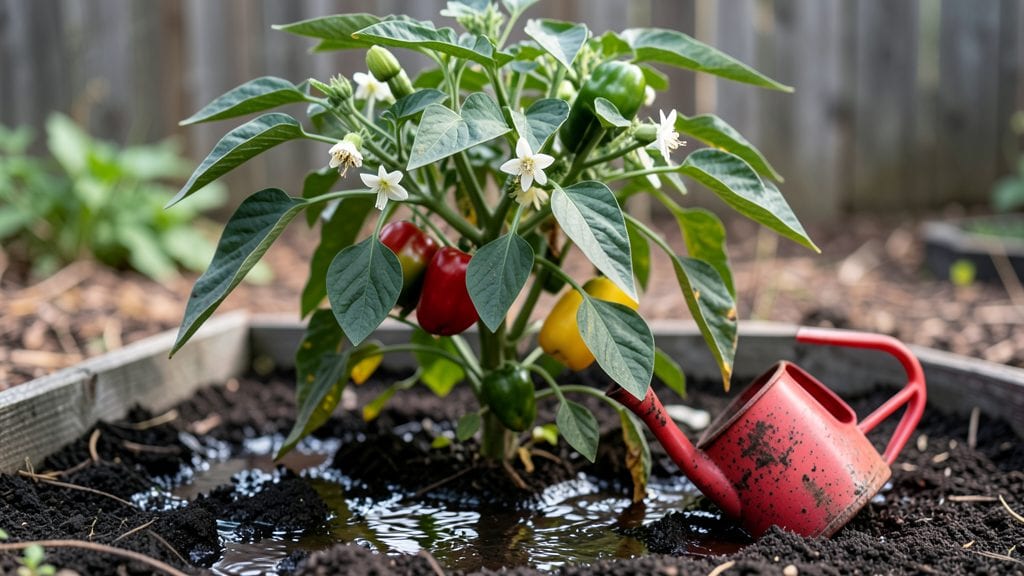
Overwatering pepper plants turns vibrant green leaves into sad, yellowing mush before you even see a single pepper. 🌱 I’ve watched healthy plants drown in their own pots—wilting stems, mushy roots, and that sickly smell that means it’s already too late.
The fix starts with understanding how much water peppers really need (hint: it’s less than you think).
Most people overwater because they assume peppers are thirsty like tomatoes. But peppers hate soggy roots—too much moisture cuts off oxygen, inviting root rot and fungal diseases. Check soil moisture by sticking your finger an inch deep: if it’s damp, wait.
If it’s bone-dry, water deeply but only until water runs out the drainage holes. A 5-gallon pot might need just 1 cup every 3–4 days in summer.
Recovery starts with stopping water entirely for 24 hours to let roots dry. Then, repot in fresh, well-draining soil mixed with perlite or sand. Trim any blackened roots and keep the plant in bright, indirect light while it recovers.
Within 1–2 weeks, you’ll see new green growth signaling the plant is back on track.
Prevention is simpler: water early in the day so foliage dries quickly, use pots with drainage holes, and mulch to slow evaporation. Peppers thrive on consistency—better to underwater slightly than risk drowning them. Your future harvest depends on it.
Root Causes Of Overwatering
Overwatering pepper plants is a common but often preventable issue that can stifle growth, invite pests, and even kill your harvest. Understanding why it happens is the first step to fixing it.
Below, we break down the key factors—from soil science to human habits—that lead to soggy roots and stressed plants.
🌱 Poor Soil Drainage
Pepper plants thrive in well-draining soil, but many gardeners unknowingly plant them in heavy clay or compacted soil that traps excess water. When water can’t escape, roots suffocate from a lack of oxygen—a condition called anaerobic stress.
Over time, this weakens the plant’s immune system, making it susceptible to root rot (Phytophthora or Pythium fungi).
Why it matters: Roots need both water and air to function. Without proper aeration, nutrients can’t reach the plant efficiently, leading to yellowing leaves (chlorosis) and stunted growth.
Actionable fix:
- Test your soil’s drainage by digging a hole, filling it with water, and timing how long it takes to drain. If it takes more than 30 minutes, amend with perlite, sand, or compost.
- Choose raised beds or containers with drainage holes to prevent waterlogging.
💧 Overzealous Watering Habits
Many gardeners water on a schedule rather than by need, assuming peppers require constant moisture. However, peppers are drought-tolerant once established and prefer deep, infrequent watering over shallow, frequent soaks. Overwatering disrupts the plant’s natural hydration cycle, flushing out essential nutrients like nitrogen and potassium.
Why it matters: Excess water dilutes the soil’s nutrient concentration, leading to deficiencies. It also creates a breeding ground for Escherichia coli and Pseudomonas bacteria, which thrive in wet conditions and can infect peppers.
Actionable fix:
- Water only when the top 1–2 inches of soil are dry. Stick your finger in the soil—if it’s damp, wait.
- Use a drip irrigation system or soaker hoses to deliver water slowly at the base, reducing runoff.
- Avoid watering in the evening to prevent fungal spores from spreading overnight.
🌧️ Environmental Factors
Humidity, rainfall, and temperature play a huge role in how quickly soil dries. In high-humidity climates (like the Southeast U.S.), water evaporates slowly, keeping soil saturated longer. Meanwhile, cool nights (below 60°F) slow root activity, making plants less able to absorb water efficiently.
Even heavy mulch can trap moisture if not balanced with proper airflow.
Why it matters: When environmental conditions keep soil wet, beneficial microbes that help roots absorb water (mycorrhizal fungi) become less active, further stressing the plant.
Actionable fix:
- In humid areas, reduce mulch thickness (2–3 inches max) and ensure it’s not touching the plant stems.
- Use well-ventilated containers or trellises to improve airflow around plants.
- Monitor weather forecasts—adjust watering if rain is predicted to avoid double-dosing.
🌿 Container-Specific Challenges
Potted pepper plants are especially vulnerable to overwatering because containers dry out unevenly. Small pots lack root space, so water pools at the bottom, while larger pots may have uneven moisture distribution if only the surface dries. Additionally, plastic pots retain moisture longer than terracotta or fabric grow bags.
Why it matters: Roots in containers have no escape route for excess water, leading to rapid rot. Over time, this causes the plant to transpire more water than it can absorb, leading to wilting despite “wet” soil.
Actionable fix:
- Choose pots with drainage holes and elevate them on saucers to prevent soggy bottoms.
- Use a moisture meter to check soil hydration—aim for 40–60% moisture in containers.
- Switch to self-watering pots or coco coir (a faster-draining alternative to peat moss) if you struggle with consistency.
Pro Tip: 💡 Yellowing leaves? It’s often a sign of overwatering—but not always! Test for root rot by gently pulling a plant. If roots smell rotten or slippery, you’ve got a waterlogged problem. If they’re dry and crumbly, you might be underwatering. When in doubt, let the soil dry out before watering again.
Fixing Overwatered Pepper Plants
Overwatering can feel like a silent killer for your pepper plants—one day they’re thriving, the next, their roots are drowning in soggy soil. But don’t panic! With the right steps, you can nurse them back to health and even prevent future disasters.
Below, we’ll map out practical fixes based on the root causes (literally!) of overwatering, plus pro tips to keep your peppers happy and productive.
If your peppers are already showing signs of distress (yellowing leaves, mushy stems, or foul-smelling soil), halt watering right away. Let the soil dry out slightly before taking further action. This prevents further root rot and gives your plants a fighting chance.
Quick Fix:
- Move pots to a shadier, breezier spot (if outdoors) to speed up evaporation.
- If in-ground, avoid watering until the top 1–2 inches of soil feel dry to the touch.
Before diving into solutions, diagnose the severity of the overwatering.
Check for: - Root rot: Pull a plant gently—healthy roots are firm and white; rotten roots are brown, mushy, and smell like decay. - Fungal issues: Look for black spots, mold, or white fuzz on leaves or stems. - Wilting despite wet soil: A classic sign of root stress.
Action Plan:
| Issue | Solution |
|---|---|
| Early-stage rot | Trim affected roots with sterilized scissors, repot in fresh, dry soil. |
| Severe rot | Sadly, remove the plant to prevent spread. Save the pot for future use. |
| Fungal growth | Spray with a baking soda solution (1 tsp baking soda + 1 quart water) or neem oil. |
Poor drainage is often the culprit. Fix it fast to save your peppers:
🔥 For Potted Peppers:
- Empty and refresh the soil: Dump the old soil (even if it looks fine—it’s likely compacted and waterlogged).
- Sterilize the pot: Scrub with a 10% bleach solution (1 part bleach to 9 parts water) to kill fungi/bacteria.
- Repot with better mix: - Use a well-draining blend: 60% potting soil + 30% perlite/pumice + 10% compost. - Add a 1-inch layer of gravel at the bottom for extra drainage.
- Water lightly: Only when the top 1–2 inches of soil are dry.
🍳 For In-Ground Peppers:
- Improve soil structure: Mix in compost or coconut coir to aerate heavy clay soil.
- Raise beds: If possible, create a slight mound around the plant to encourage runoff.
- Mulch wisely: Use straw or wood chips (not thick layers) to retain some moisture but not suffocate roots.
Prevention is key! Follow these golden rules to avoid overwatering again:
⏰ Watering Schedule Hacks:
- Check soil moisture: Stick your finger 1–2 inches deep—if it’s damp, wait.
If dry, water deeply but infrequently. - Morning watering: Water early in the day (6–9 AM) so foliage dries quickly, reducing fungal risk. - Drip irrigation > overhead: Use soaker hoses or drip lines to deliver water at the roots, not the leaves.
🌡️ Climate & Season Adjustments:
- Hot/dry weather: Water every 2–3 days (but check soil first!).
- Cool/rainy weather: Reduce to once every 5–7 days.
- Winter: Cut back drastically—peppers need very little water when dormant.
- 🔥 Use the "Finger Test": Always check soil moisture before watering—don’t rely on a schedule.
- 🌡️ Monitor humidity: Peppers hate soggy leaves. Use a fan on low in hot weather to improve airflow.
- ✨ Choose the right pots: Ensure pots have drainage holes—no exceptions!
- 🎯 Fertilize lightly: Overwatered plants are stressed—wait until they recover before adding fertilizer.
- 🥗 Prune wisely: Remove yellow or mushy leaves to redirect energy to healthy growth.
If your pepper plants are completely blackened, smelly, or falling apart, they may not recover. Pull them out to save your other plants from infection. But don’t lose hope—replace them with new, healthy starts and apply the fixes above to your next batch!
By tackling the root causes (literally!) and adjusting your care routine, your pepper plants will bounce back stronger than ever. Happy, well-watered peppers = spicy, bountiful harvests—worth the effort! 🌶️💦
Frequently asked questions
How often should I water pepper plants to avoid overwatering?
Pepper plants prefer deep but infrequent watering. Check soil moisture by sticking your finger 1–2 inches deep—water only when it feels dry. In summer, this might mean every 2–3 days, while winter care requires once a week or less. Always water in the morning to prevent fungal growth.
What are the first signs my pepper plants are overwatered?
Watch for yellowing leaves (especially lower ones), mushy stems, or wilting despite wet soil. Pull a plant gently—if roots smell rotten or look brown and mushy, you’ve got overwatering. Act fast by stopping water and repotting in dry, well-draining soil.
Can I save a pepper plant with root rot from overwatering?
Early-stage rot? Yes! Trim black/mushy roots with sterilized scissors, repot in fresh, dry soil with perlite or sand, and avoid watering for 24 hours. Severe rot (smelly, completely mushy roots) may require removing the plant to prevent spread. Recovery takes 1–2 weeks with proper care.
Why do my pepper plants wilt even when the soil is wet?
This classic sign means roots are suffocating from excess water. Overwatering cuts off oxygen, preventing roots from absorbing moisture. Let soil dry completely, then repot in a well-draining mix. Use terracotta pots (they wick moisture) and avoid plastic containers that trap humidity.
What’s the best soil mix to prevent overwatering in pepper plants?
Use a blend of 60% potting soil, 30% perlite/pumice, and 10% compost. This ensures proper drainage while retaining enough moisture. For containers, add a 1-inch gravel layer at the bottom. Avoid garden soil—it compacts and holds too much water.