Plants
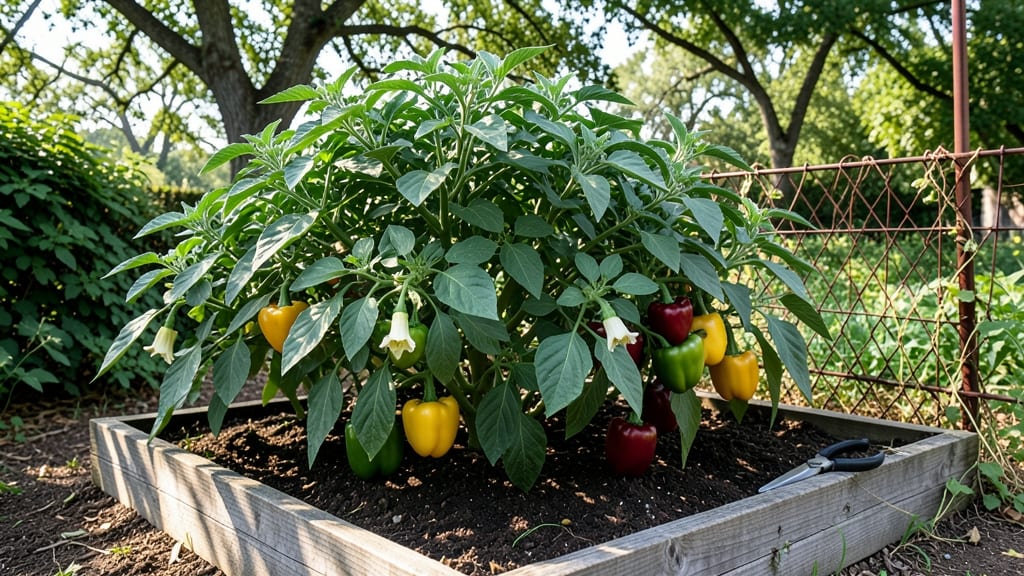
A pepper plant identifier can be as simple as studying leaf shape, color, and stem texture—no farmers’ market expertise required. 🌱 I’ve spent years comparing plants at seed swaps, and the differences in these details are the fastest way to tell bell peppers from jalapeños or habaneros from ghost peppers.
The key is looking at three things: leaf edges (smooth or jagged?), stem hairiness (fuzzy or sleek?), and leaf color (deep green or light green with purple streaks?).
A bell pepper’s broad, smooth leaves contrast sharply with the narrower, serrated leaves of a jalapeño, while habaneros often have wrinkled, lighter green foliage. These clues cut through the confusion before you even see the fruit.
Once you’ve got the ID down, you’ll know exactly how to care for each plant—bell peppers need consistent water, while hot peppers thrive with less moisture. You’ll also spot pests or diseases early, since different varieties attract different problems. This visual guide makes the process foolproof, even for beginners.
Perfect for gardeners who’ve ever stared at a mystery plant and wondered, “Is this a pepper or something else?” By the end, you’ll recognize them on sight and grow the exact varieties you love. Let’s get started with the visual breakdown!
Root Causes of Misidentification
Identifying pepper plants can feel like solving a botanical puzzle—especially when leaves, stems, and flowers look eerily similar across species. But why does confusion happen so often? The answer lies in a mix of biological quirks, environmental factors, and human tendencies.
Let’s break down the science behind the mix-ups and why even seasoned gardeners sometimes scratch their heads.
Pepper plants (Capsicum spp.) share a common ancestor, which means they’ve inherited many overlapping traits. Here’s why genetics play a trick on us:
- Leaf Shape & Venation: Most peppers have lanceolate (lance-shaped) or ovate (egg-shaped) leaves with prominent veins. For example, jalapeño and serrano peppers look nearly identical in early growth stages because they’re both Capsicum annuum varieties.
Even wild relatives like Capsicum frutescens (the habanero’s ancestor) can mimic cultivated types. - Stem Texture & Color: Young stems often appear hairless and green, regardless of whether the plant will bear mild bell peppers or fiery ghost peppers.
The pubescence (fine hairs) that distinguish some species (like Capsicum pubescens, the Rocoto pepper) only develops later. - Flower Structure: All peppers produce white, star-shaped flowers, making it hard to tell a bell pepper plant from a chili just by blooms.
The key difference? Pepper shape and size—which only reveal themselves after fruiting.
💡 Pro Tip: Look for subtle differences in leaf serration (edges) or stem thickness. For instance, African bird’s eye peppers (Capsicum frutescens) often have slightly curled leaf edges, while jalapeños tend to be straighter.
Pepper plants under stress can develop symptoms that resemble pests or diseases, throwing off identification. Here’s how:
| Stress Factor | What It Looks Like | Why It Happens |
|---|---|---|
| Overwatering | Yellowing leaves, mushy stems, wilting | Roots suffocate, cutting off oxygen and nutrients. |
| Underwatering | Crispy leaf edges, drooping | Cells lose turgor pressure due to dehydration. |
| Nutrient Deficiency | Purple stems, stunted growth, pale leaves | Lack of nitrogen (yellow leaves) or magnesium (interveinal chlorosis). |
| Temperature Shock | Blackened leaf tips, curled leaves | Cold drafts or heat stress disrupt cell membranes. |
| Light Deficiency | Leggy stems, pale leaves | Plants stretch toward light, weakening structure. |
⚠️ Common Mistake: A nutrient-deficient pepper plant might look like early signs of bacterial leaf spot—but the key difference? Disease spots are brown with yellow halos, while deficiency symptoms are uniformly discolored.
Our brains are wired to focus on fruits over foliage, but pepper identification often requires leaf and stem analysis—especially in early stages. Here’s how we trip ourselves up:
- Fruiting Stage Blindness: Gardeners often wait for peppers to form before identifying the plant. But by then, cross-pollination (e.g., a jalapeño pollinated by a serrano) can create hybrid fruits that don’t match standard identifiers. - Seasonal Variations: Young plants (seedlings) look nothing like mature ones.
A habanero seedling might resemble a bell pepper until it flowers or fruits. - Cultural Confusion: Terms like "chili" and "pepper" are used interchangeably, even though botanically, all chilis are peppers (Capsicum spp.). This leads to mislabeling in seed packets and nurseries.
🎯 Solution: Use a two-step verification:
- Examine leaves and stems (shape, hairs, color).
- Check flower structure (size, petal arrangement) before fruits appear.
Not all pepper plants are what they seem—breeding and grafting can create plants that defy expectations:
- Hybrid Varieties: Breeders cross peppers to create disease-resistant or high-yielding types (e.g., Carolina Reaper × Ghost Pepper hybrids). These often have unpredictable leaf or fruit traits. - Grafted Plants: Commercial growers graft pepper scions (top plant) onto disease-resistant rootstocks.
The leaves and stems may look like one species, but the fruit could be entirely different. - Chimera Effects: Rare genetic mutations can cause sectored leaves (part green, part purple), making identification even harder.
🔥 Hot Take: If your pepper plant doesn’t match its label, it might be a grafted variety—common in grocery store plants!
Not all peppers follow the "rulebook." Wild and heirloom varieties can throw off identification:
- Peruvian Rocoto Peppers (Capsicum pubescens) have hairy stems and leaves, unlike smooth-stemmed Capsicum annuum types.
- African Bird’s Eye Peppers (Capsicum frutescens) often grow smaller and bushier than their annuum cousins.
- South American Peppers (like Aji Amarillo) may have yellow leaves even when healthy—a trait absent in most commercial varieties.
🌡️ Climate Impact: Peppers grown in high-altitude or tropical regions may develop darker leaves or thicker stems due to UV exposure, making them look like different species.
Misidentification happens because peppers are masters of disguise—genetically, environmentally, and even due to human error. The good news? Leaves, stems, and flowers hold the clues—you just need to know where to look. Next up: How to Spot the Differences with our visual pepper plant cheat sheet.
Quick Fixes for Pepper Plant Problems
Got a pepper plant that’s not looking its best? Don’t panic—most issues have simple, actionable solutions. Below, we’ve mapped common symptoms to their fixes, so you can diagnose and treat your plant like a pro. Prevention tips are included to keep your peppers thriving long-term!
Cause: Too much water, poor drainage, or lack of essential nutrients (like nitrogen or magnesium). Fix It:
- 🔥 Step 1: Check the Soil – Stick your finger 1–2 inches deep. If it’s soggy, your plant is drowning. Let it dry out before watering again.
- 🍳 Step 2: Improve Drainage – Repot in well-draining soil (mix in perlite or sand) or add a saucer under the pot to catch excess water.
- 👨🍳 Step 3: Feed Your Plant – Use a balanced fertilizer (like 10-10-10) or a compost tea to replenish nutrients. For magnesium deficiency (yellow edges), add Epsom salt (1 tbsp per gallon of water) every 2 weeks.
💡 Prevention Tip: Water only when the top inch of soil is dry, and avoid letting plants sit in saucers of standing water.
Cause: Inconsistent watering, lack of sunlight, or root-bound plants. Fix It:
- 🌞 Step 1: Move to Better Light – Pepper plants need 6–8 hours of direct sunlight daily. Place near a south-facing window or use grow lights if indoors.
- 💧 Step 2: Water Deeply & Consistently – Water at the base (not the leaves) until it drains from the bottom. Mulch around the base to retain moisture.
- ⏰ Step 3: Repot if Root-Bound – If roots circle the pot, upgrade to a slightly larger container (1–2 inches wider) with fresh potting mix.
🔥 Prevention Tip: Use a moisture meter or your finger to check soil moisture daily—peppers hate dry spells!
Cause: Dry air, weak plants, or poor hygiene (old debris attracts pests). Fix It:
- 🔪 Step 1: Isolate the Plant – Move it away from other plants to prevent spread.
- 🌿 Step 2: Blast Off Pests – Spray leaves with neem oil (1 tsp per quart of water) or insecticidal soap. Repeat every 3–5 days.
- 🌡️ Step 3: Boost Humidity – Place a tray of water near the plant or use a humidifier to deter mites.
✨ Prevention Tip: Wipe leaves with a damp cloth weekly to remove dust and deter pests. Introduce ladybugs (natural predators) for long-term control.
Cause: Overcrowded plants, high humidity, or wet foliage. Fix It:
- 💨 Step 1: Prune Infected Leaves – Remove and dispose of (don’t compost) any yellow or spotted leaves.
- 🌧️ Step 2: Improve Airflow – Space plants 12–18 inches apart and use a fan on low to circulate air.
- 🧴 Step 3: Apply Fungicide – Spray with baking soda mix (1 tsp baking soda + 1 quart water + a drop of dish soap) or a copper-based fungicide.
🎯 Prevention Tip: Water early in the day so leaves dry quickly. Avoid overhead watering—aim for the soil instead.
Cause: Temperatures above 90°F (32°C) or lack of shade. Fix It:
- 🏖️ Step 1: Provide Shade – Use a light shade cloth (30–50% coverage) or move pots to a dappled sunlight spot.
- 💦 Step 2: Water More Frequently – Increase watering slightly (but avoid soggy soil) and mulch to retain moisture.
- 🌿 Step 3: Mist Leaves (Carefully!) – Lightly mist in the early morning to cool the plant (avoid evenings to prevent fungal growth).
💡 Prevention Tip: Grow heat-tolerant varieties like ‘Cayenne’ or ‘Jalapeño’ if you live in a hot climate.
Cause: Chronic overwatering or poor drainage. Fix It:
- ⚠️ Step 1: Act Fast – Remove the plant and trim away black, mushy roots with sterilized scissors.
- 🌱 Step 2: Repot in Fresh Soil – Use a sterile, well-draining mix (cactus/succulent soil works) and a pot with drainage holes.
- 🌞 Step 3: Adjust Watering – Water only when the soil is bone-dry, and avoid fertilizing until new growth appears.
🔥 Prevention Tip: Never skip drainage holes—this is the #1 cause of root rot!
Final Pro Tip: 📝 Keep a plant journal! Note watering, sunlight, and issues to spot patterns and adjust care before problems escalate. Happy growing—your peppers will thank you! 🌶️💚
Frequently asked questions
How can I tell the difference between bell peppers and hot peppers just by looking at the leaves?
Bell peppers usually have broader, smoother leaves with fewer serrations (edges), while hot peppers like jalapeños or habaneros tend to have narrower, more jagged leaf edges. Look for leaf hairiness too—bell peppers often have smoother stems, while some hot varieties (like rocoto) develop fuzzy stems as they mature.
What should I do if my pepper plant's leaves look nothing like the variety I bought?
Check for grafted plants—many store-bought peppers are grafted onto disease-resistant roots, so the leaves may not match the fruit. Also verify if it's a seedling mislabel or hybrid mix-up. Compare your plant to our visual guide, and if still unsure, wait for flowers or fruit to appear for clearer clues.
Can I use a phone app to help identify my pepper plant?
Yes! Apps like PictureThis or PlantNet use image recognition to match your plant's leaves and stems. For best results, take clear photos of leaves, stems, and flowers (if present) in good light. Combine app results with our visual guide for more accurate identification.
Why do some pepper plants have purple stems or leaves?
Purple stems/leaves usually indicate phosphorus deficiency or cool temperatures. If the rest of the plant looks healthy, it's likely a natural trait in varieties like Shishito peppers. For deficiency, add a balanced fertilizer and ensure consistent warmth (peppers thrive at 70-85°F).
How do I know if my pepper plant is healthy enough to bear fruit?
A healthy pepper plant should have deep green leaves, firm stems, and white flowers (if flowering). Check for no yellowing, pests, or stunted growth. If it's at least 6-8 inches tall with 4-6 true leaves, it's ready to produce fruit with proper care.