
Fertilization
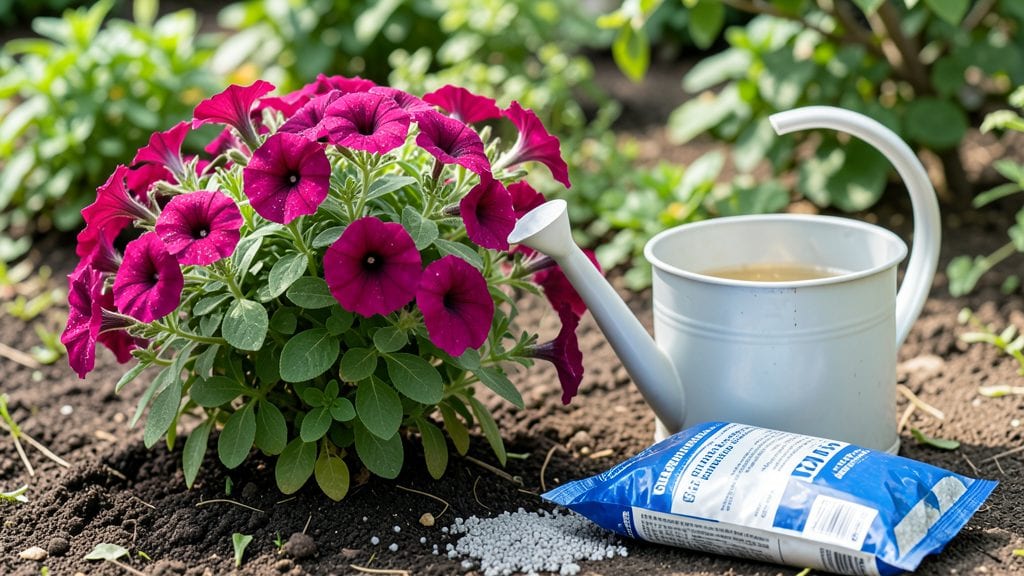
Petunia plant food isn't just about dumping fertilizer—it's about feeding the right balance of nutrients to trigger those shockingly lush blooms. ✨ My first year growing petunias, I overdid it with nitrogen-heavy stuff, and ended up with leafy monsters instead of flowers.
The key is matching what petunias crave—phosphorus for roots, potassium for blooms, and a touch of micronutrients to keep them vibrant.
You don't need fancy equipment—just a water-soluble fertilizer with a balanced NPK ratio like 10-10-10 or a slow-release granular blend. Organic options like fish emulsion or compost tea work too, though they require more frequent applications.
The real secret is consistency: feed every two weeks during the growing season, then cut back in late summer to avoid leggy growth before frost.
What you'll end up with is petunias that burst with color from spring to fall, their blooms so dense you'll need to deadhead weekly. The foliage stays glossy and healthy, not yellow or crispy from over- or under-feeding. Even my black thumb can't kill these when the nutrients are right.
Works for both container petunias and in-ground plantings, though container varieties need slightly more frequent feeding. Here's how to keep them thriving without the guesswork—no more sad, sparse blooms in your garden beds or hanging baskets.
📚 In This Guide
- What you need
- Instructions
- Tips and common mistakes
- Wrapping up and next steps
What you need
- ● Balanced fertilizer (10-10-10 or 20-20-20 NPK ratio) – 1 tbsp per gallon of water (for liquid feed) or 1 cup per 10 sq ft (for granular).
- ● Phosphorus-rich fertilizer (e.g., bone meal or 5-10-10 NPK) – ½ tsp per plant (to encourage blooms).
- ● Potassium supplement (e.g., wood ash or Epsom salt) – 1 tsp per gallon of water (boosts root strength).
- ● Compost or well-aged manure – 1-2 cups per plant (for organic nutrients).
- ● Watering can or hose with a gentle spray nozzle (for even distribution).
- ○ Gloves (optional but recommended) – Protects hands from fertilizer dust or compost.
- ● Measuring spoons/scoops – For precise fertilizer doses.
- ● Garden trowel or hand fork – To mix compost into soil or apply granular fertilizer.
- ○ pH testing kit (optional) – Ensures soil pH is 6.0-7.0 (petunias thrive here!).
- ● Spray bottle (for foliar feeding) – Dilute liquid fertilizer 1:2 with water for leaf applications.
- ● Sunny spot or grow lights – Petunias need 6+ hours of sunlight daily for best results.
Step-by-step guide to feeding petunias for maximum blooms
Here's how to transform your petunias into a nonstop flower factory using the right nutrients.
🌱 Step 1: Understand the 3 Key Nutrients Petunias Need
Petunias thrive on a balanced diet of nitrogen (N), phosphorus (P), and potassium (K)—but they crave phosphorus most of all. Look for a 10-10-10 or 5-10-10 fertilizer with phosphorus as the middle number. This middle boost fuels root growth and flower production, which is exactly what you want for those showstopping blooms.
I always check the label for micronutrients too—petunias need small amounts of magnesium, calcium, and iron to prevent yellowing leaves. If your fertilizer doesn’t list these, add a chelated iron supplement every 4-6 weeks to keep foliage vibrant. The goal is strong stems and endless flowers, not just green leaves.
💧 Step 2: Feed During Active Growth and Blooming
Start fertilizing 2 weeks after transplanting when roots are established but before buds form. Use half-strength fertilizer the first time to avoid burning tender roots—petunias are sensitive to overfeeding early on. Water thoroughly before applying to distribute nutrients evenly.
Once blooming begins, switch to full-strength fertilizer every 2 weeks during the growing season. Stop fertilizing 6 weeks before your first frost—this gives roots time to harden off for winter. You’ll see the difference immediately: plants fed at the right time produce 2-3 times more blooms than those fed sporadically.
☀️ Step 3: Apply Fertilizer Correctly for Best Results
Always water petunias deeply the day before feeding—this prevents fertilizer from sitting on dry soil and burning roots. Use a water-soluble fertilizer for quick absorption, mixing it into a watering can at the recommended strength. Pour the solution directly onto the soil, not the leaves, to avoid chemical burns.
I like to fertilize in the early morning when temperatures are cooler—this reduces stress on the plants. After applying, water again to rinse any fertilizer that might cling to foliage. Watch for dark green leaves and sturdy stems—that’s your sign the feeding is working. If leaves yellow or wilt, you’re overdoing it.
✂️ Step 4: Deadhead and Feed for Continuous Blooms
Deadheading—removing spent blooms—is just as important as feeding. Pinch off wilted flowers every 3-4 days to encourage new buds. Pair this with a light feeding of half-strength fertilizer after deadheading to give plants a quick nutrient boost for their next round of blooms.
Here’s the thing—petunias bloom best when they’re stressed just enough. Overcrowded plants or those left unpruned produce fewer flowers. I always trim back leggy stems to 4-6 inches and feed immediately after to stimulate bushier, more productive growth. You’ll notice thicker clusters of blooms within 2 weeks of this combo treatment.
🪴 Step 5: Adjust for Seasonal Changes
In hot summer months, petunias need extra potassium to handle heat stress. Switch to a 5-10-20 fertilizer for 2-3 feedings to strengthen stems and flowers. In cooler weather, reduce feeding to every 3 weeks—petunias slow down naturally and don’t need as much support.
If your petunias start dropping buds or leaves yellow between veins, they’re iron-deficient. Sprinkle iron sulfate around the base and water it in. This happens often in alkaline soils, so I test soil pH annually and amend with sulfur if needed. A happy petunia is a bloom machine—keep the soil fed, the air moving, and the deadheads off.
Tips & tricks for perfect petunia plant food
These little tricks will help you turn your petunias into a nonstop flowering powerhouse with minimal effort.
Micronutrient Boost: While the big three nutrients (nitrogen, phosphorus, potassium) are essential, don't overlook those micronutrients like magnesium and calcium. Yellowing leaves between veins? That's your plant screaming for magnesium. I keep a bottle of chelated iron supplement on hand—just a few drops every 4-6 weeks keeps foliage vibrant and prevents those ugly yellow patches. Think of it as your petunias' multivitamin.
Timing Secret: The 2-week wait after transplanting before your first feeding is crucial—this gives roots time to establish without burning. I've learned the hard way that impatient feeding leads to crispy roots. Mark your calendar for that 2-week milestone, then stick to the schedule. Trust me, your petunias will thank you with stronger stems and more blooms.
Seasonal Strategy: Summer heat changes the game—your petunias need that extra potassium boost when temperatures climb. Switch to a 5-10-20 fertilizer for 2-3 feedings during peak summer months. In cooler weather, you can stretch your feeding schedule to every 3 weeks. This seasonal adjustment prevents overfeeding during slow growth periods and keeps your plants thriving year-round.
Deadheading Hack: Here's what nobody tells you—pair that deadheading with a light feeding of half-strength fertilizer. The combination of removing spent blooms AND giving a quick nutrient boost creates a feedback loop that results in thicker clusters of blooms within just 2 weeks. I deadhead every 3-4 days and feed immediately after, and my petunias never stop flowering.
Pro Tips for Petunia Plant Food
- These little tricks will help you turn your petunias into a nonstop flowering powerhouse with minimal effort.
- Micronutrient Boost: While the big three nutrients (nitrogen, phosphorus, potassium) are essential, don't overlook those micronutrients like magnesium and calcium.
- Timing Secret: The 2-week wait after transplanting before your first feeding is crucial—this gives roots time to establish without burning.
Frequently asked questions
Got questions about keeping your petunias thriving?
Here are the most common ones—and the answers to help your blooms shine brighter than ever!
How often should I feed my petunias?
Feed your petunias every 2–4 weeks during the growing season (spring to fall). Once they’re established, a balanced liquid fertilizer (like 10-10-10) works best. Pro tip: Cut back to monthly in late summer to encourage fall blooms!
What if my petunias look yellow or wilted after fertilizing?
Yellow leaves or wilting often mean over-fertilization or underwatering. Flush the soil with water to dilute excess salts, then adjust your feeding schedule. Always water before fertilizing to prevent root burn.
Can I use homemade petunia food instead of store-bought?
Try a compost tea, diluted banana peel water (rich in potassium), or a mix of Epsom salt (1 tbsp/gal) for magnesium. Just ensure it’s balanced—petunias need nitrogen (N), phosphorus (P), and potassium (K) in equal parts for best results.
Do petunias need special food for more blooms?
Yes! For extra blooms, use a high-phosphorus fertilizer (5-10-5 or 10-20-10) every 3–4 weeks. Phosphorus boosts flower production, while potassium (the last number) strengthens stems. Bonus: Deadhead spent blooms to encourage new ones!
Should I fertilize petunias in winter?
No! Petunias are annuals (or tender perennials) and go dormant in winter. Hold off on fertilizing until spring when new growth appears. Overwintering varieties may need a light feeding in early spring, but most do best with a break.
Wrapping up and next steps
Growing vibrant petunias is all about feeding them the right nutrients—nitrogen, phosphorus, and potassium—to fuel lush foliage, strong roots, and stunning blooms. 🌸 With the right petunia plant food and a little care, your garden can burst into color all season long!
Now that you’re armed with the knowledge, it’s time to roll up your sleeves and get growing. Start by picking your fertilizer, follow the feeding schedule, and watch your petunias thrive—your green thumb is about to shine brighter than ever!