Companion Plants
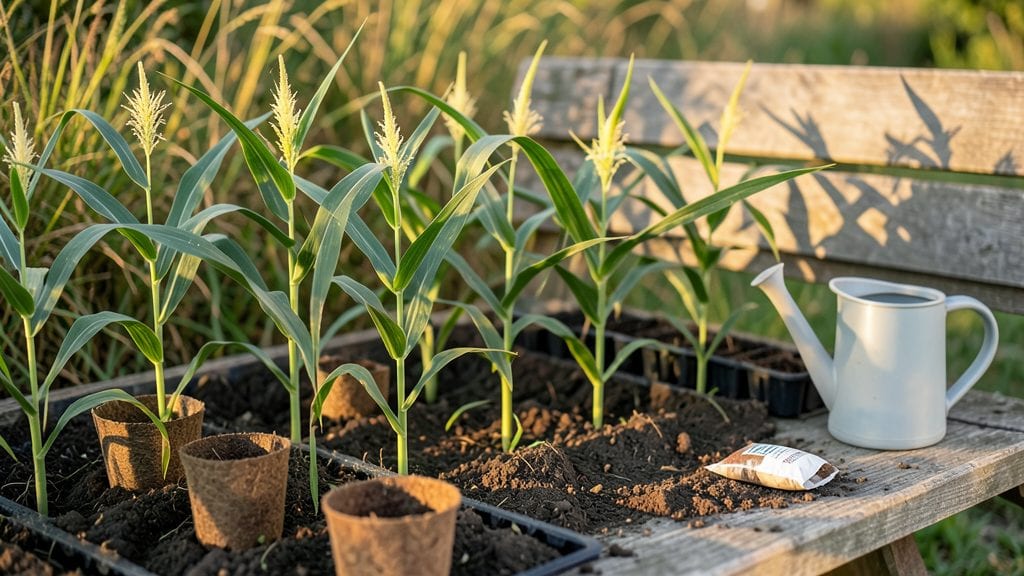
Planting sweetcorn plants the right way means doubling your harvest and keeping pests at bay. 🌽 I learned the hard way that cramming plants too close leads to stunted ears and fungal rot—my first garden produced just 12 ears from 50 plants.
The secret isn’t just spacing; it’s how you arrange them in blocks, not rows.
Start with rich, well-drained soil amended with compost—sweetcorn is heavy feeders. Plant in full sun (at least 6 hours daily) and wait until soil reaches 60°F before sowing. For direct planting, drop seeds 1 inch deep, 12 inches apart, and 30 inches between rows.
Transplants? Space them 14 inches apart to give roots room to spread.
After sprouts hit 4 inches tall, thin to your target spacing—this might mean pulling plants, but it prevents competition. Mulch with straw to retain moisture and deter weeds, then water deeply 1 inch per week.
The payoff? Each plant will produce 2-4 ears instead of just one, and the dense planting confuses corn earworm moths.
This method works for home gardens, raised beds, or even containers (use dwarf varieties). The key is patience—sweetcorn needs 70-90 days to mature, but the effort turns your plot into a neighborhood bragging point. Ready to try it?
📚 In This Guide
- What you need
- Instructions
- Tips and common mistakes
- Wrapping up and next steps
What you need
- ● Sweetcorn seeds: Choose heirloom or hybrid varieties (e.g., 'Ambrosia,' 'Silver Queen,' or 'Peaches and Cream'). Buy 1–2 lbs per 100 sq ft for optimal spacing.
- ● Garden soil or raised bed mix: Well-draining, rich in organic matter (compost or aged manure). Avoid heavy clay.
- ● Companion plants: Pick from beans, marigolds, basil, or nasturtiums (1–2 plants per 4–6 ft of corn row).
- ● Fertilizer: 10-10-10 balanced NPK (apply 1–2 lbs per 100 sq ft) or compost tea for organic growth.
- ● Mulch: Straw or grass clippings (2–3 inches thick) to retain moisture and deter weeds.
- ● Watering can or hose: With a fine spray nozzle for gentle watering.
- ○ Garden twine or stakes: (Optional but helpful) For trellising tall varieties.
- ● Row cover fabric: Lightweight mesh to protect seedlings from pests like corn earworms.
- ● Diatomaceous earth: Food-grade powder to deter slugs and snails near plant bases.
- ● Plant markers: Wooden or biodegradable labels to track varieties and spacing.
- ● Soil pH test kit: Ensure your soil is 6.0–6.8 pH (sweetcorn loves slightly acidic to neutral soil).
- ● Hand trowel or transplanting tool: For precise planting depth (1–2 inches).
Step-by-Step instructions for planting sweetcorn for optimal growth
Sweetcorn thrives when planted with precision—here's how to maximize yields while keeping pests at bay.
🌱 Step 1: Prepare the Soil and Planting Site
Sweetcorn loves rich, well-draining soil with a pH between 6.0 and 6.8. Work in 2-3 inches of compost or aged manure into the top 6 inches of soil to improve fertility and drainage. I always test the soil first—corn is heavy feeders and won’t tolerate poor soil conditions. If your soil is heavy clay, mix in sand or perlite to loosen it.
Choose a location with full sun—at least 6-8 hours daily. Sweetcorn also benefits from wind protection, so avoid exposed areas where strong breezes can damage tender stalks. If planting in rows, space them 30 inches apart to allow for easy access and airflow between plants.
🌱 Step 2: Plant Seeds at the Right Depth and Spacing
Plant seeds 1 inch deep and 4-6 inches apart in rows. I like to use a seed spacing guide or a simple ruler to ensure consistency—crowding leads to poor air circulation and increased disease risk. For 4 plants, you’ll need about 12-18 inches of row space, depending on your variety.
Plant 2-3 seeds per hole and thin to the strongest seedling once they’re 4-6 inches tall. This ensures you don’t waste seeds and gives you a backup if one fails. Press the soil gently around the seeds to ensure good contact—this helps roots establish faster.
☀️ Step 3: Water and Mulch for Strong Starts
Water the soil deeply right after planting to settle it around the seeds. Keep the soil evenly moist but not soggy—sweetcorn roots need oxygen to grow. A soaker hose or drip irrigation works best to avoid disturbing the soil surface. Water in the morning to reduce evaporation and fungal risks.
Apply 2-3 inches of organic mulch (like straw or shredded leaves) around the plants once they’re 3-4 inches tall. Mulch conserves moisture, suppresses weeds, and keeps soil temperatures stable. I always leave a 2-inch gap around the stalks to prevent rot. Avoid synthetic mulches—they can overheat the soil and stress young plants.
✂️ Step 4: Thin and Monitor for Pests
When seedlings reach 4-6 inches, thin them to 1 plant per hill, leaving the strongest one. Use clean scissors to snip weak stems at soil level—pulling can disturb roots. This spacing (12-18 inches apart) gives each plant room to develop strong stalks and prevents competition for nutrients.
Watch for corn earworms and aphids—common pests that thrive in crowded or stressed plants. I inspect plants weekly and handpick eggs or larvae when possible. If needed, use neem oil or insecticidal soap as a preventive spray, but avoid chemicals once pollen sheds for pollination.
🌿 Step 5: Support and Fertilize for Maximum Yield
As plants grow, consider staking or caging taller varieties to prevent lodging (falling over). I use bamboo stakes or corn cages for varieties over 6 feet tall. Tie stalks loosely with soft plant ties—too tight, and you’ll restrict growth.
Side-dress with balanced fertilizer (10-10-10) when plants are 6-8 inches tall, following package rates. Over-fertilizing leads to excessive leafy growth at the expense of ears. Water deeply after fertilizing to prevent root burn. Harvest begins when silks turn brown—usually 20-25 days after pollination.
Tips & tricks for perfect sweetcorn planting
Sweetcorn doesn't just grow—it thrives when you respect its spacing needs and environmental preferences. Here are the game-changing details that separate good harvests from spectacular ones.
Spacing Precision: Those 12-18 inches between plants in Step 2 isn't arbitrary—it's the sweet spot for airflow and sunlight penetration. I've seen corn plants grow lush leaves but produce tiny ears because they were crowded. Use a simple string line and measuring tape to mark your spacing before planting. For 4 plants, visualize a square about 18 inches per side—this gives each plant elbow room to develop strong stalks and prevents fungal diseases from spreading.
Soil Preparation Payoff: The 2-3 inches of compost in Step 1 should be worked into the top 6 inches of soil, not just sprinkled on top. Think of it like layering a gourmet meal—each layer provides something essential. I like to mix in a handful of bone meal at planting time for extra phosphorus, which promotes strong root development. If your soil tests below 6.0 pH, add dolomitic lime a few weeks before planting to create the ideal growing environment.
Mulch Timing: Applying 2-3 inches of organic mulch in Step 3 isn't just about moisture retention—it's about temperature regulation. Mulch keeps soil temperatures stable, which is crucial during those hot summer afternoons when roots need consistent warmth. I've found that straw mulch works best because it breaks down slowly and adds organic matter as it decomposes. The key is applying it once plants reach 3-4 inches tall—this gives them enough strength to push through while still benefiting from the mulch's protective properties.
Pest Prevention: The weekly inspections in Step 4 are non-negotiable if you want to avoid corn earworms. I've seen entire crops devastated by these pests when gardeners ignored early signs. Look for silken webs between leaves or tiny eggs on the undersides of leaves. For organic control, I make a simple spray of 1 tablespoon neem oil per quart of water and apply it in the early morning when pests are least active. Remember, once pollen sheds, chemical sprays can harm beneficial insects that help with pollination.
Pro Tips for Planting Sweetcorn Plants
- Sweetcorn doesn't just grow—it thrives when you respect its spacing needs and environmental preferences. Here are the...
- Spacing Precision: Those 12-18 inches between plants in Step 2 isn't arbitrary—it's the sweet spot for airflow and su...
- Soil Preparation Payoff: The 2-3 inches of compost in Step 1 should be worked into the top 6 inches of soil, not just...
Frequently asked questions
Got questions about planting sweetcorn? You’re not alone—growing this beloved crop can raise a few curiosities! Below, we’ve rounded up the most common queries to help you plant with confidence and avoid pitfalls. Whether you’re a first-timer or a seasoned gardener, these answers will keep your sweetcorn thriving.
How close can I plant sweetcorn seeds together?
Sweetcorn needs space to grow strong stalks and prevent disease. For standard varieties, space seeds 12–15 inches apart in rows 24–36 inches apart. Dwarf or bush varieties can be planted slightly closer (8–10 inches apart). Overcrowding leads to poor airflow, inviting fungal issues like rust or blight.
When is the best time to plant sweetcorn outdoors?
Sweetcorn is frost-sensitive, so wait until the soil is at least 60°F (15°C) and all frost risk has passed. In most regions, this means 2–3 weeks after your last frost date (typically mid-April to June, depending on your zone). For a longer harvest, plant successive batches every 2 weeks.
What’s the best way to protect sweetcorn from pests like corn earworms?
Use a multi-layered approach:
- Companion plants: Interplant with beans, marigolds, or thyme to repel pests.
- Row covers: Use lightweight fabric over young plants to block moths.
- Handpick: Check ears daily and remove worms manually (wear gloves!).
- Avoid over-fertilizing: Too much nitrogen attracts pests.
For severe infestations, try Bt (Bacillus thuringiensis), a natural bacterial spray.
Can I plant sweetcorn in containers or small spaces?
Yes! Choose bush or dwarf varieties (like ‘Golden Bantam’ or ‘Sweet Baby’) for containers. Use pots at least 12 inches deep and wide per plant, with well-draining soil. Place containers in full sun (6+ hours/day) and fertilize regularly. Just ensure good airflow to prevent mold.
What should I do if my sweetcorn plants look wilted or yellow?
Yellowing or wilting often signals underwatering, overwatering, or disease. Check:
- Soil moisture: Sweetcorn needs 1–1.5 inches of water weekly (more in heatwaves).
- Drainage: Poor drainage causes root rot—amend soil with compost.
- Pests/disease: Look for holes (cutworms) or spots (fungus). Treat with neem oil or fungicide if needed.
- Nutrients: A balanced fertilizer (10-10-10) can revive struggling plants.
If wilting persists, trim damaged leaves and adjust care immediately.
Wrapping up and next steps
Planting sweetcorn with the right spacing and companion plants isn’t just about technique—it’s about harvesting success! 🌽 By following these secrets, you’ll protect your crop from pests, boost yields, and enjoy fresher ears straight from your garden.
Ready to dig in? Grab your gloves, mark those rows, and get growing—your future corn-on-the-cob feasts are waiting!
Next step: Start small with a test patch, track your spacing results, and share your tips with fellow gardeners. Happy planting!