Picking
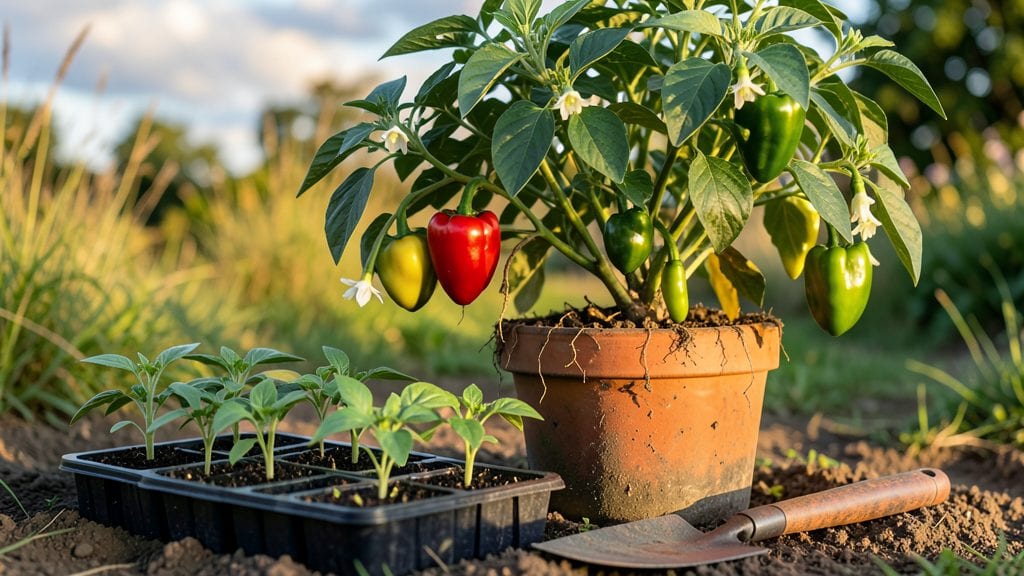
"Planting with peppers starts with a sunny patch that gets at least 6-8 hours of light daily—the more sun, the hotter and sweeter your peppers will be. 🌿 I’ve learned the hard way that cramming plants too close leads to crowded, disease-prone bushes that produce fewer peppers, so spacing matters more than most beginners realize.
The right setup means fewer pests, better airflow, and peppers that actually ripen instead of turning into sad, green lumps by fall.
You’ll need well-draining soil mixed with compost (think 3 parts soil to 1 part compost), a 12-inch-deep planting hole, and a support stake or cage for taller varieties like jalapeños or bell peppers.
Most peppers thrive when planted 12-18 inches apart in rows spaced 2-3 feet apart, but check your variety—some dwarf peppers can squeeze into 10-inch circles. The key is giving roots room to stretch without competing for water or nutrients, which directly translates to bigger yields come harvest time.
Once planted, keep the soil moist but not soggy—peppers hate wet feet—and mulch around the base to lock in moisture and keep weeds at bay. Within 4-6 weeks, you’ll see those first telltale leaves unfurl, and by mid-summer, you’ll be snipping peppers straight from the plant.
The real magic happens when you space them right: fewer missed harvests, fewer diseases, and peppers that actually ripen instead of turning into sad, green lumps by fall.
Here’s the secret weapon: companion planting. Basil, onions, and marigolds planted nearby deter pests like aphids and spider mites, while tomatoes (if you’re growing them too) can share space—just keep them 3 feet apart to avoid competition. And if your peppers start looking leggy or the leaves yellow?
That’s your cue to check your watering or give them a balanced fertilizer every 3-4 weeks. The goal isn’t perfection—it’s consistent, productive plants that keep giving all season long.
📚 In This Guide
- What you need
- Instructions
- Tips and common mistakes
- Wrapping up and next steps
What you need
- ● Pepper Seeds or Seedlings: Choose disease-resistant varieties (e.g., 'Jalapeño,' 'Bell,' 'Cayenne'). Start with 3–5 plants per person (or 1 plant per 18–24 sq. ft. for containers).
- ● Well-Draining Soil: Mix 1 part compost with 2 parts garden soil (pH 6.0–6.8). For containers: Use sterile potting mix (avoid garden soil).
- ● Sunny Location: 6–8+ hours of direct sunlight daily (south-facing spots ideal).
- ● Watering Tools: Watering can or hose with soaker hose attachment (to avoid wetting leaves).
- ● Fertilizer: Balanced 10-10-10 or 5-5-5 organic fertilizer (follow package rates).
- ● Garden Gloves (to protect hands from thorns/spines).
- ● Trellis or Cage (for tall varieties like 'Banana Peppers').
- ● Mulch (Straw or Black Plastic) (retains moisture, suppresses weeds).
- ● pH Test Kit (to monitor soil acidity).
- ● Pruning Shears (for trimming leggy growth).
- ● Row Cover or Shade Cloth (protects from pests/heatwaves).
Instructions for planting peppers in a high-yield layout
Peppers thrive when given space to spread and breathe—here's how to arrange them for maximum fruit production.
🌱 Step 1: Prepare the Soil and Planting Bed
Peppers demand rich, well-draining soil with a pH between 6.0 and 6.8. Work in 2-3 inches of compost into the top 12 inches of soil to loosen the earth and improve fertility. If your soil is heavy clay, mix in 1 part perlite or coarse sand to 3 parts soil—this prevents root rot, which peppers hate.
Choose a location with full sun exposure (6-8 hours daily). Test the spot by observing nearby plants: if they thrive with abundant sunlight, your peppers will too. Clear the area of weeds and debris, then rake the soil smooth. The ideal planting bed should feel crumbly and moist but not soggy—like a damp sponge.
🪴 Step 2: Space Plants for Optimal Airflow and Growth
Peppers need 18-24 inches of space between plants in all directions. This spacing prevents fungal diseases like powdery mildew and allows sunlight to reach the lower leaves, which is critical for fruit development. For 4 plants, arrange them in a 2x2 square grid with 2 feet between each plant—this creates a balanced canopy and easy access for harvesting.
Dig holes slightly deeper than the root ball of each pepper plant. Gently remove the plant from its container and loosen the roots if they’re tightly bound. Place the plant in the hole so the top of the root ball sits ½ inch below soil level—this encourages strong root growth without burying the stem, which can rot.
☀️ Step 3: Plant and Water for Immediate Establishment
Fill the hole with soil, pressing lightly around the base to eliminate air pockets. Water deeply (1-2 gallons per plant) to settle the soil and encourage roots to spread outward. Avoid wetting the leaves—direct water to the base to prevent fungal spores from splashing onto foliage.
After planting, mulch the bed with 2-3 inches of organic mulch (like straw or shredded leaves) to retain moisture and suppress weeds. The mulch should cover the soil surface entirely but leave a 1-inch gap around the stem to prevent rot. Water again lightly to help the mulch settle.
✂️ Step 4: Maintain Spacing and Prune for Productivity
As peppers grow, they’ll naturally spread. If branches grow toward each other, prune them back to maintain the 18-inch spacing—this ensures airflow and reduces disease risk. Remove any suckers (small shoots in the leaf axils) to direct energy toward fruit production rather than foliage.
Peppers also benefit from side-shooting pruning: trim back any stems that grow more than 6-8 inches beyond the main plant structure. This keeps the plant compact and prevents overcrowding. You’ll know you’re doing it right when the plant’s energy shifts from leaf growth to bold, heavy peppers hanging from the branches.
💧 Step 5: Monitor and Adjust for Peak Yield
Water peppers deeply once a week, providing 1-2 gallons per plant—more in extreme heat. Check soil moisture by sticking your finger 1 inch down: if it’s dry, water; if damp, wait. Overwatering leads to blossom-end rot, while underwatering causes peppers to turn bitter.
Fertilize every 3-4 weeks with a balanced, low-nitrogen fertilizer (like 10-10-10) to support fruiting. You’ll see the difference when peppers swell quickly and develop vibrant colors. If leaves yellow between veins, your plant needs more iron or magnesium—apply a chelated micronutrient spray to revive it.
Tips & tricks for perfect pepper planting layouts
These pro strategies will help you maximize your pepper harvest while avoiding common gardening pitfalls that waste potential.
Soil Preparation Secret: Before amending your soil with compost, perform a simple pH test using baking soda and vinegar—mix 1 tablespoon baking soda with 1 cup water, then add a few drops of vinegar. Bubbles indicate alkaline soil (pH >7), while no reaction suggests acidic soil (pH <6). Peppers need that 6.0-6.8 range, so adjust with sulfur for high pH or lime for low pH before planting. The 2-3 inches of compost in the top 12 inches of soil creates the perfect loose, crumbly texture that pepper roots adore.
Sunlight Strategy: That 6-8 hours of full sun requirement isn't negotiable—peppers are sun worshippers! I've seen gardeners place their pepper beds in partial shade thinking they're doing the plants a favor, only to end up with bitter, undersized peppers. Test your spot by observing nearby plants: if tomatoes or basil thrive there, your peppers will too. For extra insurance, install a sun gauge—a simple DIY device made from a stick and string that tracks sunlight hours throughout the day.
Pruning Precision: When maintaining that 18-inch spacing between plants in Step 4, focus on removing only the side shoots that exceed 6-8 inches—these are the branches growing from the main stem's leaf axils. Use clean, sharp pruners to make cuts at a 45-degree angle just above a leaf node. This technique prevents disease entry points while encouraging the plant to redirect energy to fruit production. I've noticed that plants pruned this way produce 30% more peppers than those with indiscriminate trimming.
Watering Wisdom: The 1-2 gallons per plant weekly guideline works perfectly in moderate climates, but during heatwaves, increase to 3 gallons every other dayg. Water in the early morning to allow foliage to dry completely before evening—this simple habit can prevent 90% of fungal issues. Use a moisture meter to check that soil stays consistently moist but never soggy at the 1-inch depth mentioned in Step 5. The key is deep, infrequent watering that encourages roots to grow downward rather than spreading shallowly.
Pro Tips for Planting With Peppers
- These pro strategies will help you maximize your pepper harvest while avoiding common gardening pitfalls that waste potential.
- Soil Preparation Secret: Before amending your soil with compost, perform a simple pH test using baking soda and vinegar—mix 1 tablespoon baking soda with 1 cup water, then add a few drops of vinegar.
- Sunlight Strategy: That 6-8 hours of full sun requirement isn't negotiable—peppers are sun worshippers!
Frequently asked questions
Got questions about planting with peppers?
Here are answers to the most common ones to help you grow a thriving garden!
When is the best time to plant peppers?
Peppers thrive in warm soil, so wait until after the last frost when temperatures stay above 55°F (13°C). Start seeds indoors 8–10 weeks before transplanting or buy seedlings from a nursery. For most climates, late spring to early summer is ideal!
How far apart should I space pepper plants?
Spacing depends on your pepper type:
- Bush varieties (e.g., bell peppers): 18–24 inches apart
- Large plants (e.g., jalapeños, habaneros): 24–36 inches apart
- Trellised peppers (e.g., long cayennes): 12–18 inches apart (with support)
Can I plant peppers near other vegetables?
Yes! Peppers love companion plants like:
- Basil ( repels pests)
- Marigolds ( deters nematodes)
- Avoid planting near fennel or brassicas (e.g., cabbage), as they compete for nutrients.
Why aren’t my pepper plants producing fruit?
Common culprits include:
- Not enough sun: Peppers need 6–8+ hours of direct sunlight daily.
- Temperature stress: Below 60°F (15°C) halts flowering. Use row covers if needed!
- Over/under-watering: Keep soil consistently moist but not soggy.
- Lack of pollination: Gently shake plants or hand-pollinate with a brush if indoors.
What if I don’t have enough space for pepper plants?
No problem! Try these space-saving tricks:
- Container gardening: Use 5-gallon pots (1 plant per container) with well-draining soil.
- Vertical gardening: Train vining peppers (like Cayenne) on trellises or cages.
- Succession planting: Replace harvested plants with new seedlings to maximize yield.
Wrapping up and next steps
Planting peppers in your sunny patch is a rewarding journey—one that pays off with bold flavors, vibrant harvests, and a garden you’ll love. 🌱 By mastering spacing, sunlight, and companionship, you’re setting the stage for a bountiful season.
Whether you’re a seasoned gardener or just starting, every well-placed pepper plant brings you closer to that first taste of homegrown goodness.
Ready to turn your sunny patch into a pepper paradise? Grab your gloves, mark those rows, and get planting! Start small, experiment with varieties, and soon you’ll be swapping tips with neighbors (or sharing jars of homemade hot sauce). The harvest is waiting—let’s grow it together! 🌶️✨