Companion Plants
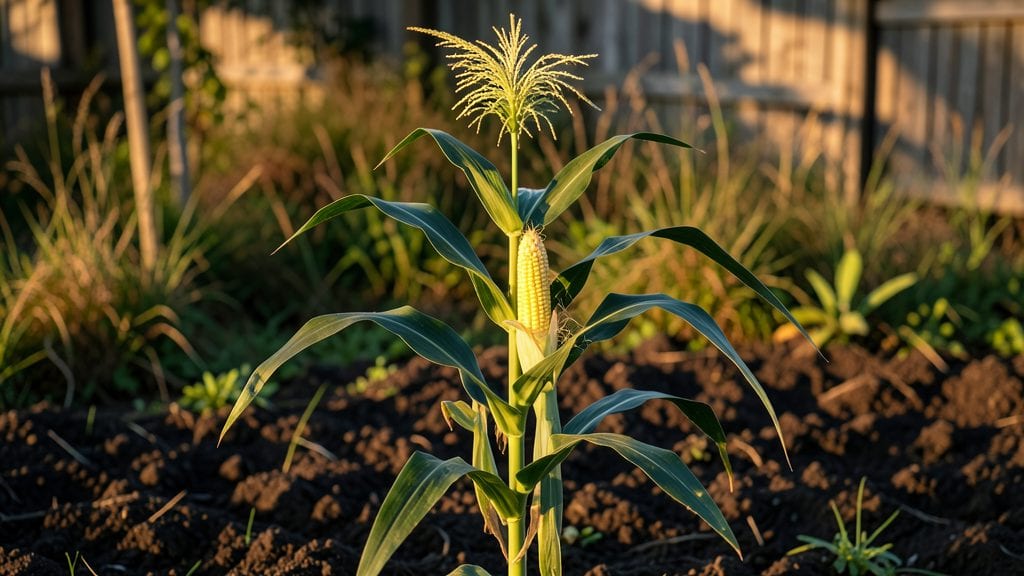
Popcorn plants pictures showcase varieties like 'Black Aztec' with deep purple husks or 'Golden Midget' with bright yellow kernels, distinguished by their distinct cob shapes and husk colors before harvest. These ornamental corn types flourish in warm climates and bring vibrant visual appeal to gardens.
If you're looking for eye-catching garden additions, popcorn plants deliver both beauty and function. 🌱 Their striking colors—ranging from deep purples to golden hues—make them stand out in any landscape. Unlike standard corn, these varieties are often grown for their visual impact, with some even producing edible kernels.
The key to showcasing their unique traits is planting them in full sun and well-draining soil, which enhances their natural pigmentation and ensures full cob development.
What truly sets these plants apart is their versatility—you can grow them for their decorative value or harvest the kernels for popping. 💫 Many gardeners pair them with complementary plants like beans or squash to create a balanced, visually appealing garden layout.
The best time to take pictures of their vibrant husks is during the tasseling stage, when their colors are at their peak intensity.
💡 In This Article
- Distinguishing Popcorn Plant Varieties by Visual Traits
- Growing Tips for Showcase-Worthy Popcorn Plants
Distinguishing popcorn plant varieties by visual traits
Here's what's actually happening when you look at popcorn plants: their visual traits develop through a combination of genetics and environmental factors. The husk color—ranging from deep purples in 'Black Aztec' to golden hues in 'Golden Midget'—is determined by anthocyanin pigments that react to sunlight.
These pigments intensify with 6-8 hours of direct sunlight daily, creating the vibrant colors that make these plants so photogenic. 🔥 The kernel patterns, like the rainbow streaks in 'Glass Gem', result from specific genetic markers that control starch distribution within the endosperm.
At the seedling stage, you can spot early indicators: 'Strawberry Popcorn' shows faint red streaks on leaves as young as 3 weeks old, while 'Glass Gem' seedlings display subtle pastel coloring.
During the tasseling stage (6-8 weeks), the plants' mature height—typically 5-8 feet—becomes evident, with husks developing their signature colors. The cob size varies dramatically: 'Golden Midget' produces 4-6 inch cobs, while 'Black Aztec' can reach 8-10 inches.
These differences are controlled by the plant's growth hormones, particularly gibberellins, which influence both height and ear development.
What most people don't realize is how light quality affects pigmentation. Plants grown under full-spectrum sunlight develop the most vibrant colors, while those in partial shade may produce muted versions. For photography, the early morning light (within 2 hours of sunrise) creates the most dramatic backlighting for husk colors.
The kernel patterns become most visible when the husks begin to dry slightly, typically 2-3 weeks before harvest. This is when the contrast between kernel colors and husk textures creates the most striking visuals. ✨
Consider these key visual distinctions when identifying varieties:
- Husk Texture: 'Glass Gem' has silky-smooth husks, while 'Strawberry Popcorn' develops slightly rougher, more fibrous husks
- Kernel Arrangement: 'Black Aztec' shows staggered rows, while 'Golden Midget' has tightly packed kernels
- Growth Habit: 'Glass Gem' grows in 8-foot stalks, while 'Strawberry Popcorn' typically reaches 6 feet
- Maturity Timing: 'Golden Midget' matures in 90-100 days, while 'Black Aztec' takes 110-120 days
The science behind these visual differences involves chlorophyll breakdown during kernel development. As the kernels mature, chlorophyll degrades and is replaced by carotenoids (yellow/orange) or anthocyanins (purple/red), creating the distinctive patterns. For example, 'Glass Gem' kernels contain multiple pigment layers that scatter light differently, producing its iridescent appearance.
This phenomenon is similar to how opals create their rainbow effects through light diffraction. 💫
When selecting plants for photography, focus on the mid-to-late tasseling stage when husks are fully colored but before they begin drying. This is when the contrast between husk colors and kernel patterns is most pronounced.
For best results, photograph plants when the relative humidity is below 60%, as this reduces moisture on the husks and enhances color saturation. The ideal time window is typically 10 AM to 2 PM on clear days.