Pruning
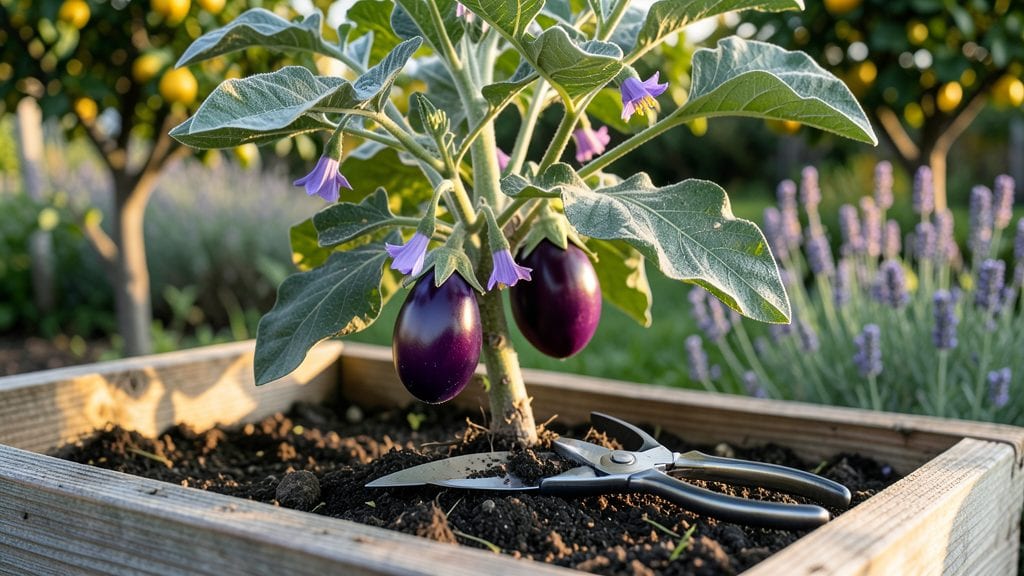
Pruning aubergine plants transforms leggy, sparse bushes into high-yielding powerhouses that produce fruit for months. 🌱 I learned this the hard way—my first eggplant plants sprawled like vines, dropping blooms before they could set fruit.
The fix? Strategic cuts that redirect energy where it matters: more flowers, more fruit, and plants that stay compact enough to actually reach.
You’ll need just three tools: sharp pruning shears, a small hand trowel for cleanup, and a pair of gloves (eggplant stems are surprisingly prickly). The key is timing: start when plants hit 12–18 inches tall, then prune again every 2–3 weeks during the growing season.
Focus on removing the lower leaves (they touch soil and rot) and suckers—those tiny shoots growing where branches meet the main stem. These cuts might look brutal, but they’re what turns a single stem into a bushy, productive plant.
What you’ll end up with is a plant that keeps producing instead of putting all its energy into one big fruit. My pruned aubergines now give me 2–3 harvests per season instead of one, and the fruit stays firm and glossy instead of rubbery.
The best part? You’ll also avoid the dreaded "blossom end rot" that plagues unpruned plants, because better air circulation means fewer hidden pests and diseases.
This works for both bush and vining varieties, though vining types need more aggressive pruning. If you’re growing in containers, pruning also keeps plants from toppling over—another lesson I learned when my first eggplant "tree" crashed into my neighbor’s fence.
Ready to turn those skinny stems into a harvest machine?
📚 In This Guide
- What you need
- Instructions
- Tips and common mistakes
- Wrapping up and next steps
What you need
- ● Pruning shears – Bypass pruners (sharp, clean blades, 5-7" length) for precise cuts. Sterilize with rubbing alcohol before and after use.
- ● Garden gloves – Nitrile-coated (thick, durable) to protect against thorns and sap.
- ● Disinfectant spray – 70% isopropyl alcohol or a copper-based fungicide (1 oz per gallon of water) to prevent disease spread.
- ● Sharp knife or pruning saw – For thicker stems (avoid tearing; use for branches >1/2 inch thick).
- ● Rubbing alcohol or hydrogen peroxide – 3% solution to clean tools between cuts.
- ● Compost bin or trash bag – For removing pruned debris (disease-free plants only!).
- ● Plant growth regulator – Paclobutrazol (follow label rates) to control excessive growth if needed.
- ● Organic mulch – Straw or wood chips (2-3 inches thick) to retain moisture and reduce stress post-pruning.
- ● Plant tie or twine – For supporting heavy branches after pruning (if your aubergine is indeterminate).
- ● Label markers – To tag pruned sections if tracking growth stages.
Step-by-Step guide to pruning aubergine plants for year-round productivity
Here’s how I transform leggy, underperforming aubergine plants into bushy, fruit-heavy powerhouses.
🌿 Step 1: Identify the Right Time to Prune
Prune your aubergines early in the morning when temperatures are cool—this reduces stress on the plant. I always wait until the plant has at least 3-4 main stems and 4-5 leaves per stem before touching it. This ensures the plant has enough energy to recover and continue growing.
Use clean, sharp pruning shears to avoid tearing the stems. If you’re using your fingers, pinch just above a leaf node—this is where new growth will sprout. Avoid pruning during hot afternoons or when the plant is flowering, as this can shock the system and reduce fruit production.
✂️ Step 2: Remove Weak or Damaged Growth
Start by eliminating any stems that are thin, weak, or showing signs of disease. These are usually the ones growing inward or crossing over other stems. I also cut back any leaves that are yellowing or have brown spots—this improves airflow and prevents fungal issues.
Focus on the plant’s center first. Aubergines tend to grow bushy from the base, so removing crowded inner growth encourages outward expansion. If you see a stem with no leaves or flowers, snip it off completely—it’s just taking energy from the rest of the plant.
🌱 Step 3: Encourage Bushier Growth with Strategic Cuts
Once the weak growth is gone, it’s time to shape the plant. I leave the strongest 3-4 main stems and prune any additional stems back to a leaf node. This redirecting of energy leads to thicker, more productive branches.
For each remaining stem, pinch off the top set of leaves just above a leaf node. This prevents the plant from growing too tall and encourages it to branch out. You’ll see new side shoots forming within 7-10 days—these are your future fruit-bearing stems.
☀️ Step 4: Maintain and Monitor After Pruning
After pruning, water the plant deeply to help it recover. I like to add a balanced fertilizer (like 10-10-10) to the soil to give it a nutrient boost. Avoid over-fertilizing, though—too much nitrogen can lead to lots of leaves but few fruits.
Keep an eye on the plant over the next 2-3 weeks for new growth. If you notice any stems growing too close together, prune them again to maintain airflow. Regular pruning every 4-6 weeks keeps the plant healthy and productive all season long.
🌿 Step 5: Harvest and Prune for Continuous Growth
When your aubergines start to fruit, harvest them regularly to encourage more production. After picking, check the plant for any stems that have finished fruiting or are growing weakly. Prune these back to a leaf node to redirect energy to new growth.
This method keeps your aubergine plant producing fruit for months instead of just one big flush. I’ve had plants last well into fall with proper care—just keep pruning, harvesting, and repeating the process! The key is consistency and patience.
Tips & tricks for pruning aubergine plants
Transforming your aubergine plants into productive powerhouses takes a few key tricks that most gardeners miss.
Timing is Everything: Early morning pruning is non-negotiable—cool temperatures mean less plant stress and faster recovery. I've learned this the hard way after seeing plants wilt dramatically when pruned in midday heat. The 3-4 main stems guideline in Step 1 ensures your plant has enough structural integrity to support new growth without collapsing.
Visual Cues for Healthy Growth: In Step 2, look for stems that grow inward or cross over others—these are energy vampires. I train myself to spot these by imagining the plant as a tree: just like a tree's branches, aubergine stems need room to spread outward. The leaf node is your target spot for pinching—it's where new growth will emerge most vigorously.
The 7-10 Day Growth Window: When you pinch back those top leaves in Step 3, you're not just shaping the plant—you're triggering a growth spurt. I've timed this perfectly by marking my calendar 7 days after pruning to check for new side shoots. This is when the magic happens, and you'll see those future fruit-bearing stems start to form.
Fertilizer Strategy: That 10-10-10 balanced fertilizer in Step 4 isn't just random numbers—it's the perfect ratio to support both leafy growth AND fruit production. Too much nitrogen (the first number) leads to lush foliage but few aubergines. I've had plants with beautiful green leaves but no fruit because of this imbalance, so I always stick to the balanced formula.
Pro Tips for Pruning Aubergine Plants
- Transforming your aubergine plants into productive powerhouses takes a few key tricks that most gardeners miss.
- Timing is Everything: Early morning pruning is non-negotiable—cool temperatures mean less plant stress and faster recovery.
- Visual Cues for Healthy Growth: In Step 2, look for stems that grow inward or cross over others—these are energy vampires.
Frequently asked questions
Got questions about pruning your aubergine (eggplant) plants? You’re not alone! Here are some of the most common concerns—plus straightforward answers to keep your garden thriving.
When is the best time to prune aubergine plants?
Prune your aubergines after they’ve established 4–5 true leaves (about 4–6 weeks after transplanting). Focus on removing lower leaves and suckers (side shoots) in the morning when plants are hydrated. Avoid heavy pruning late in the season—it can stress plants before harvest.
How much should I cut back my aubergine plant?
For bush varieties, trim 25–30% of foliage to improve airflow and fruit production. For indeterminate types, prune suckers (shoots growing between the main stem and branches) to 1–2 inches above the stem. Never remove more than 1/3 of the plant at once—gradual pruning prevents shock.
What if I prune too late in the season?
Late-season pruning (within 4–6 weeks of harvest) can delay fruit ripening or reduce yield. If you must prune late, focus on dead or diseased leaves only. Avoid heavy cuts—prioritize airflow over aggressive trimming. Over-pruning now might leave your plants vulnerable to pests or cold snaps.
Can I prune aubergines if they’re flowering or fruiting?
Yes, but lightly! Remove only yellow or diseased leaves and small suckers near flowers/fruit. Heavy pruning during flowering can stress plants and drop blossoms. Save major pruning for early growth stages—focus on post-harvest maintenance (like trimming spent stems) later in the season.
Will pruning make my aubergines grow bigger or more?
Pruning doesn’t directly increase fruit size, but it boosts quantity by redirecting energy to fewer, healthier stems. Bushy plants with good airflow produce more uniform, disease-resistant fruit. Think of it as “quality over quantity”—your aubergines will thank you with bigger yields over time!
Pro Tip:
Use sterilized pruners (wipe with rubbing alcohol) to avoid spreading disease. And if your plants look leggy? They’re thirsty—water deeply before pruning to reduce stress.
Wrapping up and next steps
Pruning your aubergine (eggplant) plants is your secret weapon for bigger yields, healthier growth, and a longer harvest season! 🌱 By mastering a few simple techniques—like pinching, trimming, and managing suckers—you’ll transform your garden into a productive powerhouse.
Remember, consistency is key, so grab those pruners and get to work with confidence.
Ready to take your aubergine game to the next level? Start small: pick one plant to practice on, follow the steps, and watch your skills (and harvest!) grow. Before you know it, you’ll be sharing your pruning prowess—and those juicy, homegrown eggplants—with friends and family. Happy pruning! 🎉