Pruning
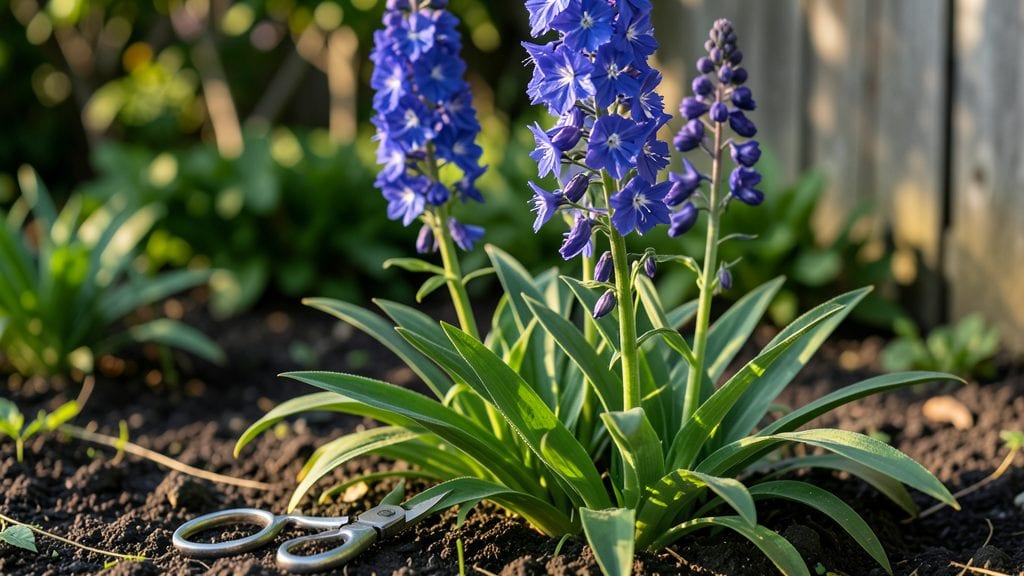
Pruning delphinium plants at the right time transforms those gangly stems into towering, bloom-packed giants that steal the show in the garden. I learned the hard way that cutting too late means sacrificing next year's flowers—delphiniums store energy in their roots, and aggressive late-season pruning leaves them exhausted.
The key is timing: deadhead spent blooms in summer to encourage more flowers, then do a cleanup cut in early fall to shape the plant for spring.
You'll need sharp pruners or shears (dull blades tear stems), a clean cutting surface, and a clear plan for where to cut. Delphiniums bloom on new growth, so avoid heavy pruning until after flowering.
For established plants, reduce stems by one-third in early fall, cutting just above a leaf node at a 45-degree angle to prevent water pooling. This encourages bushier regrowth while protecting the crown from winter moisture.
The payoff comes next spring when your delphiniums burst from the ground with thicker stems and more blooms than before. Proper pruning also reduces disease risk by improving airflow, and the plants recover faster after winter.
Just avoid cutting into old wood—delphiniums are tough, but they won’t regrow from bare stems. With the right technique, you’ll have six-foot spires of color that outshine anything from a nursery.
This method works for both perennial and biennial delphiniums, though biennials may need lighter pruning to preserve seed heads if you want to collect them. For cold climates, wait until after the last frost to prune—early cuts can leave plants vulnerable to freeze damage.
Start with one plant this season to perfect your timing before tackling the whole border.
📚 In This Guide
- What you need
- Instructions
- Tips and common mistakes
- Wrapping up and next steps
What you need
- ● Bypass pruners – Sharp, clean bypass pruners (not anvil-type) to make precise cuts without crushing stems. Choose 5-inch blades for medium stems.
- ● Garden shears or loppers – For thicker stems (over ½ inch in diameter), opt for bypass loppers with 8-inch blades and a comfortable grip.
- ● Disinfectant (70% isopropyl alcohol or bleach solution) – A small spray bottle or cloth to sterilize tools before and after each cut.
- ● Garden gloves – Heavy-duty nitrile or leather gloves to protect against thorns and sap.
- ● Sharpie or permanent marker – For marking stems if you’re pruning for propagation or specific regrowth patterns.
- ● Compost or mulch – A bucket or wheelbarrow to collect pruned stems and debris for composting.
- ● Sturdy bucket or trash bag – For disposing of diseased or heavily infested stems separately from healthy clippings.
- ● Hand pruners with ergonomic grips – If you have arthritis or prefer extra comfort during long sessions.
- ● Knee pads or a small stool – For easier access to lower stems or if you’re working in a garden bed.
- ● Pruning saw (for stubborn woody stems) – A folding pruning saw for stems too thick for loppers.
- ● Plant hormone rooting gel – If you’re propagating from cuttings (e.g., for delphinium stem cuttings).
- ● Spray bottle with water – To dampen stems before cutting if the air is very dry.
Instructions for pruning delphinium plants
Here's the precise method I've used to keep delphiniums thriving and producing those dramatic spires of color year after year.
Understand the Two-Pruning System
Delphiniums bloom on last year's growth, so timing matters. First, cut back spent stems after flowering to 4-6 inches above the ground—this redirects energy into next year's blooms. I always use clean, sharp pruners to avoid damaging the woody stems. The key is to prune after the flower stalks have faded completely but before seed heads form, which saps the plant's strength.
Wait until late summer (around August) for the second prune. At this point, cut back all stems to 6-8 inches tall. This prevents flopping and prepares the plant for dormancy. I mark my calendar because pruning too early can stimulate new growth that won't harden off before winter.
Deadhead Regularly During the Bloom Season
As soon as flower spikes begin to fade, snip them off just above the next set of leaves. This encourages continuous blooming throughout the season. I use my fingers for small stems but switch to pruners for larger clusters to avoid crushing the delicate stems. Never leave seed heads—they signal the plant to stop flowering and focus on reproduction instead.
Watch for buds forming along the stems. If you see new flower buds developing, leave those stems intact. The goal is to remove only fully spent blooms while preserving potential future growth. A quick weekly check keeps the plant looking tidy and productive.
Thin Crowded Stems for Better Airflow
Delphiniums naturally multiply, creating dense clumps that trap moisture and invite disease. In early spring, before new growth appears, thin out weak or crossing stems at the base. I aim to leave 3-5 of the strongest stems per plant—this ensures each has enough nutrients to develop robust blooms. Use sharp pruners to make clean cuts at the crown level.
This step also prevents the center of the plant from becoming woody and bare. Over time, delphiniums can develop a hollow center if not thinned. I always step back to check the plant's shape—it should look open and airy, not like a tightly packed bundle of sticks.
Clean Up Debris After Pruning
Remove all cuttings and spent stems from the garden immediately. Delphiniums are prone to powdery mildew, and leaving debris around invites fungal spores. I collect the clippings in a bag and dispose of them in the trash—not the compost pile—because fungal spores can survive and reinfect next year's plants.
After clearing away debris, apply a 2-3 inch layer of mulch around the base of the plant. This protects the crown from temperature swings and retains moisture. I use organic mulch like shredded bark or straw, keeping it 6 inches away from the stem to prevent rot.
Monitor for New Growth After Pruning
Within 2-3 weeks of your late-summer prune, you'll see new basal leaves emerging from the crown. This is a good sign—the plant is preparing for dormancy. If no new growth appears, the plant may need more nutrients. I add a balanced fertilizer (10-10-10) in early spring to support regrowth.
Watch for yellowing leaves or stunted growth—these are signs of stress. Over-pruning or cutting too late in the season can weaken the plant. If you notice weak stems, reduce pruning next year and focus on removing only dead or diseased growth. Delphiniums are forgiving, but they reward careful attention.
Tips & tricks for pruning delphinium plants
The secret to maintaining delphiniums that reach for the sky lies in precision and timing. These insights will help you avoid common pitfalls and keep your plants thriving for years to come.
Timing is Everything: In Step 1, when pruning spent stems to 4-6 inches, wait until the flower spikes have completely faded but before seed heads form. I've learned this the hard way—cutting too early removes potential future blooms, while waiting too long lets the plant expend energy on seed production instead of next year's growth. Mark your calendar for late August for the second prune, as this is when delphiniums naturally prepare for dormancy. The goal is to give the plant enough time to harden off before winter.
Tool Selection Matters: Never use dull or rusty pruners, especially in Step 1 and Step 3 where clean cuts are critical. I invest in high-quality, sharp pruners that make clean cuts without crushing stems. For delicate deadheading in Step 2, I use my fingers for small stems but always have pruners ready for larger clusters. Disinfect your tools with rubbing alcohol between plants to prevent spreading disease, particularly important when dealing with powdery mildew-prone delphiniums.
Visual Cues for Perfect Pruning: When cutting back to 6-8 inches in Step 1's second prune, look for the point where the stem is about the width of your thumb above the base. This height ensures you're not cutting into last year's growth while still preventing flopping. For deadheading in Step 2, remove stems just above the next set of leaves—this encourages new growth from that node. The plant should always look balanced, with an open center rather than a tightly packed bundle.
Mulching Strategy: After cleaning up debris in Step 4, apply that 2-3 inch layer of organic mulch, but keep it 6 inches away from the stem. This creates a moisture-retaining barrier while preventing crown rot. I've found that straw works particularly well for delphiniums because it allows water to penetrate while insulating the roots. In colder climates, consider adding an extra 2 inches of mulch in late fall to protect the crown during winter.
Pro Tips for Pruning Delphinium Plants
- The secret to maintaining delphiniums that reach for the sky lies in precision and timing.
- Timing is Everything: In Step 1, when pruning spent stems to 4-6 inches, wait until the flower spikes have completely faded but before seed heads form.
- Tool Selection Matters: Never use dull or rusty pruners, especially in Step 1 and Step 3 where clean cuts are critical.
Frequently asked questions
Got questions about pruning your delphinium plants? You’re not alone! Here are answers to the most common concerns—so you can keep those stunning blooms thriving with confidence.
When is the best time to prune delphiniums?
Prune after the first flush of blooms has faded (late spring to early summer) to encourage a second round of flowers. Avoid pruning in fall or winter, as delphiniums store energy in their roots for next year’s growth. Pro tip: If your plant is leggy, a light trim in early spring can also help shape it before blooming season.
How much should I cut back delphiniums?
Cut back stems by about ⅓ after flowering to promote bushier growth. For deadheading, snip just above a set of leaves or a bud. Never remove more than 50% of the plant at once—this can stress it. Use clean, sharp shears to avoid crushing stems, which can invite disease.
Can I prune delphiniums in rainy or humid weather?
Nope! Prune on a dry, sunny day to allow wounds to heal quickly. Humid or rainy conditions slow healing and increase the risk of fungal issues like powdery mildew. If you must prune in damp weather, do it in the morning so stems have time to dry before evening.
What if I skip pruning—will my delphinium still bloom?
Yes, but expect fewer, smaller blooms and a less structured plant. Pruning removes spent flowers, redirects energy to new growth, and prevents the plant from becoming woody or floppy. Think of it like giving your delphinium a haircut—it’ll thank you with bigger, showier blooms next season!
How do I revive an over-pruned delphinium?
If you’ve trimmed too aggressively, don’t panic! Water deeply and fertilize with a balanced, low-nitrogen formula to encourage root recovery. Avoid heavy pruning the next year—opt for light maintenance. With patience, your delphinium will bounce back, though it may take a season to regain its full vigor.
Wrapping up and next steps
Pruning your delphinium plants may feel like a daunting task, but with the right timing and technique, you’ll unlock stunning, towering blooms year after year! 🌸 Remember to trim spent flowers in early summer, cut back faded stems in late summer, and give them a light haircut in early spring to encourage fresh growth.
A little effort now means a show-stopping display later—so grab those shears and get pruning!
Ready to transform your garden? Start with one plant this season and watch your delphiniums thrive! 🌱 For more pruning tips, explore our gardening guide—happy pruning!