Pruning
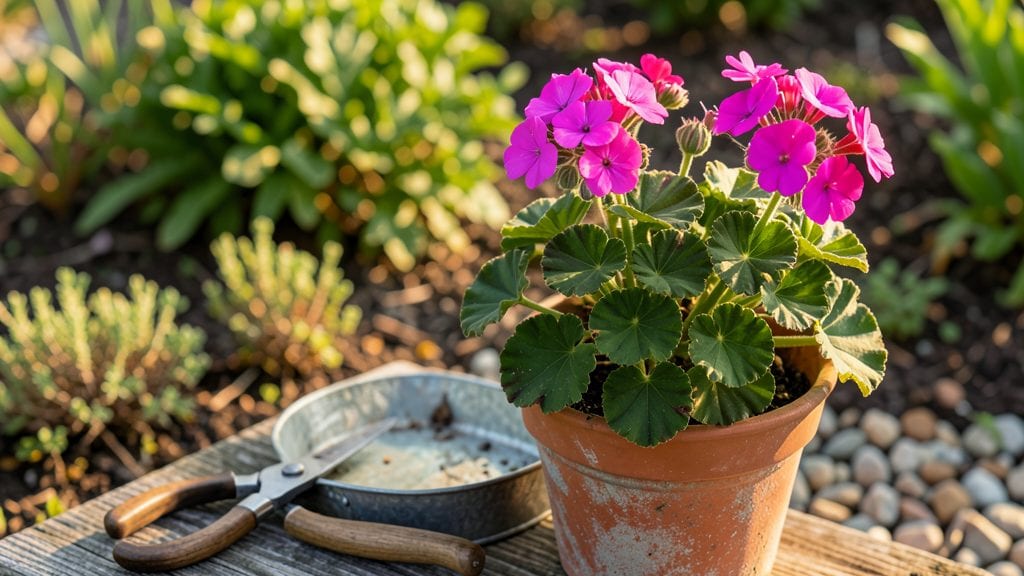
Pruning geranium plants keeps them blooming like clockwork all season long. 🌿 I've learned that three well-timed cuts—early spring, mid-summer, and late fall—transform these plants from scraggly to showstopping.
The key isn't just when you cut, but how: removing the right growth at the right time makes all the difference between a few sad blooms and a cascade of color.
You'll need sharp pruners, gloves, and a clear sunny day for visibility. Zonal geraniums respond best to aggressive cuts, while ivy types prefer light shaping. My first mistake?
Over-pruning in spring—now I wait until new growth appears before making my first trim. This simple adjustment doubled my blooms that first season.
After each cut, your plants will bounce back with fresh, vibrant foliage within weeks. The late-fall trim, in particular, sets them up for a strong spring comeback. You'll notice the difference immediately—fuller plants, more flowers, and a shape that looks intentional, not wild.
Works for both patio pots and in-ground beds, and adapts to different climates. The same principles apply whether you're dealing with zonal, regal, or ivy geraniums. Ready to give your plants the care they deserve?
📚 In This Guide
- What you need
- Instructions
- Tips and common mistakes
- Wrapping up and next steps
What you need
- ● Pruning shears: Bypass pruners (sharp, clean, and sterilized with rubbing alcohol to prevent disease). Avoid dull tools—they crush stems!
- ● Gloves: A pair of gardening gloves (nitrile-coated for grip and protection from thorns).
- ● Disinfectant: 70% isopropyl alcohol or a 10% bleach solution (1 part bleach to 9 parts water) to sterilize tools between cuts.
- ● Trash bag or bucket: For collecting pruned stems and debris. A sealed bag helps contain mess!
- ● Pruning saw: For thick, woody stems (if your geraniums are mature and overgrown).
- ● Horticultural oil or fungicide: If your plants show signs of powdery mildew or pests.
- ● Plant food: A balanced fertilizer (10-10-10 or 20-20-20) to nourish geraniums after pruning.
- ● Notebook & pen: To jot down pruning dates and notes on plant health.
Instructions for pruning geranium plants to maximize blooms
This three-part pruning schedule keeps your geraniums lush and flowering all season long.
✂️ Step 1: First Trim After Spring's Last Frost
Wait until after the last frost when temperatures stay above 50°F nightly—geraniums won't tolerate cold soil. Grab your sharp pruning shears and cut back all stems by one-third (about 3-4 inches from the base). This removes winter damage and encourages fresh growth from the center.
Look for new buds forming at the stem base—these will become your next flush of flowers. I always prune on a dry morning to reduce disease risk from wet foliage. Remove any dead or brown stems completely; they won't regrow and just compete with healthy growth.
✂️ Step 2: Mid-Season Trim After First Bloom Fade
About 6-8 weeks after your first trim, when the initial flowers begin to fade, give your geraniums another light trim. This time, cut back only the spent blooms and leggy stems—never more than 1-2 inches per stem. The goal is to redirect energy to new growth rather than seed production.
Watch for stems that grow long and bare at the bottom. These "leggy" stems won't produce flowers and make the plant look unkempt. Pinch off just above a set of leaves where new buds may form. Avoid cutting into old wood—geraniums bloom on new growth, so always prune just above a leaf node.
✂️ Step 3: Late-Season Renewal Before Fall Chill
When temperatures drop below 60°F at night (usually 8-10 weeks after planting), give your geraniums one final trim. Cut back all stems by half—about 4-6 inches from the base. This prevents woody growth and encourages compact, bushy plants that survive winter better.
Remove any remaining flowers and seed heads completely. These drain energy that could be used for root strengthening. After trimming, apply a balanced fertilizer (like 10-10-10) to support new growth before dormancy. Water deeply after pruning to help roots recover from the shock of cutting.
🌱 Bonus: Winter Pruning for Potted Geraniums
If your geraniums are in containers, move them indoors before the first frost. Prune them again in early spring (February-March) by cutting back one-third of the growth. This mimics their natural cycle and ensures vigorous blooms when you return them outside.
Here's the thing—geraniums reward precise timing. Prune too early, and you'll stunt spring blooms. Prune too late, and you'll miss the summer flush. Stick to these three cuts, and you'll enjoy continuous color from May through October—or even later with proper winter care.
Tips & tricks for perfect geranium pruning
Timing and technique make all the difference when pruning geraniums—here's what I've learned from years of trial and error.
The Temperature Factor: Those 50°F and 60°F thresholds aren't arbitrary—they're when geraniums shift between growth and dormancy modes. In Step 1, wait until nighttime temps consistently stay above 50°F before cutting. I've seen plants shocked when pruned too early after frost, with new growth wilting despite warm days. For Step 3, when nights drop below 60°F, that's your cue for the final trim—any later and you'll encourage woody stems that bloom poorly next season.
Tool Technique: Sharp pruning shears aren't just about clean cuts—they're about plant health. Dull blades crush stems instead of cutting cleanly, creating entry points for disease. I always clean my shears with rubbing alcohol between plants to prevent spreading pathogens. For the one-third cut in Step 1, angle your cuts just above a leaf node at a 45-degree angle—this increases surface area for faster healing and new growth.
Visual Cues Over Calendars: The 6-8 week window for Step 2 isn't set in stone—watch your plants instead. When you see the first flush of blooms starting to fade (petals dropping or turning brown), that's your signal. I've missed this window by following weeks too literally, only to get sparse summer blooms. Leggy stems with bare bottoms are another clear sign—these won't produce flowers and should be pinched back immediately, even if it's slightly before the 6-week mark.
Post-Prune Care: After that dramatic half-cut in Step 3, geraniums need extra TLC. The shock of cutting triggers root activity, so water deeply right after pruning to help recovery. I've found that applying a balanced fertilizer (like 10-10-10) immediately after the late-season trim gives roots the phosphorus boost they need for winter hardening. For potted geraniums, move them to a bright indoor spot after winter pruning—geraniums need 6-8 hours of light daily to prevent leggy indoor growth.
Pro Tips for Pruning Geranium Plants
- Timing and technique make all the difference when pruning geraniums—here's what I've learned from years of trial and error.
- The Temperature Factor: Those 50°F and 60°F thresholds aren't arbitrary—they're when geraniums shift between growth and dormancy modes.
- Tool Technique: Sharp pruning shears aren't just about clean cuts—they're about plant health.
Frequently asked questions
Got questions about keeping your geraniums lush and blooming? Here are answers to the most common ones—so you can prune like a pro!
When is the best time to prune geraniums for maximum blooms?
Prune geraniums three times a year for continuous blooms: early spring (to shape and remove dead growth), mid-summer (to encourage a second flush of flowers), and late summer/early fall (to prep for winter). Avoid pruning in extreme heat or cold—wait for mild weather (60–75°F).
How much can I cut back geraniums without harming them?
You can safely cut back geraniums by 1/3 to 1/2 of their height, but never trim into old, woody stems (they won’t regrow). Focus on green, healthy growth—this encourages bushier plants and more flowers. For leggy geraniums, trim just above a leaf node (where leaves meet the stem) to promote branching.
What should I do if my geraniums look sad or stop blooming after pruning?
Don’t panic! Geraniums often need 2–4 weeks to recover after pruning. If they’re still struggling, check for:
- Underwatering (stick your finger in the soil—it should feel dry 1–2 inches down).
- Overcrowding (thin out stems if they’re too dense).
- Lack of sunlight (geraniums need 6+ hours of direct sun daily).
Can I propagate geraniums from pruned cuttings? Yes—and it’s easy!
Use 4–6 inch cuttings from healthy stems (just below a leaf node). Remove lower leaves, dip in rooting hormone (optional), and place in moist potting mix or water. Keep in bright, indirect light and roots should form in 2–4 weeks. Transplant once rooted!
Do I need to prune geraniums differently in pots vs. garden beds?
Not drastically, but container geraniums may need more frequent trims (every 3–4 weeks) to prevent root-bound stress. Since pots dry out faster, prune slightly earlier in the season (late spring) to avoid overcrowding. Also, replace potting mix every 2 years—old soil loses nutrients, which can stress plants.
Wrapping up and next steps
Pruning your geraniums doesn’t have to be intimidating—it’s all about timing, technique, and a little love! 🌸 By mastering the three strategic trims (early spring, mid-summer, and late summer), you’ll encourage lush foliage and nonstop blooms all season long.
Remember, healthy plants reward patience, so grab those shears and get ready to enjoy your vibrant, thriving geraniums.
Now that you’re armed with the know-how, why not take the next step? 🌱 Try pruning a single stem today and observe the difference over the next few weeks. Soon, you’ll be a geranium-growing pro—and your garden will thank you for it!