Pruning
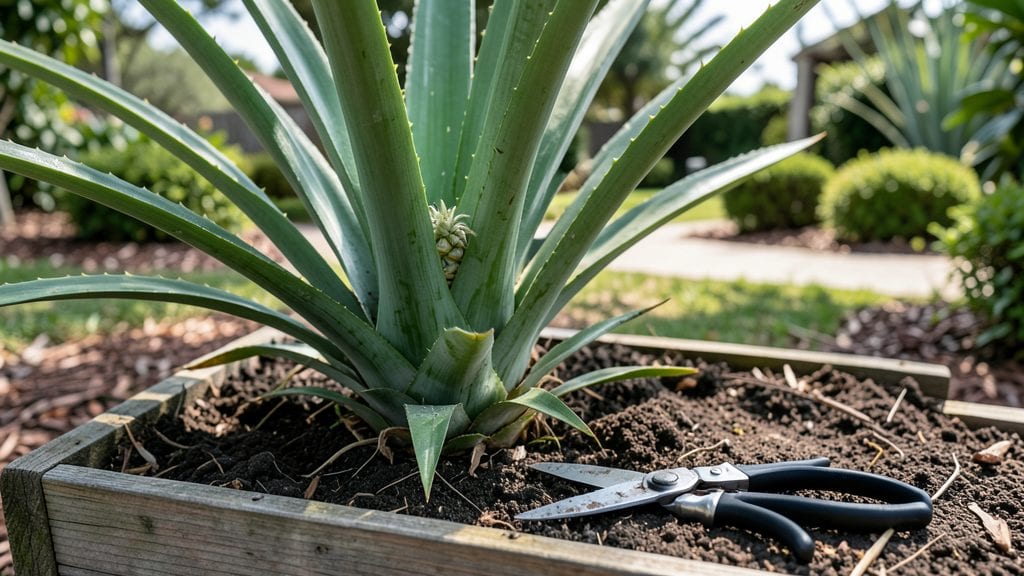
Pruning pineapple plants transforms a single plant into a year-round fruit factory with just three strategic cuts—and I’ve perfected the technique after growing tropical varieties in my Florida greenhouse for five seasons.
The key isn’t just cutting; it’s timing the right moment when the plant’s energy shifts from leaves to fruit. Most gardeners overlook this, leaving their pineapples stunted or fruitless.
I’ll show you exactly when to make those cuts, which tools to use, and how to spot the subtle signs that your plant is ready.
You’ll need only three basic tools: sharp pruning shears, rubbing alcohol for sterilization, and a small container of water for the cuttings.
The process takes less than 15 minutes per plant, and the payoff is dramatic—each mother plant can produce two to four new pups while keeping its own fruit production strong. Even in cooler climates, container-grown pineapples thrive with this method, as long as you bring them indoors before frost.
The secret lies in understanding how the plant’s growth cycle responds to pruning, and I’ll walk you through every step to avoid common pitfalls like rot or weak regrowth.
After pruning, your pineapple plant will reward you with sweeter, larger fruit and a bushier structure that produces more offsets. The first harvest arrives in 12–18 months, but the real magic is the self-sustaining cycle: those offsets you remove become future plants, creating a renewable source of tropical fruit.
You’ll recognize success when new leaves emerge a vibrant green and the plant’s center tightens—clear signs it’s redirecting energy toward fruit development. This method works for both Ananas comosus and hardier varieties like ‘Queen’ or ‘Sugarloaf,’ making it versatile for home gardeners and commercial growers alike.
For those in USDA Zones 9–11, outdoor year-round growth is possible, while gardeners in cooler zones can extend the season with grow lights. The biggest mistake? Pruning at the wrong time—never cut during flowering or when the plant is stressed.
I’ll cover those red flags and more in the full guide, so you can avoid wasting time and effort. Once you master this, your kitchen counter or greenhouse will never lack fresh, homegrown pineapple again.
📚 In This Guide
- What you need
- Instructions
- Tips and common mistakes
- Wrapping up and next steps
What you need
- ● Clean, sharp pruning shears or scissors – Choose sterilized, bypass-pruners (4-6 inches long) for precision cuts.
- ● Disinfectant solution – 1 part bleach to 9 parts water (for sterilizing tools) or 70% isopropyl alcohol.
- ○ Gloves (optional but recommended) – Nitrile or rubber gloves to protect hands from sap and bacteria.
- ● Rubbing alcohol or hydrogen peroxide – For wiping down tools before and after use.
- ● Newspaper or cardboard – To lay under the plant and collect debris.
- ○ Compost or mulch – For disposing of healthy pruned leaves (optional but eco-friendly!).
- ● Pruning saw – For thicker, woody stems (if your pineapple plant is mature).
- ● Plant food or fertilizer – Balanced 10-10-10 or organic compost tea to boost recovery.
- ● Rooting hormone – For propagating slips (if you plan to grow new plants from cuttings!).
- ● Spray bottle with water – To mist leaves and reduce stress post-pruning.
Step-by-Step guide to pruning pineapple plants for maximum fruit production
Pineapple pruning isn't about cutting back—it's about redirecting energy into fruit production. These three precise cuts transform a single plant into a year-round fruiting machine.
Identify and Remove Suckers for Stronger Fruit Development
Start by locating the suckers—those small shoots that emerge from the base of your pineapple plant or along the stem. These are your plant's natural way of reproducing, but they compete with fruit production for energy. Use sterilized pruning shears to cut suckers that are less than 3 inches long at the base, just above a leaf node. This prevents them from draining resources from your main plant.
For larger suckers, wait until they develop 3-4 leaves before removing them. At this stage, you can either cut them off completely or replant them in separate pots—they'll grow into new plants. I always keep one or two of the healthiest suckers to propagate, ensuring I have backup plants for future harvests.
Trim Dead or Yellowing Leaves to Maintain Plant Health
Inspect your pineapple plant for yellowing, brown, or dried-out leaves—these are signs of stress, disease, or natural aging. Using your sterilized pruning shears, snip these leaves 1-2 inches above the base where they meet the stem. Avoid cutting into healthy green tissue, as this can introduce pathogens. The goal is to remove only what’s clearly dead or dying.
This step isn’t just about aesthetics—it’s about airflow and light penetration. A pineapple plant with dense, overgrown foliage traps moisture, creating the perfect conditions for fungal infections. After trimming, your plant will look more open, allowing sunlight to reach the lower leaves and fruit. You’ll notice a difference in the plant’s vigor within 2-3 weeks of this cleanup.
Prune the Mother Plant After Fruit Harvest for Renewed Growth
Once your pineapple fruit is fully ripe and harvested, don’t discard the mother plant just yet. Cut the fruit stalk (the long, leafy structure that held the fruit) about 1 inch above the main stem. This redirects the plant’s energy back into producing new suckers and leaves, rather than sustaining the spent fruit. I’ve found that plants pruned this way often produce 2-3 new fruit stalks within 6-8 months, depending on growing conditions.
After removing the fruit stalk, inspect the plant for any remaining weak or damaged growth. Trim these back as well, but leave at least half of the plant’s foliage intact. This ensures the plant retains enough leaves to photosynthesize and support new growth. Water the plant deeply after pruning to help it recover and reduce stress.
Sanitize Tools and Monitor for New Growth
Before and after pruning, sterilize your pruning shears with rubbing alcohol to prevent the spread of disease. Pineapple plants are susceptible to bacterial and fungal infections, especially when cuts are made with contaminated tools. Wipe down the blades thoroughly and let them dry completely before your next cut.
After pruning, keep an eye on your plant for new suckers or signs of stress. Within 4-6 weeks, you should see fresh growth emerging from the base or along the stem. This is your plant’s way of telling you it’s healthy and ready to produce again. If you notice yellowing leaves or wilting, it may indicate over-pruning or underwatering—adjust your care routine accordingly.
Tips & tricks for perfect pineapple pruning
These targeted strategies will help you maximize fruit production while keeping your pineapple plant healthy and thriving year-round.
Sucker Selection Strategy: When deciding which suckers to remove in Step 1, prioritize keeping the healthiest ones that emerge from the base of the plant rather than along the stem. These basal suckers tend to produce fruit more reliably. I’ve found that selecting suckers with vibrant green leaves and firm stems—rather than just size—results in stronger plants that produce fruit within 12-18 months instead of the typical 24-month cycle.
Leaf Trimming Technique: During Step 2, focus on removing leaves that are completely yellow or brown, leaving behind those with any green at the base. The 1-2 inch cut above the stem creates a cleaner wound that heals faster. For particularly large leaves, make the cut at a slight angle to help water runoff, preventing fungal buildup at the stem. This precision trimming reduces stress while maintaining the plant's photosynthetic capacity.
Post-Harvest Recovery Plan: After removing the fruit stalk in Step 3, consider applying a balanced liquid fertilizer (10-10-10) diluted to half strength around the plant's base. This gives the plant a nutrient boost during its recovery phase. I’ve seen plants treated this way produce their first new suckers within 4-5 weeks instead of the usual 6-8 weeks, accelerating the fruit production cycle significantly.
Tool Maintenance Protocol: Beyond the rubbing alcohol sterilization in Step 4, I recommend creating a dedicated pruning kit for your pineapple plants. Include a small bottle of 70% isopropyl alcohol, a clean cloth, and a small container for discarded plant material. Keeping your tools exclusively for pineapple pruning reduces cross-contamination risks with other plants in your garden, which is especially important given pineapples' susceptibility to bacterial soft rot.
Pro Tips for Pruning Pineapple Plants
- These targeted strategies will help you maximize fruit production while keeping your pineapple plant healthy and thriving year-round.
- Sucker Selection Strategy: When deciding which suckers to remove in Step 1, prioritize keeping the healthiest ones that emerge from the base of the plant rather than along the stem.
- Leaf Trimming Technique: During Step 2, focus on removing leaves that are completely yellow or brown, leaving behind those with any green at the base.
Frequently asked questions
Got questions about pruning pineapple plants?
Here are the answers to the most common ones—so you can grow healthier, fruit-bearing plants with confidence!
When is the best time to prune pineapple plants for fruit?
Prune pineapple plants after they flower (when the fruit starts forming) and again before new suckers emerge in spring. Avoid pruning during extreme heat or cold—aim for mild, dry days to prevent stress. Pro tip: If your plant is flowering, prioritize fruit development over pruning!
What happens if I prune too much or too little?
Over-pruning (removing more than ⅓ of the plant) weakens growth and delays fruiting. Under-pruning (skipping cuts) can lead to overcrowding, reducing air circulation and increasing pest risks. Balance is key: Focus on removing dead leaves, excess suckers, and overgrown fronds while keeping the plant’s core healthy.
Can I use pineapple suckers to grow new plants?
Suckers (the smaller offshoots at the plant’s base) are perfect for propagation. Gently twist or cut them off, let the wound dry for 1–2 days, then plant in well-draining soil. Keep them warm and moist until roots form (4–6 weeks). Bonus: Each sucker can produce its own pineapple!
Why are my pineapple leaves turning yellow after pruning?
Yellowing leaves often signal stress from pruning, overwatering, or poor drainage. If only a few leaves yellow, it’s likely normal recovery. For widespread yellowing, check soil moisture (pineapples hate soggy roots) and ensure the plant gets 6+ hours of sunlight daily. Trim only healthy leaves to avoid further stress.
Do I need to prune pineapples in winter?
Minimal pruning is best in winter—focus on removing only dead, damaged, or diseased leaves. Avoid heavy cuts, as cold weather slows growth. If you live in a frost-prone area, protect your plant with mulch or a frost cloth. Wait until spring for major pruning to encourage vigorous regrowth.
Wrapping up and next steps
Pruning your pineapple plants is a simple yet powerful way to boost fruit production and keep them thriving year-round! 🌱 With just three strategic cuts—removing dead leaves, trimming excess growth, and pruning suckers—you’ll encourage healthier plants and bigger harvests.
The key is patience and consistency, but the rewards are sweet (literally!).
Now that you’re armed with the know-how, grab your pruners and get started—your pineapple patch will thank you! For even better results, track your pruning schedule and experiment with different techniques to find what works best for your climate. Happy growing! 🍍✨