
Pruning
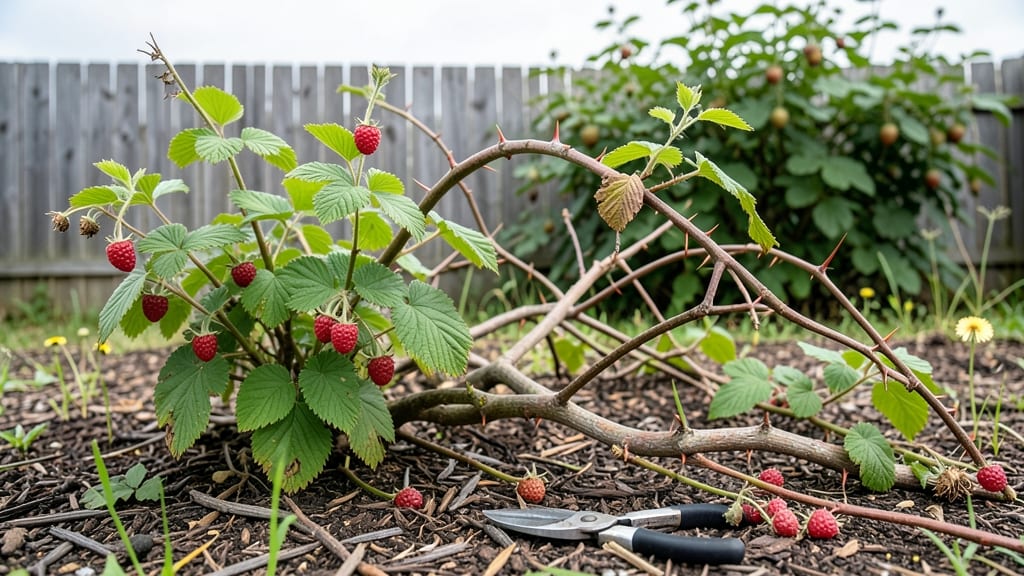
Raspberry plant care through pruning is the secret to those juicy, thorn-free canes that produce fruit for years—if you do it right. I spent three seasons wrestling with tangled, overgrown bushes until I learned the three seasonal trims that keep raspberries productive and healthy.
The difference between a bush that gives up after two years and one that thrives for a decade often comes down to timing and technique.
Most gardeners mess this up by pruning at the wrong time or cutting too aggressively. You’ll need just a few tools—a sharp pair of pruners, gloves, and maybe a cane marker—and a clear plan for each season.
Summer-bearing varieties get their first trim in late winter, while fall-bearing types need a different approach. The key is removing old canes while leaving next year’s fruiting wood, which sounds tricky until you see it in action.
After pruning, your raspberries will reward you with straight, strong canes that bear fruit more efficiently and resist disease better. The first flush of new growth appears within weeks, and by harvest season, you’ll notice fewer thorns and bigger berries.
This method works for both summer- and fall-bearing varieties, though the timing shifts slightly between them.
First-timers often worry about over-pruning, but the worst mistake is hesitation—once you get the rhythm, it becomes second nature. I’ll walk you through the exact cuts to make, when to make them, and how to spot a healthy cane from a dead one.
Let’s turn those tangled bushes into a well-behaved, fruit-producing powerhouse.
📚 In This Guide
- What you need
- Instructions
- Tips and common mistakes
- Wrapping up and next steps
What you need
- ● Pruning shears or secateurs: A sharp, bypass-style pair (avoid anvil types—they crush stems). Choose 5-inch blades for thick canes (e.g., blank">Fiskars X27). Sanitize with rubbing alcohol between cuts to prevent disease.
- ● Loppers: For thicker canes (1-inch diameter or more). Opt for long-handled loppers (e.g., blank">Gardeners Supply Co.) to avoid strain.
- ● Gloves: Heavy-duty, cut-resistant gloves (e.g., blank">TEKWORX thorn-proof) to protect against prickles.
- ● Disposable pruning bags: 10-gallon capacity (e.g., blank">Gardeners Supply) to collect debris and prevent spread of pests.
- ● Rake or leaf blower: For clearing fallen leaves/canes post-pruning. A heavy-duty garden rake works best.
- ● Hose with nozzle: For rinsing tools and washing hands post-pruning.
- ● Pruning sealant: (e.g., blank">Ortho Pruning Sealant) to coat large cuts and prevent disease (use sparingly).
- ● Labeling tags: For marking new canes if you’re training your plants (e.g., blank">Gardeners Supply Co. tags).
- ● Knee pads: If you’re working in a large patch—your back will thank you!
- ● Know your raspberry type: Summer-bearing (prune after harvest) vs. fall-bearing (everbearing) (prune in late winter/early spring).
- ● Dry weather: Prune on a dry, calm day to avoid spreading fungal spores.
- ● Plant identification: Confirm which canes are floricanes (fruit-bearing, 2+ years old) vs. primocanes (new, non-fruiting).
Step-by-Step guide for pruning raspberries seasonally
Here’s how I keep my raspberry canes productive all year—just three strategic cuts that boost fruit and plant health.
Late Winter Pruning to Clear Out Old Canes
In late February or early March, when the ground is thawed but before buds swell, remove all last year’s fruiting canes. These are the thin, brown, woodier stems that produced berries last season—they won’t fruit again. I cut them down to the ground with clean pruning shears, leaving only the thicker, greenish-red primocanes (this year’s growth). This prevents disease buildup and directs energy to new canes.
If you’re unsure which canes to keep, look for the thick, sturdy stems that grew last summer. These are your keepers. I also rake up and discard any fallen leaves or debris around the base to reduce fungal risks. The goal here is cleanup and renewal—your plant will reward you with stronger new growth.
Summer Pruning to Encourage Fruit Production
In mid-to-late summer, after the first harvest but before new canes harden, focus on thinning and shaping. Remove any weak, spindly canes that aren’t producing well—they’re just stealing energy. I also prune back the tips of fruiting canes by about 6 inches to encourage bushier growth and more berries. This is the time to open up the center of the plant so air circulates, reducing humidity and disease.
Watch for sucker growth—those thin, fast-growing shoots at the base. Snip them off immediately unless you’re propagating new plants. I leave 3-4 of the strongest canes per plant to focus energy on fruit production. If you see yellowing leaves or signs of rust, prune those leaves off right away to prevent spread.
Fall Cleanup to Prepare for Winter
After the first hard frost but before the ground freezes, do a final prune to remove all dead or diseased canes. These are easy to spot—they’ll be brown, brittle, or showing signs of mold. Cut them down to the ground, then mulch the base with 3-4 inches of straw or wood chips to insulate roots. This protects against winter dieback and keeps soil temperatures stable.
I also tie any remaining canes to stakes or trellis supports if they’re flopping over. This prevents them from breaking under snow or ice. Avoid heavy pruning now—just tidy up. The goal is to set the stage for next year’s growth while giving your plant a clean, protected start to dormancy.
Bonus: Year-Round Maintenance Tips
Between pruning seasons, water deeply once a week (unless it rains) to keep soil moist but not soggy. Raspberries are heavy feeders, so in early spring, I spread 1 cup of 10-10-10 fertilizer around the base and water it in. Watch for aphids or spider mites—a strong spray of water usually knocks them off. If you see black spots on leaves, that’s raspberry leaf spot; remove infected leaves immediately and avoid overhead watering.
Here’s the thing—consistency matters more than perfection. Even if you miss a pruning window, your plant will adapt. The key is to prune at the right time each year, and you’ll have juicy, abundant berries for years to come.
Tips & tricks for perfect raspberry plant pruning
A few key strategies will help you maintain healthy raspberry canes and maximize fruit production throughout the year. These insights come from years of hands-on experience and avoiding common pitfalls that can stress your plants.
Timing is Everything: The late February to early March window for Step 1 is critical because it allows the plant to focus energy on new growth before buds swell. If you prune too early, the plant may not have enough time to recover before spring growth begins. I always check the ground temperature—it should be above freezing but not yet warm enough to encourage new shoots. In colder climates, you might need to wait until late March to avoid frost damage to emerging canes.
Visual Cues Matter: In Step 2, when you're pruning back the tips of fruiting canes by about 6 inches, look for the point where the cane starts to branch or where you see new growth buds forming. This is your cue to stop cutting. The goal is to encourage bushier growth, not to remove all potential fruiting points. I also recommend keeping a notebook to track which canes produce the best berries each year—this helps you prioritize which ones to keep during summer pruning.
Disease Prevention: During all pruning steps, clean your pruning shears with rubbing alcohol between cuts to prevent spreading disease from infected canes. In Step 3, when you're removing dead canes after the first hard frost, pay special attention to any canes with black spots or mold. These should be bagged and discarded, not composted, to prevent fungal spores from reinfecting your plants. I also recommend sterilizing your tools before and after each pruning session as an extra precaution.
Year-Round Maintenance: The watering schedule mentioned in the year-round maintenance section is crucial, but don't forget that raspberries are heavy feeders. In early spring, when you apply the 1 cup of 10-10-10 fertilizer, work it into the top 2-3 inches of soil rather than just spreading it on the surface. This ensures the roots can access the nutrients. I also recommend a second feeding in early summer with a lower-nitrogen fertilizer to support fruit production without encouraging excessive foliage growth.
Pro Tips for Raspberry Plant Care Pruning
- A few key strategies will help you maintain healthy raspberry canes and maximize fruit production throughout the year.
- Timing is Everything: The late February to early March window for Step 1 is critical because it allows the plant to focus energy on new growth before buds swell.
- Visual Cues Matter: In Step 2, when you're pruning back the tips of fruiting canes by about 6 inches, look for the point where the cane starts to branch or where you see new growth buds forming.
Frequently asked questions
Got questions about pruning raspberries? You’re not alone! Here are some of the most common concerns—plus clear, actionable answers to keep your plants thriving.
When is the best time to prune raspberries?
Prune raspberries in late winter or early spring (before new growth starts) and again in summer (after harvest). Summer pruning removes dead canes and encourages fruit production. Avoid pruning in fall—it can leave plants vulnerable to cold damage.
How do I tell the difference between old and new raspberry canes?
Old canes are brown, woody, and hollow (they produced fruit last year). New canes are green, flexible, and solid (they’ll bear fruit next season). Always cut back old canes to ground level—never prune new ones unless they’re diseased or crowded.
Will pruning reduce my raspberry harvest?
Not if done right! Pruning increases fruit quality and quantity by redirecting energy to healthy canes. Over-pruning (removing too many new canes) can hurt yields, but following seasonal trims ensures a bigger, sweeter harvest the next year.
What should I do if my raspberry canes are dying after pruning?
Check for root rot, pests (like spider mites), or fungal diseases (like cane blight). If canes are mushy or covered in spots, trim affected areas below the damage and treat with copper fungicide. Keep soil well-drained and avoid overwatering to prevent future issues.
Can I prune raspberries without shears?
Shears are ideal for clean cuts, but in a pinch, use sharp, sterilized pruners or even a clean knife. Avoid tearing canes—rough cuts invite disease. For large patches, a hedge trimmer works for bulk removal, but hand-prune delicate areas.
Do I need to prune raspberries every year?
Yes! Annual pruning is key for airflow, disease prevention, and fruit production. Skipping it leads to overcrowding, weaker canes, and lower yields. Even established plants benefit from seasonal trims—think of it as a reset button for growth!
Wrapping up and next steps
Mastering raspberry plant care and pruning is your ticket to a bountiful harvest year after year! By following these three seasonal trims—early spring, late spring, and post-harvest—you’ll encourage healthier canes, better fruit production, and easier maintenance. Your garden will thank you!
Ready to put your new skills into action? Grab your pruners and start trimming! If you’re new to pruning, take it step by step—confidence grows with practice. For extra tips, check out our pruning guide or join a local gardening group for hands-on support. 🌱✨