Pruning
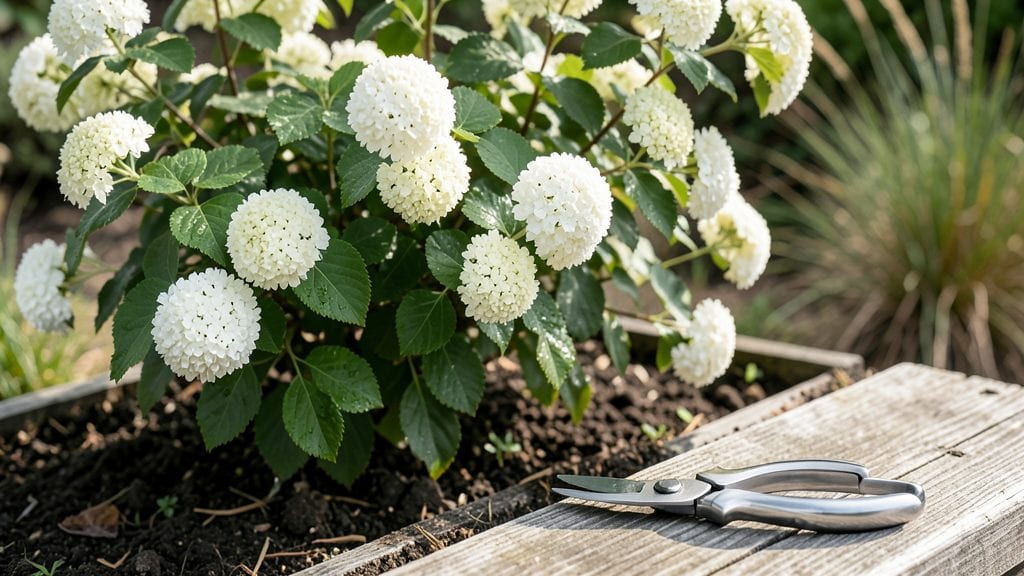
Pruning snowball plants transforms them from scraggly shrubs into lush, year-round showstoppers—and it only takes three strategic cuts. I’ve pruned mine for five years, and the difference between a well-shaped viburnum and one that looks like it’s giving up is just timing and technique.
The key is working with the plant’s natural growth cycle, not against it.
Most people wait until spring, but the real secret is pruning in three phases: a light cleanup after flowering, a mid-season shape-up, and a winter reset. You’ll need sharp pruners, gloves, and about 20 minutes of focused time.
The goal isn’t to make it perfect—it’s to encourage dense, healthy growth where new blooms will form next year. Over-pruning or cutting at the wrong time? That’s how you end up with bare branches and no flowers.
By the end of summer, your snowball plant will be fuller than ever, with vibrant green leaves and clusters of white blooms forming for next season. The best part?
You’ll spend less time fighting back growth and more time enjoying how effortlessly it thrives. Ready to turn your viburnum into the star of the landscape?
This method works for all Viburnum opulus varieties, whether you’re dealing with a mature shrub or a young plant. The same principles apply whether you’re in Zone 3 or Zone 7—just adjust the timing slightly for your climate. Let’s get those pruners out and make it happen.
Understanding Overgrowth Triggers
Your Viburnum opulus—commonly called the snowball plant—is a lush, multi-stemmed shrub that thrives on structure and balance. But when it starts looking ragged, leggy, or overcrowded, it’s often due to a mix of natural growth patterns and environmental factors.
Let’s break down the key reasons why your snowball plant might need pruning, so you can address the root causes (literally!) and keep it looking its best.
Snowball plants are fast growers, especially in ideal conditions. Without regular pruning, their woody stems elongate rapidly, seeking sunlight and space. This leads to:
- Leggy stems: Long, bare branches with sparse foliage at the tips, caused by apical dominance (where the top growth inhibits side shoots).
- Weak structure: Overly long stems bend under snow or wind, making the plant vulnerable to breakage.
- Reduced flowering: Energy is diverted to vertical growth instead of producing those iconic white flower clusters.
Why it happens: Snowball plants naturally prioritize height and width over density. If left unchecked, they’ll stretch toward light sources (like windows or skylights), creating an unkempt silhouette. Actionable fix: Prune back 1/3 of the oldest stems annually to encourage bushier, stronger regrowth.
When branches grow too close together, they compete for sunlight, water, and nutrients—leading to a thin, airy appearance. This often happens in:
- Young plants with multiple central leaders (instead of a single dominant stem).
- Mature shrubs where inner branches die back due to lack of light.
- Plants grown in shaded or tight spaces (e.g., against a fence or wall).
Why it happens: Snowball plants are multi-stemmed by nature, but without strategic thinning, stems grow in a chaotic tangle. The center becomes a "dead zone" where branches rub together, increasing disease risk (like powdery mildew). Actionable fix: Remove 2–3 of the oldest, thickest stems at ground level every 2–3 years to improve airflow and sunlight penetration.
Harsh weather, poor soil, or improper planting can accelerate decline and make pruning more critical. Common culprits include:
| Factor | Effect on Snowball Plant | Pruning Response |
|---|---|---|
| 🌡️ Extreme heat/drought | Stunted growth, leaf scorch, and dieback of outer branches. | Prune dead or brown stems to the nearest healthy bud. Water deeply post-prune. |
| ❄️ Heavy snow/ice | Broken branches or sunscald (bark damage from winter sun exposure). | Remove damaged stems at a 45° angle above a bud. Apply anti-desiccant spray if needed. |
| 🔥 Poor drainage/waterlogging | Root rot weakens the plant, causing yellowing leaves and stunted new growth. | Prune sickly stems to encourage root recovery. Amend soil with compost. |
Why it happens: Snowball plants are hardy but not indestructible. Environmental stress forces the plant to allocate energy to survival rather than aesthetic growth. Actionable fix: Prune reactively—cut out damaged areas immediately—to prevent further decline.
Snowball plants have a natural lifespan for their stems: typically 3–5 years before they become woody and unproductive. Without regular maintenance:
- Old stems lose vigor and produce fewer flowers.
- New growth emerges only at the tips, creating a "whip-like" appearance.
- The plant loses its rounded shape, resembling a "broom" instead of a lush bush.
Why it happens: Pruning isn’t just about aesthetics—it’s a renewal process. Snowball plants rely on rejuvenation cuts (deep pruning every few years) to stimulate fresh, flowering stems. Actionable fix: Follow a 3-year rotation:
- Year 1: Light shaping (remove dead/weak stems).
- Year 2: Thinning (cut 1/3 of oldest stems).
- Year 3: Rejuvenation (prune 1/2 of oldest wood to ground level).
Revive Your Snowball Plant With These Pruning Fixes
If your snowball plant (Villosa cyathiflora) looks leggy, sparse, or overgrown, it’s time to roll up your sleeves and give it the care it deserves. Pruning isn’t just about aesthetics—it’s about encouraging bushier growth, preventing disease, and keeping your plant thriving year-round.
Below, we break down the most common issues and the exact steps to fix them, plus tips to keep your snowball plant lush and happy for seasons to come.
When your snowball plant stretches tall and sparse, it’s begging for a structural reset. Leggy growth happens when the plant isn’t getting enough light or has outgrown its space.
✂️ Step-by-Step Fix:
- 🔍 Assess the Plant
- Look for long, bare stems with few leaves at the base. These are your priority cuts.
- Identify any dead or dying branches—these should be removed first.
- 🍳 Prune Back by 1/3
- Use clean, sharp pruners (or scissors) to cut back the longest stems by about one-third their length.
- Cut just above a leaf node (the bump where leaves grow) to encourage new branching.
- 🌱 Encourage Bushiness - For every major stem, make a diagonal cut just above a leaf node.
This signals the plant to grow side shoots instead of reaching upward. - If your plant is severely leggy, you can prune back even more aggressively—just avoid cutting into old wood (woody stems won’t regrow).
- 🌞 Boost Light & Fertilizer
- After pruning, move your plant to a brighter spot (but avoid harsh afternoon sun).
- Feed it with a balanced liquid fertilizer (like 10-10-10) every 4-6 weeks to support new growth.
💡 Prevention Tips:
- Rotate your plant every few weeks to ensure even light exposure.
- Pinch back tips in early spring to discourage excessive stretching.
- Avoid overwatering—soggy soil can weaken stems and make them more prone to flopping.
If your snowball plant has patchy or sparse leaves, it’s often a sign of under-pruning, poor nutrition, or stress. The good news? A strategic prune can jumpstart fresh foliage.
✂️ Step-by-Step Fix:
- 🔍 Identify Problem Areas - Look for stems with few or no leaves.
These are your targets. - If the bare spots are at the base of the plant, you may need to prune lower down to encourage new growth from the bottom up.
- 🍳 Prune for Density
- Cut back selective stems to just above a leaf node where new growth can emerge.
- For severely bare stems, you can cut them back to the base—the plant will often regrow from the roots.
- 🌱 Promote Leafy Recovery
- After pruning, reduce watering slightly (let the top inch of soil dry out between waterings) to avoid stressing the plant.
- Mist the leaves lightly to increase humidity, which helps new leaves unfurl smoothly.
- 🌿 Feed for Foliage
- Use a foliar spray with seaweed extract or a fertilizer high in nitrogen (like 30-10-10) to encourage leafy growth.
- Repeat applications every 2-3 weeks until you see new leaves emerging.
💡 Prevention Tips:
- Prune regularly—don’t wait until the plant is severely sparse.
A little maintenance goes a long way! - Use well-draining soil to prevent root stress, which can lead to leaf drop. - Avoid cold drafts—snowball plants prefer warmth and can drop leaves if exposed to sudden temperature drops.
If your snowball plant has yellowing leaves, black spots, or tiny bugs, pruning can help contain the problem and prevent it from spreading. The key is to remove infected areas immediately and keep the plant healthy.
✂️ Step-by-Step Fix:
- 🔍 Diagnose the Issue
- Fungal issues (powdery mildew, leaf spot): Look for white powder or dark spots on leaves.
- Pests (spider mites, aphids, mealybugs): Check the undersides of leaves for tiny webs, bugs, or sticky residue.
- 🔪 Remove Infected Parts
- For fungal diseases, trim off all affected leaves and stems, including any nearby healthy-looking growth that might be compromised.
- For pests, prune away heavily infested branches first, then treat the remaining plant.
- 🌱 Clean Up & Disinfect
- Wipe your pruners with rubbing alcohol between cuts to avoid spreading disease.
- Remove all pruned material from the area to prevent reinfestation.
- 🛡️ Treat & Prevent Recurrence - For fungi: Spray the plant with a neem oil solution (1 tsp neem oil + 1 tsp mild soap per quart of water) and improve airflow by spacing plants apart. - For pests: Use an insecticidal soap or horticultural oil.
Repeat every 5-7 days until the pests are gone.
💡 Prevention Tips:
- Water at the base (avoid wetting leaves) to reduce fungal risks.
- Inspect new plants before bringing them home—quarantine them for a week to catch pests early.
- Keep your workspace clean—sterilize tools and remove debris regularly.
If your snowball plant looks wilting, brown, or dormant after winter, it may have suffered from cold stress or lack of light. A gentle prune can stimulate fresh growth once temperatures rise.
✂️ Step-by-Step Fix:
- 🔍 Wait for Warmth
- Only prune after the last frost when nighttime temps stay above 50°F (10°C).
- Trim back any dead or mushy stems first—they won’t recover.
- 🍳 Light Pruning for Stimulation
- Cut back overly long stems by 20-30% to encourage new shoots.
- Avoid heavy pruning—your plant is still recovering from winter stress.
- 🌱 Refresh the Plant
- Repot if the soil looks compacted or waterlogged from winter.
- Add a slow-release fertilizer to the soil to give it a nutrient boost.
- 🌞 Prepare for Growth
- Move your plant to a sunny spot (but protect it from harsh afternoon sun if it’s acclimating).
- Increase watering gradually as new growth appears.
💡 Prevention Tips:
- Mulch heavily in fall to protect roots from freezing.
- Bring potted plants indoors if your winters are harsh (below 40°F/4°C).
- Avoid fertilizing in late fall**—it encourages tender new growth that can’t survive frost.
With these targeted pruning fixes, your snowball plant will bounce back with vibrant, full foliage in no time. Remember: consistency is key—regular light pruning keeps your plant healthy and prevents major issues down the road. Happy pruning! 🌿✂️
Frequently asked questions
When is the best time to prune my snowball plant?
Prune your snowball plant in three key phases: late winter/early spring (just before new growth starts), summer (after flowering to shape), and late winter again for a winter reset. This three-phase approach maintains year-round fullness while preventing leggy growth. Avoid heavy pruning in fall, as new growth won't harden off before winter.
How much can I cut back my snowball plant without harming it?
For healthy, established snowball plants, you can safely prune back up to one-third of the oldest stems annually. For rejuvenation, cut half of the oldest wood to the ground every 2-3 years—this stimulates fresh, flowering growth. Never remove more than 30% of the plant's foliage in a single season, as this stresses the shrub.
Why does my snowball plant have bare stems after pruning?
Bare stems often appear when you prune too late in the season or cut into old, woody growth that won't regenerate. Always cut just above a leaf node or bud—never into bare wood. If you've already pruned too much, focus on fertilizing and watering to encourage new shoots from the base next season.
Can I prune my snowball plant after it flowers?
Yes, you can prune snowball plants after flowering to shape them, but avoid heavy pruning. Focus on removing dead wood and thinning crowded branches to improve airflow. The best time for major pruning is late winter, when the plant is dormant but before new growth begins.
What tools do I need for proper snowball plant pruning?
You'll need sharp bypass pruners for clean cuts, loppers for thicker stems, and gloves for protection. Sterilize your tools with rubbing alcohol between cuts to prevent disease spread. Avoid dull tools, as they crush stems instead of making clean cuts.