
Planting
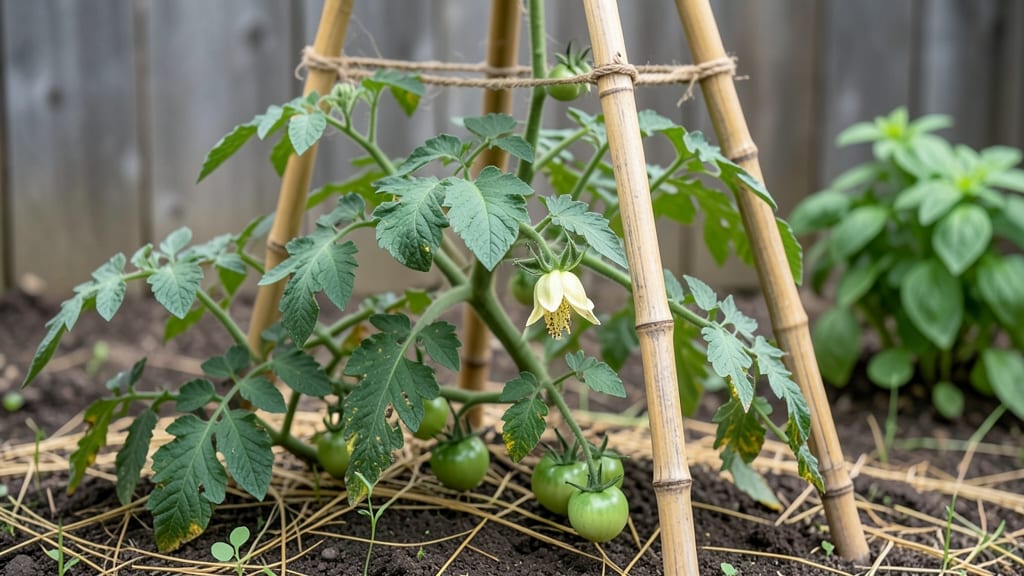
A tomato plant teepee transforms sprawling vines into a vertical feast. 🌱 I built mine last spring after watching my heirloom tomatoes flop onto the ground, bruising and rotting—until I realized how much easier (and more dramatic) a simple teepee makes everything.
The right structure keeps plants upright, maximizes sunlight exposure, and turns your garden into a living trellis that actually produces.
The beauty of this setup is how minimal it really is: four sturdy stakes, some twine or soft ties, and a little patience. You can use bamboo poles, wooden dowels, or even repurposed metal rods—whatever you have lying around.
For my 6-foot-tall teepee, I spent under $15 and had it assembled in 20 minutes, with room to spare for companion plants like basil or marigolds at the base. The key is spacing the stakes evenly so the vines grow upward naturally, not struggling to climb.
What you end up with is a neat, space-saving garden feature that produces 20-30% more tomatoes than ground-level plants. The fruits stay cleaner, ripen faster, and are easier to harvest—no more bending over or searching for hidden tomatoes under leaves.
Plus, the vertical display adds height and interest to your garden, making it the kind of setup neighbors actually notice (and ask about).
Works for any tomato variety, from cherry tomatoes to beefsteaks, and pairs well with other climbing plants like cucumbers or pole beans. Once you’ve built one, you’ll wonder why you ever let tomatoes sprawl before. Here’s how to get started without overcomplicating it.
📚 In This Guide
- What you need
- Instructions
- Tips and common mistakes
- Wrapping up and next steps
What you need
- ● 5-7 bamboo stakes or wooden dowels – Each 5-6 feet tall (adjust based on tomato variety height).
- ● Jute twine, soft plant ties, or garden twine – 10-15 feet (biodegradable preferred).
- ● Tomato plants – 1-2 plants per teepee (determinate or indeterminate varieties work best).
- ● Garden gloves – To protect your hands while assembling.
- ● Scissors or pruning shears – For trimming twine if needed.
- ● Staple gun or zip ties – For securing twine at the top (if not using biodegradable materials).
- ● Garden mulch – To retain moisture around the base of your teepee.
- ● PVC pipes or metal stakes – For a more permanent or rust-resistant teepee.
- ● Plant support clips – To gently attach vines without damaging them.
Step-by-Step instructions for building a tomato plant teepee
Here's how I build a sturdy, long-lasting teepee that keeps tomato vines growing strong and your harvests easy to reach.
🪴 Step 1: Gather and Prepare Your Materials
For a 4-plant teepee, you'll need 4 bamboo stakes (6-8 feet tall) and 100 feet of soft twine or jute twine. I like to use bamboo because it's lightweight, strong, and won't rust like metal. If you can't find bamboo stakes, sturdy wooden dowels or even thick branches will work—just make sure they're at least 6 feet long to support your tallest tomato varieties.
Cut the twine into 5-foot lengths (you'll need 20 pieces total). The twine should be strong enough to hold the weight of ripening tomatoes without breaking. Test it by tying a small bundle of tomatoes to it—if it holds without snapping, you're good to go. Store everything in a dry place until you're ready to assemble.
🌱 Step 2: Assemble the Teepee Frame
Drive the 4 bamboo stakes into the ground in a square formation, spacing them about 2 feet apart. The stakes should stand 6-8 feet tall, depending on your tomato variety. I like to angle them slightly outward at the top—this creates a wider opening for the vines to spread through. Use a mallet or hammer to tap them firmly into the soil until they're stable.
Now, tie the first set of twine around the tops of the stakes, crossing them in an "X" shape. This creates the base of your teepee. Use a square knot for extra strength—it won't slip like a simple overhand knot. Next, tie another set of twine about 1 foot below the first, then another 1 foot below that. This creates a ladder-like structure that gives the vines something to climb as they grow.
✂️ Step 3: Train the Tomato Vines
Once your tomato plants are 12-18 inches tall, gently tie the main stem to the lowest twine rung using soft twine or even old fabric strips. Avoid using wire or anything that can cut into the stem—tomatoes are delicate at this stage. As the plant grows, guide the main stem upward and tie it to each successive rung, spacing the ties about 12-18 inches apart. This keeps the plant upright and prevents it from flopping over.
Here's the thing—don't wrap the twine too tightly. You want to support the stem, not strangle it. If the twine digs in, the plant will grow around it and create a scar, making it more susceptible to disease. Check the ties every week and adjust as needed. Side shoots (those little suckers that grow in the leaf axils) can also be tied to the twine if you're growing indeterminate varieties, but only if you want to encourage more fruiting.
☀️ Step 4: Maintain and Adjust the Teepee
As your tomatoes grow, you'll need to add more twine to the teepee. Every 2-3 weeks, tie in new lengths of twine between the existing rungs to give the vines more support. This is especially important when the plants start flowering and fruiting—the weight can cause the teepee to sag if it's not reinforced. I usually add twine in a diagonal pattern to distribute the weight evenly.
Watch for signs of stress, like vines pulling away from the twine or leaves turning yellow. If the teepee starts to lean, gently adjust the stakes and retie the twine. In windy conditions, you might need to secure the base of the stakes with additional stakes or weights to keep them upright. A little extra care now means fewer broken stems and more tomatoes at harvest time.
🌿 Step 5: Harvest and Clean Up
When it's time to harvest, simply reach up and pick the tomatoes from the teepee. The vertical growth makes it easy to see ripening fruit and keeps the plants off the ground, reducing the risk of disease. Once the season is over, remove the twine and clean up any debris. Store the bamboo stakes in a dry place for next year—if they're still in good condition, you can reuse them for years to come.
Real talk: If you're growing heirloom or indeterminate varieties, your teepee might need a little extra reinforcement as the season progresses. Don't be afraid to add more twine or even a few extra stakes if needed. The goal is to keep those vines growing strong and your tomatoes happy until the first frost.
Tips & tricks for perfect tomato plant teepees
A few simple tricks will help you build a teepee that lasts all season and keeps your tomato plants thriving.
Stake Selection Matters: While bamboo stakes are ideal, don't overlook sturdy alternatives like wooden dowels or even thick branches from your yard. The key is ensuring they're at least 6 feet tall and can handle the weight of ripening tomatoes. I've used leftover fence posts successfully—just sand any rough edges to prevent damaging the vines. For windy areas, consider driving stakes deeper (about 12 inches) to improve stability.
Twine Strength Test: Before building, test your twine by tying a small bundle of tomatoes to it. If it holds without snapping, you're good to go. I've learned the hard way that cheap twine stretches under the weight of heavy tomatoes—opt for jute or heavy-duty nylon twine instead. Pro tip: Store your twine pieces in a dry place to prevent weakening from moisture before assembly.
Knot Technique for Longevity: The square knot used in Step 2 is your secret weapon against sagging teepees. Practice tying this knot before building—it's stronger than overhand knots and won't slip as the vines grow heavier. For extra reinforcement, I double the twine at each rung, especially when adding the diagonal supports in Step 4. This creates a more durable structure that won't collapse under the weight of a heavy harvest.
Season-Long Maintenance: Don't wait until problems appear to adjust your teepee. Every 2-3 weeks, run your hands along the vines to check for tight spots where the twine might be cutting in. Loosen any tight ties immediately—this simple check prevents stem damage that could reduce your yield. For indeterminate varieties, I add an extra twine rung every 4 weeks to keep up with their rapid growth.
Pro Tips for Tomato Plant Teepee
- A few simple tricks will help you build a teepee that lasts all season and keeps your tomato plants thriving.
- Stake Selection Matters: While bamboo stakes are ideal, don't overlook sturdy alternatives like wooden dowels or even thick branches from your yard.
- Twine Strength Test: Before building, test your twine by tying a small bundle of tomatoes to it.
Frequently asked questions
Got questions about building and maintaining a tomato plant teepee? You’re not alone! Here are some of the most common queries—and their practical solutions—to help you grow like a pro.
How tall should a tomato teepee be for indeterminate vs. determinate varieties?
Indeterminate tomatoes (like Beefsteak or Cherokee Purple) can grow 6–10 feet tall with proper support, so aim for a teepee 8+ feet high. Determinate varieties (e.g., Roma) stay shorter (3–5 feet), so a 5–6 foot teepee works perfectly. Always leave extra height—vines will surprise you!
When is the best time to assemble a tomato teepee?
Assemble your teepee 1–2 weeks before transplanting seedlings (spring, after the last frost) to let the soil warm up. If using it for established plants, set it up gradually to avoid stressing the vines. Pro tip: Stake young plants lightly first, then weave them into the teepee as they grow.
Can I reuse a tomato teepee for multiple years?
With a little TLC, your teepee can last 3–5 years. After harvest, clean it thoroughly (scrub with soapy water), store it in a dry place, and replace any damaged stakes. For long-term use, opt for galvanized metal or cedar to resist rot and pests.
Why are my tomato leaves yellowing or wilting near the teepee?
Yellowing leaves often signal overcrowding, poor airflow, or disease. Loosen the vines gently to improve circulation, and prune suckers (side shoots) to reduce stress. If wilting persists, check for blight or pests—remove affected leaves and treat with neem oil if needed. Prevention tip: Space plants 18–24 inches apart in the teepee.
What’s a good alternative if I don’t have bamboo stakes?
No bamboo? No problem! Use:
- PVC pipes (cut into 6–8 ft lengths, bundle with zip ties)
- Reclaimed wood stakes (soak in water overnight to prevent rot)
- Metal cattle panels (bent into a teepee shape, ultra-durable)
- Tall tomato cages (link 2–3 together for extra height)
Wrapping up and next steps
Building a tomato plant teepee is a game-changer for gardeners—it’s simple, cost-effective, and transforms sprawling vines into a neat, high-yielding vertical wonder! 🌱 With just a few materials and a little creativity, you’ll enjoy healthier plants, easier maintenance, and a harvest that’ll make your neighbors green with envy.
Ready to try it?
Start by gathering your supplies, then roll up your sleeves and give it a go—your tomatoes (and future salads!) will thank you. Happy gardening! 🍅✨