Planting
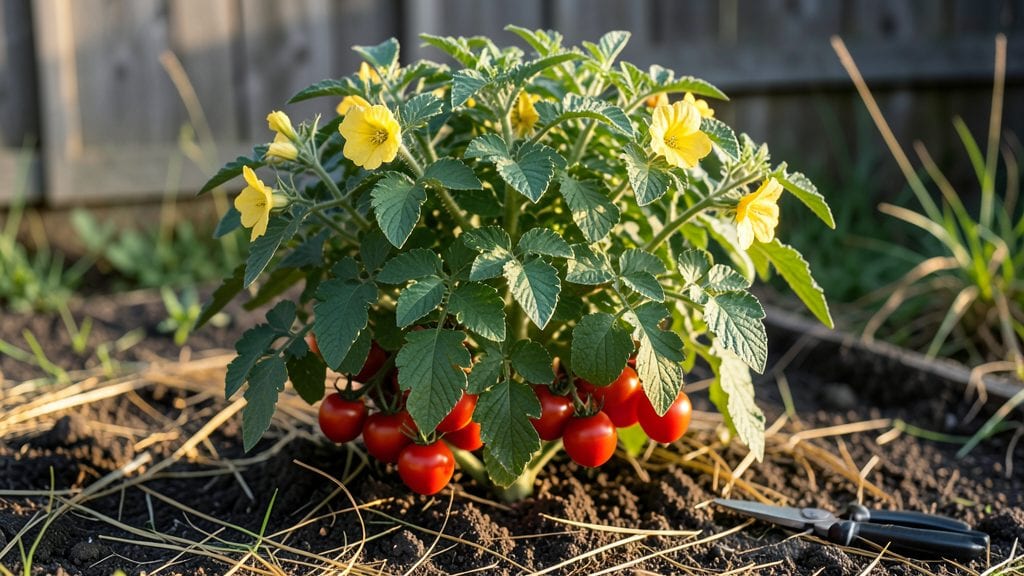
The Topsy-Turvy tomato plant turns tiny spaces into bountiful harvests with its compact, upward-growing magic. I’ve grown this variety in my 4x4-foot balcony garden for three years now, and it’s the only tomato that fits without taking over everything.
The secret lies in its unique growth habit—it sprawls sideways instead of upward, making it perfect for trellises, cages, or even hanging baskets.
You’ll need a sturdy support system—think sturdy stakes, a tomato cage, or a wall-mounted trellis—to keep those vines in check. The soil should be rich in organic matter, well-draining, and slightly acidic (pH 6.0-6.8), just like any tomato.
Water consistently, aiming for about 1 inch per week, but avoid soggy roots. Prune suckers regularly to encourage more fruit production, and pinch off the first few flowers to help the plant establish stronger growth first.
What you’ll end up with is a neat, productive tomato plant that produces heirloom-sized fruits without the sprawl. The flavor? Rich, sweet, and just like a backyard garden, even in a small container.
By mid-summer, you’ll be harvesting tomatoes that make neighbors ask, “How do you fit all those plants in there?”
Works in containers as small as 5 gallons or in-ground plots with proper support. The real game-changer? You can grow three or four of these plants where one traditional tomato would struggle. Let’s get those vines climbing!
📚 In This Guide
- What you need
- Instructions
- Tips and common mistakes
- Wrapping up and next steps
What you need
- ● Topsy tomato seeds or seedlings: 1-2 plants (choose a determinate variety for compact growth).
- ● Vertical garden system: A wall-mounted planter, hanging fabric pocket planter, or trellis with sturdy containers (e.g., 5-gallon buckets or fabric grow bags).
- ● Potting mix: 5-10 gallons of well-draining, organic potting soil (add perlite or compost for aeration).
- ● Fertilizer: Balanced 10-10-10 or tomato-specific fertilizer (follow package instructions).
- ● Support system: For trellises: Metal or wooden stakes (4-6 ft tall) or a strong wire trellis.
- ● For hanging planters: Adjustable straps or hooks rated for 10+ lbs.
- ○ Watering supplies: Watering can with a rose attachment or a drip irrigation kit (optional but helpful).
- ● Pruning tools: Sharp bypass pruners (sterilized with rubbing alcohol).
- ● Slow-release fertilizer tablets for hassle-free nutrition.
- ● Mulch (straw or shredded leaves) to retain moisture.
- ● Plant ties or soft twine to secure vines to supports.
- ● Garden gloves to protect your hands.
- ● pH testing kit to monitor soil acidity (ideal: 6.0–6.8).
How to grow a thriving Topsy tomato plant in limited space
This indeterminate variety thrives upward—here's how to coax its vines into a vertical wonder.
Select the Right Location and Support Structure
Choose a site receiving at least 6-8 hours of direct sunlight daily—south-facing walls or trellises work best. The Topsy's vigorous growth demands sturdy support like a 10-foot tall obelisk or strong wire trellis (I prefer the obelisk for its built-in stability). Install it before planting so roots won't disturb the structure later.
Ensure the base is anchored securely—wind gusts can topple lightweight supports when vines reach full size. For container growing, use a 5-gallon pot with a built-in trellis or attach a freestanding cage to the container's side. The key is vertical space: vines will climb 12-15 feet if given proper support.
Prepare the Planting Site or Container
For in-ground planting, amend the soil with 2-3 inches of compost mixed into the top 12 inches of soil. Topsy tomatoes thrive in well-draining, nutrient-rich soil with a pH between 6.0 and 6.8. Work in a balanced organic fertilizer (5-5-5 ratio) at planting time to provide essential nutrients for vigorous growth.
Container growers should use high-quality potting mix with added perlite for drainage. Fill the 5-gallon pot completely, leaving only 1 inch of space at the top. Water thoroughly before planting to settle the soil and eliminate air pockets. The container must have multiple drainage holes—root rot is the Topsy's Achilles' heel.
Plant and Initial Staking
Dig a hole twice as wide as the root ball but no deeper. Position the plant so the top of the root ball sits just below soil level—burying the stem too deeply encourages rot. Gently spread the roots and backfill with soil, pressing lightly to remove air pockets. Water immediately after planting to help soil settle around the roots.
Install a small stake or bamboo support next to the plant at planting time. The Topsy's main stem should grow straight up this initial support before lateral branches form. Avoid tying the stem too tightly—use soft plant ties that can grow with the vine. Within 2-3 weeks, you'll see the first tendrils that will latch onto your trellis.
Prune and Train for Maximum Yield
Begin pruning when the plant reaches 3 feet tall. Remove all suckers (side shoots) that form in the leaf axils—these compete with fruit production. The Topsy's indeterminate growth means continuous pruning: check weekly and pinch off any new suckers larger than 2 inches. This redirection of energy produces larger, more flavorful tomatoes and prevents overcrowding on the trellis.
Guide the main stem upward along the trellis, securing it with soft ties every 12-18 inches. When the plant reaches the top of the support, pinch the growing tip to encourage lateral branching. This creates a bushier plant that produces fruit along its entire length. You'll know you're doing it right when the trellis becomes a tomato-covered vertical tapestry by midsummer.
Maintain Through the Growing Season
Water deeply 2-3 times per week, aiming for 1-1.5 gallons per plant each time. The Topsy's extensive root system needs consistent moisture—let the soil dry slightly between waterings but never completely. Mulch with 2-3 inches of organic mulch to retain moisture and regulate soil temperature. Avoid wetting the leaves when watering to prevent disease.
Fertilize every 4-6 weeks with a low-nitrogen, high-phosphorus fertilizer (like 3-4-6) to support flowering and fruiting. You'll notice the plant's growth rate slow slightly after heavy fruiting—this is normal. Harvest tomatoes when they reach full color and slight softness to encourage continuous production. With proper care, your Topsy can produce pounds of fruit throughout the season.
Tips & tricks for perfect Topsy tomato plant growth
Transforming your Topsy tomato into a thriving vertical garden requires attention to detail that pays off with bountiful harvests. Here's what I've learned from years of growing these prolific plants in limited spaces.
Support Stability is Non-Negotiable: The Topsy's vigorous 12-15 foot vines demand a support structure that won't wobble. I've seen obelisks topple when planted too shallowly—bury the base at least 6 inches deep and anchor with stakes for windy locations. For container growing, use the 5-gallon pot's full depth for stability, and attach the trellis to the container's sides with heavy-duty zip ties rather than flimsy clips. This prevents the entire system from tipping when vines reach their full height.
Soil Preparation Makes All the Difference: Don't skimp on the soil prep in Step 2—the Topsy's deep root system rewards proper preparation. Mix that 2-3 inches of compost into the full 12 inches of soil depth, not just the surface. I've found that adding a handful of worm castings to the planting hole provides immediate microbial activity that helps roots establish faster. For container growers, the high-quality potting mix with perlite is crucial—without it, you'll face drainage issues that lead to root rot.
Pruning Strategy for Maximum Yield: When you reach Step 4's pruning phase, think of each sucker you remove as an investment in your harvest. The key is consistency—check weekly and remove any suckers larger than 2 inches, but don't obsess over tiny ones. I've noticed that plants with 3-4 main stems produce the most balanced fruit loads. Also, when securing the main stem every 12-18 inches, use soft fabric ties that can stretch as the vine grows—plastic ties cut into the stem as it thickens.
Watering Wisdom for Consistent Production: The 2-3 times per week watering schedule in Step 5 works best when you water deeply each time. I measure 1-1.5 gallons using a watering can with measurement markings—this ensures consistent moisture without waterlogging. For container growers, I've found that watering in the morning allows any excess to evaporate before evening, reducing the risk of fungal issues. The mulch layer you apply should be 2-3 inches thick, but don't pile it against the stem—keep it 2 inches away to prevent moisture buildup that encourages rot.
Pro Tips for Topsy Tomato Plant
- Transforming your Topsy tomato into a thriving vertical garden requires attention to detail that pays off with bounti...
- Support Stability is Non-Negotiable: The Topsy's vigorous 12-15 foot vines demand a support structure that won't wobb...
- Soil Preparation Makes All the Difference: Don't skimp on the soil prep in Step 2—the Topsy's deep root system reward...
Frequently asked questions
Got questions about growing a Topsy Tomato plant? You’re in the right place! Here are some of the most common queries—plus quick, practical answers to help you crush your vertical gardening game.
What’s so special about the Topsy Tomato plant?
The Topsy Tomato is a determinate variety, meaning it grows in a compact bush shape (no staking needed!) and produces cherry tomatoes in clusters. It’s perfect for small spaces, containers, or vertical gardens—ideal for balconies, patios, or even hanging baskets. Plus, its early maturity (50-60 days) means faster harvests!
When is the best time to plant Topsy Tomatoes?
Start seeds indoors 6-8 weeks before your last frost date (use a seed-starting kit for best results). Transplant seedlings outdoors after soil temps hit 55°F+ and all frost risk has passed. For container growing, wait until nighttime temps stay above 50°F. Pro tip: Use black plastic mulch to warm soil faster!
Can I grow Topsy Tomatoes in pots or hanging baskets?
This variety thrives in 5-gallon containers or larger (at least 12" deep). For hanging baskets, choose 10-12" diameter with drainage holes. Use a lightweight potting mix with added compost, and water consistently—containers dry out faster. Just avoid overcrowding; space plants 18-24" apart in pots.
What should I do if my Topsy Tomato leaves turn yellow?
Yellowing leaves usually signal overwatering, underwatering, or nutrient issues. Check soil moisture—it should stay consistently damp but not soggy. If leaves curl or droop, it’s thirsty; if they’re mushy, it’s drowning. Yellow edges? Could be calcium deficiency (try crushed eggshells). Pests like aphids also cause yellowing—spray with soapy water if needed.
How do I know when Topsy Tomatoes are ripe and ready to pick?
Harvest when tomatoes are fully colored (red, orange, or yellow, depending on variety) and slightly soft to the touch. Unripe tomatoes won’t ripen off the vine, so pick early if frost threatens. Use scissors or twist gently to avoid damaging the plant. For best flavor, harvest in the morning when sugars are highest.
What can I plant near Topsy Tomatoes for companion planting?
Pair Topsy Tomatoes with basil, marigolds, or onions to repel pests and boost growth. Avoid planting near brassicas (kale, cabbage) or corn, as they compete for nutrients. Herbs like thyme or oregano also thrive nearby and improve tomato flavor. Just keep spacing in mind—crowding stresses plants!
Wrapping up and next steps
Growing a Topsy Tomato plant in a vertical garden isn’t just space-smart—it’s a game-changer for small-space gardeners! 🌱 With its compact, bushy growth and delicious cherry tomatoes, this variety proves that big harvests don’t need big yards.
Whether you’re a beginner or a seasoned green thumb, the Topsy Tomato is your ticket to fresh, homegrown flavor without the fuss.
Ready to dive in? Start by gathering your supplies, then pick a sunny spot (or grow light) and let your vertical garden thrive. Happy planting—and may your tomatoes be plentiful! 🍅✨