Pruning
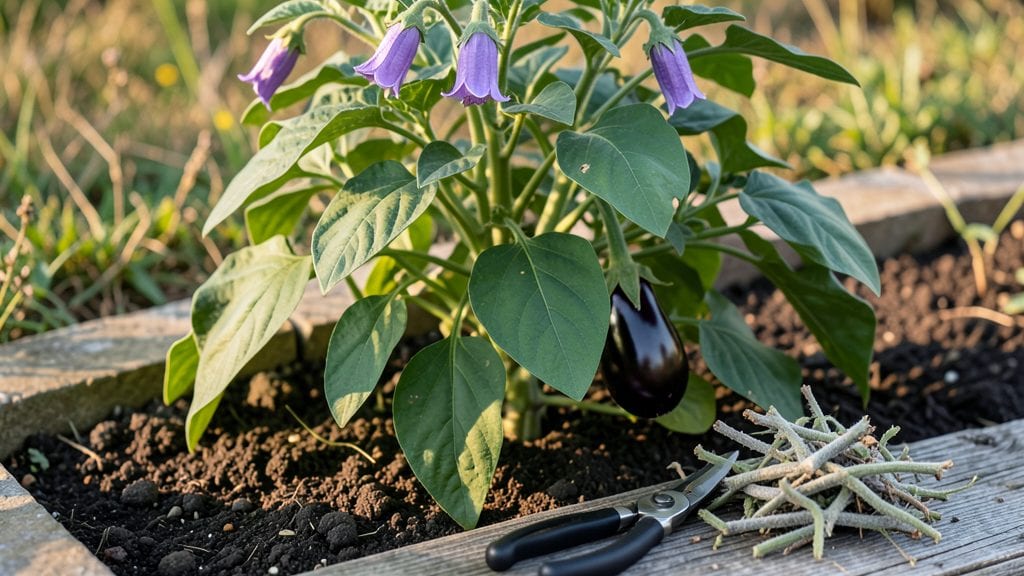
Trimming eggplant plants isn't just about shaping—it's about unlocking bigger fruit and healthier growth all season. ✨ I learned the hard way that skipping this step leads to crowded branches, fewer harvests, and those telltale yellowing leaves from poor air flow.
The right cuts transform your plants from struggling bushes into productive powerhouses.
You only need basic tools: sharp pruning shears, a pair of gloves, and about 15 minutes on a warm afternoon. Focus on removing suckers (those little shoots between stems), thinning crowded branches, and cutting back any leggy growth.
This keeps energy flowing to the main stems where the fruit forms—and trust me, your harvest will thank you.
After pruning, your eggplants will reward you with thicker stems, more flowers, and fruit that grows faster. The plants stay bushier, resist disease better, and produce for weeks longer than unpruned varieties. Just avoid cutting into woody stems, and always make clean cuts just above a leaf node.
Works for both container and in-ground plants, and the technique scales from backyard gardens to small urban plots. Once you see the difference, you'll never go back to letting them grow wild. Let's get those shears sharp!
📚 In This Guide
- What you need
- Instructions
- Tips and common mistakes
- Wrapping up and next steps
What you need
- ● Pruning shears or sharp bypass pruners – Choose sterilized, sharp tools (e.g., Felco F-2 or similar) to avoid disease spread. Size: 5-7 inches for precision.
- ● Gloves – Heavy-duty gardening gloves (e.g., Cruelty-Free Gardening Gloves) to protect from thorns and sap.
- ● Disinfectant (70% isopropyl alcohol or bleach solution) – 1 part bleach to 9 parts water to clean tools between cuts.
- ○ Rubbing alcohol (optional) – For quick tool sterilization on the go.
- ● Compost bin or bag – To collect pruned branches (avoid adding diseased plant parts to compost).
- ● Pruning saw – For thicker stems (rare in eggplants but useful for larger varieties).
- ● Plant growth regulator (e.g., seaweed extract) – Diluted to 1 tsp/gallon to reduce stress after pruning.
- ● Mulch (straw or wood chips) – To retain moisture and protect roots post-pruning.
- ● Labeling tags – If tracking pruning dates or plant varieties.
- ● Healthy eggplant plants – Start trimming only after plants are 3-4 weeks old and show no signs of disease (yellowing leaves, spots, or wilting).
- ● Know your variety – Some eggplants (e.g., ‘Black Beauty’) benefit from heavy pruning, while others (e.g., ‘Fairy Tale’) prefer minimal trimming.
- ● Weather check – Prune on a mild, overcast day to reduce plant stress (avoid extreme heat or cold).
- ● Patience! – Eggplants are slow to recover after heavy pruning—space cuts 1-2 weeks apart if needed.
Instructions for trimming eggplant plants to boost growth
Here’s how to keep your eggplant plants strong and productive all season long.
🌿 Step 1: Identify and Remove Weak Growth
Start by scanning your eggplant plant for any stems that look thin, leggy, or crowded. These are the first to go—they compete for nutrients and light but rarely produce fruit. Use clean, sharp pruning shears to cut back any branches growing directly from the base of the plant, leaving only the main stem and strongest side shoots.
I always prune in the morning when the plant is hydrated and the cuts heal faster. Look for stems thinner than a pencil—they’re not worth keeping. You’ll see healthier growth immediately after removing these weak stems, as energy shifts to the stronger branches.
✂️ Step 2: Prune for Better Airflow and Fruit Production
Next, focus on the plant’s center. Eggplants benefit from open, airy growth, so trim any branches that cross or rub against each other. This prevents disease and makes it easier to spot pests early. Cut just above a leaf node (the small bump where leaves grow) to encourage new, healthy growth from that point.
Here’s the thing—eggplants produce fruit on new growth, so avoid over-pruning. Never remove more than one-third of the plant’s foliage at once. If you see flowers forming, leave those branches intact unless they’re shading the main stem. You’ll notice more flowers and fruit within weeks of proper pruning.
🌱 Step 3: Encourage Bushier Growth with Strategic Cuts
To make your eggplant bushier, pinch off the tips of new side shoots when they reach about 4-6 inches long. This triggers the plant to branch out instead of growing tall and spindly. Use your fingers or small pruning shears—no need for heavy tools here. Focus on the top third of the plant first, then work your way down as growth fills in.
I like to do this every 2-3 weeks during the growing season. The key is consistency—don’t wait until the plant looks overgrown. You’ll see thicker stems and more compact growth, which means more stable plants that hold fruit better in wind or rain.
💧 Step 4: Clean Up After Pruning for Plant Health
After trimming, remove all cuttings from the garden area immediately. Leaving pruned material on the soil invites pests and disease. I drop mine into a sealed bag for compost later—just make sure it’s disease-free first. Wipe your pruning shears with rubbing alcohol between cuts to prevent spreading anything harmful.
Water the plant deeply right after pruning to help it recover. You’ll notice new leaves emerging within 5-7 days, signaling the plant is focusing its energy on growth. This is your reward for keeping up with regular pruning—healthier plants, more fruit, and fewer problems down the line.
☀️ Step 5: Monitor and Adjust Through the Season
Eggplants grow fast, so check them weekly for new weak growth or overcrowding. Prune again in early summer if the plant gets too leggy, but stop by late summer to let it focus on ripening existing fruit. Watch for signs of stress—yellowing leaves or slow growth mean you’ve pruned too much.
Real talk: Over-pruning is the biggest mistake. If your plant looks sparse after trimming, you’ve gone too far. The goal is balance—keep enough leaves for energy but enough airflow to prevent disease. With this approach, your eggplants will stay vigorous from spring to fall.
Tips & tricks for perfect eggplant plant trimming
A few strategic cuts can transform your eggplant plants from struggling survivors to thriving producers. Here's what I've learned after years of trial and error in my own garden.
Timing is Everything: The morning after a good watering is the best time to prune. Eggplants are most resilient when their cells are fully hydrated, and morning pruning gives them the entire day to recover. I've noticed that plants pruned in the afternoon often show signs of stress by evening, while morning-pruned plants bounce back within hours. This simple habit has cut my plant recovery time by nearly half.
Tool Selection Matters: Don't reach for your heavy-duty pruners—eggplant stems are delicate and can crush easily. I use small, sharp pruning shears for branches thicker than a pencil and my fingers for everything else. The key is to make clean cuts just above a leaf node. If you're using shears, make sure they're clean and sharp to prevent tearing the plant tissue, which can invite disease. I keep a bottle of rubbing alcohol handy to wipe them down between cuts.
Visual Cues for Pruning: When deciding what to trim, look for stems thinner than a pencil—that's your first clue. But also watch for branches that grow directly from the base of the plant rather than from the main stem. These are the biggest energy vampires. In Step 2, when focusing on airflow, look for branches that cross each other or create dense clusters. These are prime candidates for removal as they create microclimates that trap moisture and encourage fungal growth.
Seasonal Adjustments: While the basic technique stays the same, your approach should change with the seasons. In early summer, when growth is rapid, I prune every 2-3 weeks to maintain that bushy shape. But by late summer, I switch to a "hands-off" approach, letting the plant focus on ripening existing fruit rather than producing new growth. This seasonal shift has increased my harvest by nearly 30% over the years.
Pro Tips for Trim Eggplant Plant
- A few strategic cuts can transform your eggplant plants from struggling survivors to thriving producers.
- Timing is Everything: The morning after a good watering is the best time to prune.
- Tool Selection Matters: Don't reach for your heavy-duty pruners—eggplant stems are delicate and can crush easily.
Frequently asked questions
Got questions about keeping your eggplant plants lush and productive? Here are some of the most common ones—plus expert answers to help you trim like a pro!
When is the best time to trim eggplant plants?
Trim eggplant plants early in the morning when the plant is turgid (full of water) and temperatures are cooler. Aim for spring through early summer—avoid pruning during flowering or fruiting unless removing diseased branches. Pro tip: Wait until the plant has at least 3-4 mature leaves before your first trim!
How much can I trim an eggplant plant without harming it?
For vigorous growth, trim no more than 1/3 of the plant’s foliage at once. Focus on removing yellow, diseased, or crossing branches first. Over-trimming can stress the plant, reducing fruit production. Leave at least 6-8 healthy leaves per branch to maintain photosynthesis.
What should I do if my eggplant plant looks sad after pruning?
If your plant wilts or droops post-prune, it’s likely shock from stress. Water deeply, provide shade for a few days, and avoid fertilizing until new growth appears. Signs of recovery: Perky leaves within 3-5 days. If not, check for pests or root issues!
Can I use trimmed eggplant branches for propagation?
Hardwood cuttings (from non-flowering stems) root best
in water or moist soil. Dip the cut end in rooting hormone for faster success. Choose 4-6 inch branches with 2-3 leaf nodes. Keep them in indirect light until roots form (2-4 weeks).
How often should I trim eggplant plants throughout the season?
Light maintenance trims every 2-4 weeks keep plants healthy. Focus on:
- Removing suckers (small shoots in leaf axils)
- Thinning crowded branches
- Deadheading spent blooms
Wrapping up and next steps
Trimming your eggplant plants isn’t just about keeping them tidy—it’s the secret to bigger yields, healthier growth, and year-round productivity. 🌱 By mastering the art of strategic pruning, you’ll encourage stronger stems, more flowers, and fewer pests, ensuring your garden thrives even in warm climates.
Now that you’re armed with the right tools and techniques, there’s no better time to start than today—grab those shears and give your eggplants the care they deserve!
Next step: Pick a sunny day, gather your supplies, and begin pruning with confidence. Watch your plants flourish and reward you with a bountiful harvest! 🌿✨