Pruning
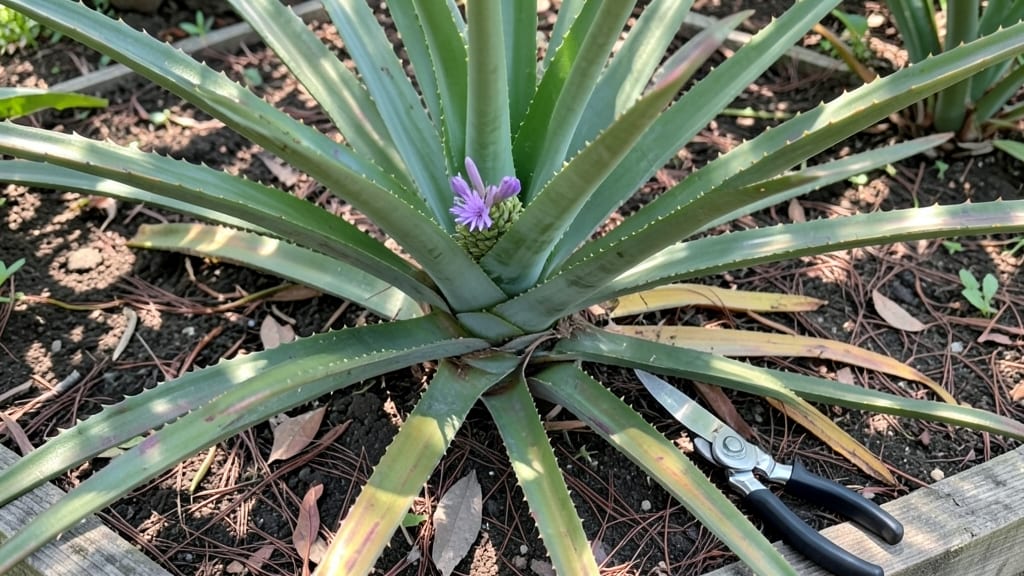
Trimming your pineapple plant isn’t just about keeping it tidy—it’s the secret to year-round fruit with just three strategic cuts. 🌱 I learned the hard way that skipping this step means fewer harvests, but once I mastered it, my plant produced fruit every 12-18 months instead of waiting years.
The key is timing: you’ll want to trim after flowering or when old leaves turn yellow, but never more than a third of the plant at once.
You only need basic tools—sharp pruning shears, rubbing alcohol for sterilizing, and a clean container for water if you’re propagating. The process takes about 20 minutes, and the best part? Those cuttings can grow into new plants.
I’ve turned old leaves into a whole new pineapple garden this way, and the mother plant keeps sending up fresh fruit stalks without missing a beat.
After trimming, your plant will focus its energy on new growth and fruit production rather than maintaining dead leaves. You’ll notice fresh green shoots within 2-4 weeks, and if you’ve done it right, a new flower spike will emerge within 6-8 months.
The plant’s crown will stay compact, and the roots will stay strong—no weak, leggy stems here.
This method works for both indoor pots and outdoor containers, though outdoor plants handle the humidity better. If you live in a cold climate, bring your pineapple inside before temperatures drop below 50°F.
The same rules apply whether you’re trimming a mature plant or a young one—just scale the cuts to the plant’s size. Ready to turn those scraps into fruit?
📚 In This Guide
- What you need
- Instructions
- Tips and common mistakes
- Wrapping up and next steps
What you need
- ● Sharp pruning shears or scissors: Choose sterilized, bypass-pruning shears (or clean kitchen scissors in a pinch) to make precise cuts without damaging the plant.
- ● Rubbing alcohol (70% isopropyl) or hydrogen peroxide (3%): Sterilize your tools before and after trimming to prevent bacterial or fungal infections.
- ● Pineapple plant (Ananas comosus): A healthy, mature plant (at least 18–24 months old) with a visible crown (the leafy top).
- ● Well-draining potting mix: A blend of 50% peat moss or coconut coir and 50% perlite or coarse sand to mimic tropical conditions.
- ● Small pots or containers (4–6 inches in diameter): For propagating the pups (baby plants) that form at the base of the mother plant.
- ○ Rooting hormone (optional but helpful): A powder or gel to boost success rates for new cuttings.
- ● Spray bottle with water: To mist cuttings and maintain humidity during the rooting phase.
- ● Activated charcoal: Add a pinch to the potting mix to prevent rot and keep cuttings fresh.
- ● Clear plastic bag or humidity dome: Creates a mini greenhouse effect to speed up rooting.
- ● Slow-release fertilizer (balanced 10-10-10 or pineapple-specific): Feed the mother plant every 2–3 months for optimal growth.
- ● Grow lights or sunny windowsill: Pineapples love 6–8 hours of bright, indirect light daily.
- ● Journal or labels: Track cutting dates, pup growth, and pruning cycles for future reference!
Step-by-Step guide to trimming a pineapple plant
Here’s how I keep my pineapple plant thriving and producing fruit year after year.
🌱 Step 1: Identify and Remove the Mother Plant
Once your pineapple produces fruit, the mother plant will start to decline. Look for a brown, dried-out crown at the top of the plant—that’s your signal it’s time to cut. Use a clean, sharp knife to slice just above the base of the fruit, about ½ inch below the crown.
Be careful not to damage the pups growing at the base. These smaller offshoots will become your next pineapple plants. After cutting, discard the mother plant or compost it—it won’t produce fruit again. You’ll notice the pups are already forming at the base, ready to take over.
✂️ Step 2: Separate and Prepare the Pups
Gently twist or wiggle the pups free from the mother plant’s base. You’ll need 3-4 healthy pups to ensure success. Each pup should have its own small root system and at least 2-3 leaves. If a pup is too small, wait a few weeks before transplanting—smaller pups struggle to establish roots.
Let the pups dry out for 1-2 days in a warm, shaded spot. This helps prevent rot when you plant them. You’ll see the cut ends callous over slightly, which signals they’re ready for their new home. I like to keep them in a dry, airy spot while they heal.
🪴 Step 3: Plant the Pups in Well-Draining Soil
Fill a 6-inch pot with a mix of cactus/succulent soil and perlite (about ¼ perlite to ¾ soil**). The soil needs to drain fast—pineapples hate soggy roots. Plant each pup so that the base of the leaves sits just above the soil line. Press the soil lightly around the pup to secure it.
Water lightly right after planting, just enough to moisten the soil. Overwatering now will cause the pup to rot before it even takes root. Place the pot in a spot with bright, indirect light—direct sun can scorch the new leaves. You’ll see fresh growth within 2-3 weeks if everything’s right.
☀️ Step 4: Care for Mature Plants to Encourage Fruit
Once your pineapple pups establish roots (usually 3-6 months), move them to a larger pot (at least 10 inches wide) or into the ground if you’re in a warm climate. They need full sun—6+ hours daily—to produce fruit. In cooler climates, keep them in pots and bring them indoors before temperatures drop below 50°F.
Feed your pineapple plant with a balanced fertilizer (10-10-10) every 2 months during growing season. You’ll notice the plant develop a flower stalk after 18-24 months. This is your cue that fruit is on the way! Keep the soil slightly moist but never soggy—consistent moisture is key.
🌿 Step 5: Prune for Health and Future Fruit
After harvesting the fruit, the plant will start to decline again. Repeat Step 1 to remove the spent plant and separate new pups. This cycle keeps your pineapple plant productive for years. Each time you trim, you’re giving yourself 3-4 new plants for future fruit.
Here’s the thing—pineapples are slow growers, but they’re worth the wait. With each trim, you’re ensuring a steady supply of fruit. Just remember: patience and good drainage are your best friends in pineapple care. You’ll see the first signs of new growth within weeks of planting the pups.
Tips & tricks for perfect pineapple plant trimming
These simple strategies will help you maximize fruit production and keep your pineapple plants thriving for years.
The Right Time to Trim: Wait until the mother plant shows clear signs of decline—yellowing leaves and a brown, dried-out crown. I've learned the hard way that trimming too early can stress the plant and reduce pup viability. The ½-inch cut below the crown in Step 1 is crucial—any lower risks damaging the pups growing at the base.
Pup Selection Matters: When choosing your 3-4 pups in Step 2, look for ones with at least 2-3 leaves and visible roots. I once tried transplanting a pup with only 1 leaf, and it took months to recover. The drying period of 1-2 days is non-negotiable—it prevents rot and helps the cut ends callous over properly. Place them in a warm, shaded spot during this time.
Soil Mix Secrets: The cactus/succulent soil mix with perlite (¼ perlite to ¾ soil) in Step 3 is essential for preventing root rot. I've had success using a 50/50 mix of regular potting soil and perlite when cactus mix isn't available. The key is ensuring fast drainage—pineapples absolutely hate soggy roots. After planting, only water lightly enough to moisten the soil, not soak it.
Temperature Watch: Remember that 50°F threshold from Step 4? That's critical for cooler climates. When temperatures drop below this, bring your pineapple plants indoors immediately. I've seen plants suffer from cold damage when left outside too long—leaves turn black and pups fail to establish. In warm climates, you can plant directly in the ground once roots are established (3-6 months).
Pro Tips for Trim Pineapple Plant
- These simple strategies will help you maximize fruit production and keep your pineapple plants thriving for years.
- The Right Time to Trim: Wait until the mother plant shows clear signs of decline—yellowing leaves and a brown, dried-...
- Pup Selection Matters: When choosing your 3-4 pups in Step 2, look for ones with at least 2-3 leaves and visible root...
Frequently asked questions
Got questions about trimming your pineapple plant for year-round fruit? You’re not alone!
Here are some of the most common concerns—plus practical answers to keep your plant thriving and productive.
How do I know when my pineapple plant is ready for trimming?
Trim your pineapple plant once the mother plant produces a fruit and starts to yellow or die back. This usually happens 8–18 months after flowering. Look for brown, crispy leaves or a shriveled appearance—these are clear signs it’s time to harvest offsets (pups) for new growth.
How often should I trim my pineapple plant?
You’ll only need to trim the mother plant once—after it fruits. However, you can (and should!) remove offsets (pups) as they grow to encourage stronger, healthier plants. These can be transplanted every 3–6 months if they’ve grown 1/3 the size of the parent plant.
What’s the best way to trim the pineapple plant without harming it?
Use a sterilized, sharp knife or pruning shears to cut offsets at the base, leaving a small portion of the stem attached. For the mother plant, cut 1–2 inches above the base to avoid damaging the roots. Always disinfect your tools with rubbing alcohol to prevent disease.
Can I grow a new pineapple plant from the trimmed-off top?
Yes! The crown (the leafy top) can root in water or soil. Place it in well-draining soil or water (change water every 2–3 days) until roots form (about 2–4 weeks). Once rooted, transplant it to a pot with sandy, acidic soil and keep it in bright, indirect light.
Why isn’t my pineapple plant producing fruit after trimming?
Pineapple plants need 3–4 years to mature before fruiting. If yours isn’t producing, check these factors:
- Age: Young plants (under 2 years) won’t fruit.
- Light: Needs 6+ hours of direct sunlight daily.
- Temperature: Thrives in 70–90°F (21–32°C).
- Fertilizer: Use a balanced, low-nitrogen fertilizer (like 10-10-10) every 2–3 months.
Wrapping up and next steps
Trimming your pineapple plant isn’t just about keeping it tidy—it’s the secret to year-round harvests and healthier growth! By mastering those three strategic cuts, you’ll encourage stronger roots, more flowers, and juicier fruit.
Whether you’re a beginner or a seasoned gardener, this method makes it simple to turn pruning into productivity.
Ready to taste the sweet rewards? Start with one plant today—grab your pruners, follow the steps, and watch your tropical garden thrive! 🌱✨