Pruning
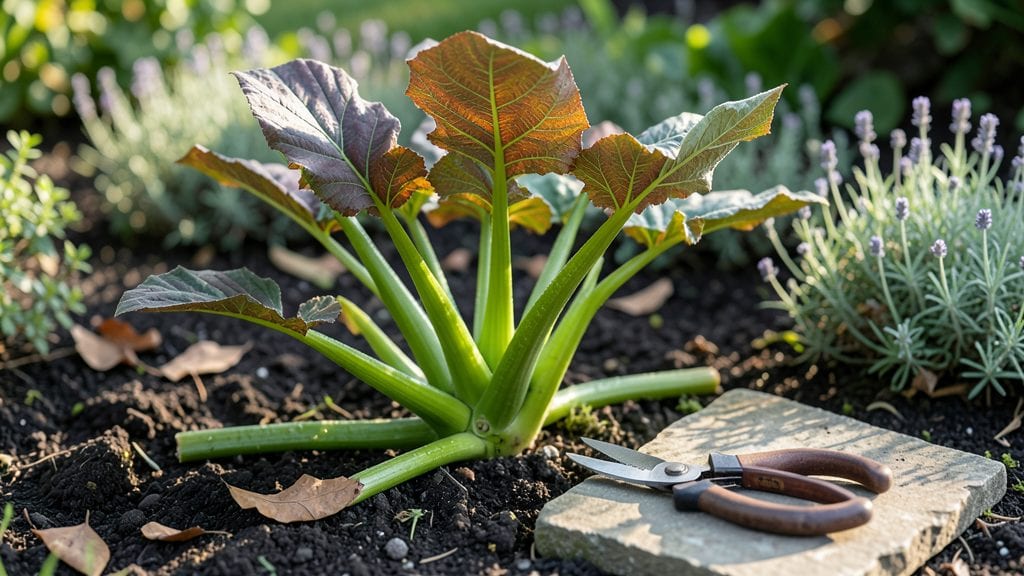
Trimming rhubarb plants at the right time turns a handful of stalks into a bountiful harvest the following year. 🌱 I learned the hard way that cutting too early or too aggressively weakens the plant—now I wait until after the first frost when the leaves turn yellow, then snip just above the soil line.
This simple step ensures thick, juicy stalks in spring instead of skinny, woody ones.
The secret lies in patience and timing. You’ll need a sharp pair of pruners or clean scissors, gloves (rhubarb sap stains like red dye), and a clear day to work.
Most gardeners stop harvesting by late June to let the plant recover, but I’ve found that cutting back entirely in fall gives even better results. The roots store energy for next season’s growth, so think of it as giving your rhubarb a well-deserved rest.
By next spring, you’ll see plump, vibrant stalks emerging faster and in greater numbers than before. The plant stays healthy, the harvest stretches longer, and you avoid the frustration of weak regrowth. It’s not just about what you cut—it’s about what you leave behind to thrive.
Works for both new and established rhubarb beds, whether you’re growing in full sun or partial shade. The key is consistency: repeat the process every fall, and you’ll have a rhubarb patch that keeps giving for decades. Ready to transform next year’s harvest?
📚 In This Guide
- What you need
- Instructions
- Tips and common mistakes
- Wrapping up and next steps
What you need
- ● Pruning shears or sharp bypass pruners: A clean, sharp pair (sterilized with rubbing alcohol) to avoid spreading disease. Choose 5-inch blades for precision.
- ○ Gloves (optional but recommended): Heavy-duty gardening gloves to protect against thorns and sap irritation.
- ● Disposable garden shears or scissors: A backup for quick cuts (sterilize between plants!).
- ○ Garden twine or plant ties (optional): To secure floppy stems if needed.
- ● Compost bin or bag: For disposing of diseased or weak stems.
- ● Watering can or hose: To hydrate plants post-trimming (especially in dry climates).
- ● Know your rhubarb’s age: Avoid trimming first-year plants—let them focus on root growth!
- ● Timing: Trim in early spring (before new growth) or late summer (after harvest).
- ● Weather check: Do it on a dry, overcast day to reduce stress on the plant.
- ● Safety first: Wear long sleeves and eye protection—rhubarb thorns are no joke!
Instructions for trimming rhubarb plants to maximize growth
Here’s the straightforward approach I’ve used for years—timing and technique matter most.
🌱 Step 1: Wait Until After Harvest Before Trimming
Never trim rhubarb until late summer or early fall, after you’ve harvested all the stalks for the season. This ensures the plant has stored enough energy in its roots to support next year’s growth. I wait until mid-September in my zone, when the stalks have stopped producing new growth and the leaves begin yellowing slightly.
If you trim too early, you’ll weaken the plant’s ability to build up reserves. Watch for the leaves to turn yellow or brown at the edges—that’s your signal. Avoid cutting back when the plant is still actively growing stalks, even if the stalks look tired.
✂️ Step 2: Cut Back to the Ground, But Leave the Crown Intact
Use clean, sharp pruners or shears to cut the entire plant back to about 1 inch above the soil line. This removes all the old stalks and leaves but leaves the rhubarb crown (the thick, fleshy base) undisturbed. The crown is where next year’s growth begins, so never dig it up or damage it.
I like to make a clean, straight cut across the top of the stalks. Avoid tearing or leaving jagged edges, as this can invite disease. If any stalks are still green and firm, leave them—they’re still storing energy. Only remove completely brown or woody stalks.
🪴 Step 3: Remove and Dispose of Old Stalks Properly
Gather the trimmed stalks and leaves and do not compost them. Rhubarb can carry diseases like crown rot, and composting old stalks spreads these pathogens. Instead, place them in the trash or burn them. This step is critical—skipping it risks infecting next year’s crop.
I also like to rake away any fallen leaves or debris around the base of the plant. This reduces hiding spots for pests and improves airflow, which helps prevent fungal issues. A quick cleanup keeps the area tidy and healthy for dormancy.
⏰ Step 4: Mulch Lightly to Protect Over Winter
After trimming, spread a 2-3 inch layer of straw or shredded leaves around the base of the plant. This mulch insulates the crown from extreme cold and prevents soil heaving during freeze-thaw cycles. Avoid piling mulch directly against the crown—keep it 2-3 inches away to prevent rot.
I use straw because it breaks down slowly and won’t smother the plant. If you live in a very cold climate, you might add an extra layer of mulch in late fall. The goal is to protect the crown without suffocating it—too much mulch can trap moisture and cause rot.
🌿 Step 5: Wait Until Spring Before New Growth Appears
Leave the rhubarb undisturbed until early spring, when you’ll see new shoots emerging from the crown. These shoots will develop into next year’s stalks. Avoid pruning or fertilizing until you see at least 2-3 inches of new growth, usually around mid-April in most regions.
Here’s the thing—rhubarb is a perennial, and proper trimming now means bigger, more productive stalks next year. If you rush the process or cut too early, you’ll end up with smaller harvests. Patience pays off with this hardy plant!
Tips & tricks for perfect rhubarb plant trimming
A few key strategies will help you avoid common mistakes and ensure your rhubarb thrives for years to come.
Timing is Everything: The mid-September window in Step 1 is critical because rhubarb needs to store energy in its roots for next year's growth. If you live in a warmer climate, watch for leaf color changes rather than sticking strictly to the calendar. Yellowing leaves signal it's time to trim—don't wait until the stalks look completely spent. Between us, I've made the mistake of trimming too early, and my harvest was noticeably smaller the following spring.
Tool Selection Matters: For Step 2, use clean, sharp pruners or shears—dull tools can crush stalks and create entry points for disease. I've found that garden shears work best for this job because they give me more control than heavy-duty pruners. Make sure to disinfect your tools with rubbing alcohol between plants if you're working with multiple rhubarb patches. This simple step has prevented fungal issues in my garden for years.
Disease Prevention Strategy: The disposal method in Step 3 is non-negotiable for disease prevention. I've seen crown rot spread in compost piles from old rhubarb stalks, and it's heartbreaking to lose a healthy plant to something preventable. For extra protection, consider adding a layer of landscape fabric around the base after trimming to create a barrier against soil-borne pathogens. This works especially well in areas with high humidity.
Mulching Technique: When applying the 2-3 inch mulch layer in Step 4, focus on creating an insulating blanket rather than a suffocating layer. I like to create a donut shape around the plant, keeping mulch 2-3 inches away from the crown to prevent rot. For colder climates, consider adding a layer of bubble wrap or frost cloth over the mulch for the harshest winter months—this extra protection has saved my rhubarb crowns during particularly brutal winters.
Pro Tips for Trim Rhubarb Plants
- A few key strategies will help you avoid common mistakes and ensure your rhubarb thrives for years to come.
- Timing is Everything: The mid-September window in Step 1 is critical because rhubarb needs to store energy in its roots for next year's growth.
- Tool Selection Matters: For Step 2, use clean, sharp pruners or shears—dull tools can crush stalks and create entry points for disease.
Frequently asked questions
Got questions about trimming rhubarb plants? You’re not alone!
Here are answers to the most common concerns—from timing to troubleshooting—to help you keep your rhubarb thriving for years to come.
When is the best time to trim rhubarb plants?
Trim rhubarb after harvest, ideally in late spring or early summer (May–June). Avoid cutting back in fall or winter, as the plant needs energy to store nutrients for next year’s growth. Focus on removing old leaves and stems after the main harvest season to prevent disease and encourage new shoots.
How much of the rhubarb plant can I cut back?
Never cut more than one-third of the plant at a time. For mature plants, trim back the oldest, largest leaves and stems to the base, leaving the younger, healthier growth. Avoid over-trimming—this can stress the plant and reduce future harvests. Think of it as a light haircut, not a buzz cut!
What if my rhubarb plant looks sad after trimming?
If your rhubarb appears wilted or weak after trimming, it might be under stress. Ensure it’s well-watered and mulched to retain moisture. Avoid trimming in extreme heat or drought—wait for cooler weather. Yellowing leaves could signal over-trimming or nutrient deficiency; fertilize lightly with compost or a balanced fertilizer.
Can I trim rhubarb in the fall or winter?
No—never trim rhubarb in fall or winter! The plant relies on its leaves to store energy for spring growth. Instead, leave the foliage intact until late winter or early spring. If you must clean up, remove dead or diseased leaves only, but avoid pruning healthy growth until the thaw.
What if my rhubarb plant is young—should I trim it at all?
Young rhubarb plants (first year) should not be trimmed. Focus on harvesting only the thinnest stalks (about pencil-width) to encourage root development. In the second year, you can start light trimming post-harvest. Patience pays off—healthy roots mean bigger harvests later!
Wrapping up and next steps
Trimming your rhubarb plants isn’t just about tidying up—it’s the secret to a bountiful harvest next season! By removing old stalks, thinning crowded crowns, and timing your cuts right, you’re setting your plants up for healthier growth and bigger yields.
Whether you’re a seasoned gardener or just starting out, these simple steps will help you grow like a pro.
Ready to take your rhubarb game to the next level? Grab your pruners and get trimming! After you’ve mastered this, explore companion planting tips or soil care hacks to keep your garden thriving all year round. 🌱✨