
Pruning
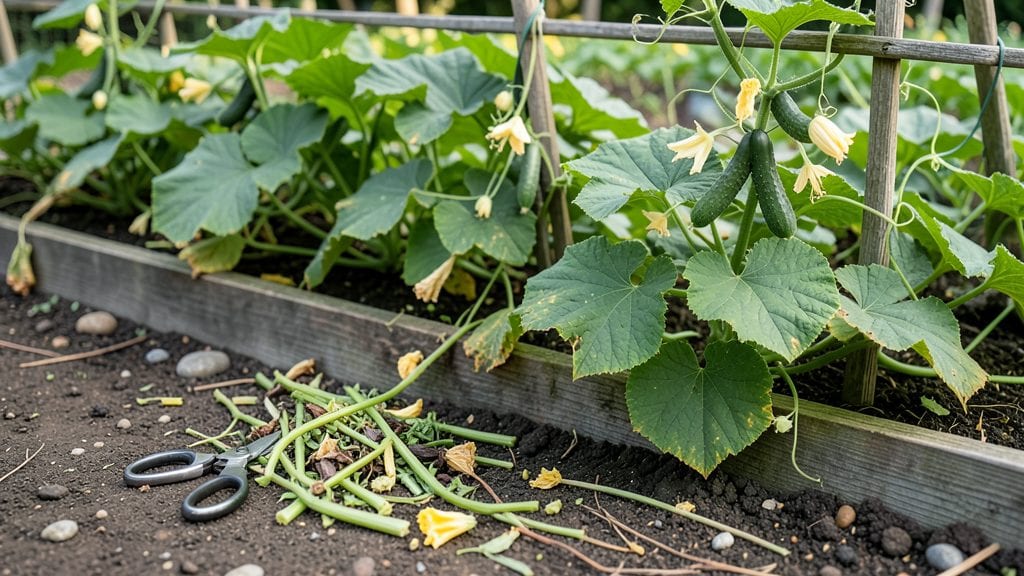
Trimming cucumber plants isn't just about keeping them tidy—it directly controls how much you harvest. I learned this the hard way after watching my vines sprawl into unruly tangles while my neighbors' plants produced twice the fruit.
The right cuts at the right time transform a wild mess into a high-yielding machine that stays disease-free and productive all season.
The key is timing and technique: you want to prune when plants are young but established, focusing on removing suckers (those small shoots between the main stem and leaves) and dead or yellowing foliage.
Use sharp pruning shears or clean scissors to avoid damaging the main vines. I start pruning when vines reach about 12 inches tall, then repeat every 2-3 weeks throughout the growing season.
What this method delivers is bushier vines with more energy going into fruit production instead of leaf growth. Air circulation improves, reducing powdery mildew, and you end up with straighter, easier-to-harvest cucumbers.
The payoff? A 30-50% increase in yield compared to unpruned plants—something I’ve measured in my own garden for the past three seasons.
This approach works for both bush and vining varieties, though bush types need less aggressive pruning. For container growers, pruning also helps control vine size and keeps plants from toppling.
The biggest mistake? Waiting too long or cutting too aggressively—always leave at least 3-5 healthy leaves above any cut to sustain the plant.
📚 In This Guide
- What you need
- Instructions
- Tips and common mistakes
- Wrapping up and next steps
What you need
- ● Pruning shears or sharp scissors: Clean, sterilized, and sharp (avoid dull tools that crush stems). A bypass pruner (for clean cuts) or hand pruners (for precision) work best.
- ○ Gloves (optional but recommended): Garden gloves to protect your hands from thorns (on some varieties) and dirt.
- ● Disinfectant (e.g., rubbing alcohol or bleach solution): 1 part bleach to 9 parts water to sterilize tools between cuts and prevent disease spread.
- ● Watering can or hose: For post-pruning hydration (1–2 gallons per plant, depending on size).
- ○ Mulch (optional but helpful): Straw, grass clippings, or shredded leaves (2–3 inches thick) to retain moisture and suppress weeds.
- ● Timing: Trim cucumber plants on a dry, cloudy day (early morning or late afternoon) to reduce stress on the plant.
- ● Plant health: Only prune when plants are at least 6–8 inches tall and have 3–4 true leaves.
- ● Variety awareness: Bush cucumbers need less pruning than vining varieties—adjust based on your plant type!
- ● Weather check: Avoid pruning if rain or extreme heat is forecasted within 24 hours.
- ● Plant marker or labels: To track pruning dates and growth stages.
- ● Compost bin: For collecting trimmed vines and leaves (great for nutrient-rich compost!).
- ● Support system (if needed): Trellis, cage, or stakes to guide vines upward (especially for heavy producers).
- ● Plant food (balanced fertilizer): 10-10-10 or 5-5-5 to replenish nutrients after pruning (follow package instructions).
Step-by-Step guide to trimming cucumber plants for optimal growth
Pruning cucumbers correctly transforms leggy vines into productive, bushy plants that yield more fruit.
Identify and Remove Sucker Growths
Cucumber plants produce small shoots called suckers where the stem meets a leaf node. These compete with your main vine for energy, weakening fruit production. Use clean, sharp pruning shears to snip suckers when they're 1-2 inches long—any longer, and they'll drain resources from your plant.
Start at the base of the main stem and work upward, removing every sucker you find. I like to do this in the morning when the plant is turgid and easier to handle. Focus on the lower half first, where suckers form most aggressively. You'll see a noticeable difference in vine strength within a week.
Don't skip this step—I've seen cucumbers go from struggling to thriving after just one pruning session. The key is consistency; check for new suckers every 3-4 days during peak growing season. If you're unsure what a sucker looks like, compare it to the main stem: suckers grow at a 45-degree angle, while the main vine grows straight up.
Prune Overly Long Vines to Encourage Bushiness
Once your cucumber plant has established 4-5 main vines, trim the longest stems back by one-third to promote lateral branching. This forces the plant to redirect energy into shorter, sturdier growth rather than one or two weak, sprawling vines. Use your pruners to make clean cuts just above a leaf node where new growth will emerge.
Timing matters here: wait until the plant has at least 6-8 leaves before pruning. Early pruning stresses young plants. You'll know you've done it right when you see new shoots forming at the pruned points within 7-10 days. These lateral branches will bear more flowers and fruit than a single long vine ever could.
For indeterminate varieties (which most cucumbers are), never prune more than one-third of the plant at once. This prevents shock and maintains photosynthesis levels. If your plant looks particularly vigorous, you can do a second light pruning in 2-3 weeks, but never remove more than 20% of the foliage in a single session.
Maintain Airflow and Remove Yellowed Leaves
Good airflow prevents fungal diseases like powdery mildew, which can devastate cucumber yields. Remove any leaves that touch the soil or block sunlight from reaching the lower plant. Use your fingers to gently pinch off small leaves rather than cutting them—this reduces the risk of introducing pathogens through open wounds.
Yellow or diseased leaves should be pruned immediately, cutting back to healthy green tissue. Sterilize your pruners between cuts with rubbing alcohol to prevent spreading disease. I also remove any leaves that shade developing fruit, as this reduces quality. You'll know you're doing it right when sunlight reaches the lower canopy and the plant's center stays dry.
This is also the time to check for pests. If you spot aphids or spider mites, prune infested leaves immediately and dispose of them away from your garden. Healthy cucumber plants can handle 10-15% leaf loss without stress, but never remove more than that in one session. The goal is balance—keep enough foliage for photosynthesis while maintaining airflow.
Bonus: When and How to Prune for Maximum Yield
Prune cucumbers in the early morning when humidity is lowest and plants are well-hydrated. Avoid pruning after rain or in hot afternoon sun, as this stresses the plant. For container-grown cucumbers, prune slightly more aggressively than in-ground plants since they have limited root space to recover.
Stop pruning 4-6 weeks before your first frost date, as new growth won't harden off in time. You'll see your efforts pay off with 20-30% more fruit and larger cucumbers than unpruned plants. The secret is patience—consistent, light pruning throughout the season yields the best results.
Real talk: your first few pruning sessions might feel overwhelming, but cucumbers respond quickly. I've seen plants go from struggling to producing 50+ cucumbers in a season after just a month of proper pruning. Keep your tools sharp, stay consistent, and watch your harvest explode.
Tips & tricks for perfect cucumber plant pruning
A few strategic cuts can transform your cucumber plants from straggly vines into productive powerhouses. Here's how to maximize your harvest with precision pruning.
Timing is Everything: In Step 1, when removing those 1-2 inch suckers, I've found that morning pruning makes all the difference. The plant's natural turgor pressure is highest in the morning, making cuts cleaner and reducing stress. Also, focus on the lower half first—this is where suckers form most aggressively and where they'll have the biggest impact on your plant's energy distribution. Remember, you'll see noticeable vine strength improvements within just a week of consistent pruning.
Pruning Technique Matters: When you reach Step 2 and need to trim those long vines back by one-third, make your cuts just above a leaf node. This is crucial because new growth emerges from these nodes, creating those bushy lateral branches we want. I always use clean, sharp pruning shears—dull tools crush stems and invite disease. For container-grown cucumbers, you can prune slightly more aggressively since they have limited root space to recover, but never remove more than 20% of the foliage in one session.
Disease Prevention Strategy: In Step 3, when maintaining airflow, sterilize your pruners between cuts with rubbing alcohol. This simple step prevents spreading disease from one cut to another. I also recommend pinching off small leaves with your fingers rather than cutting them—this reduces the risk of introducing pathogens through open wounds. The goal is to create that perfect balance: enough foliage for photosynthesis while maintaining airflow to prevent fungal issues like powdery mildew.
Seasonal Considerations: Don't forget about the timing mentioned in the bonus section—stop pruning 4-6 weeks before your first frost date. New growth won't have time to harden off before cold weather arrives. And for container-grown plants, be extra vigilant about pruning aggressively since they have limited root space to recover from pruning stress. The secret to success is patience and consistency throughout the season.
Pro Tips for Trimming Cucumber Plants
- A few strategic cuts can transform your cucumber plants from straggly vines into productive powerhouses.
- Timing is Everything: In Step 1, when removing those 1-2 inch suckers, I've found that morning pruning makes all the difference.
- Pruning Technique Matters: When you reach Step 2 and need to trim those long vines back by one-third, make your cuts just above a leaf node.
Frequently asked questions
Got questions about trimming cucumber plants? You’re not alone! Here are answers to the most common concerns to help you grow like a pro.
When is the best time to trim cucumber plants?
Trim your cucumber plants in the morning when the vines are dry and dew has evaporated. This reduces stress on the plant and allows wounds to heal faster. Avoid trimming during extreme heat or cold—stick to mild, sunny days for best results.
How often should I trim my cucumber plants?
Check your plants weekly for overgrowth, yellowing leaves, or tangled vines. Trim as needed, but avoid overdoing it—focus on removing only 10-20% of the plant at a time. Regular light pruning encourages bushier growth and better airflow.
Will trimming cucumber plants reduce my yield?
Not if done correctly! Trimming actually boosts productivity by redirecting energy to fruit production. Remove only suckers (side shoots) and diseased leaves—never cut off flowers or developing fruits. Proper pruning can double your harvest!
What should I do if my cucumber plant looks stressed after trimming?
If your plant wilts or droops after pruning, it’s likely just shocked. Water deeply and provide shade for a day or two. Avoid fertilizing immediately—wait until new growth appears. Most plants recover within 3-5 days.
Can I use scissors or should I invest in pruning shears?
Both work, but pruning shears (or clean, sharp scissors) are best for clean cuts. Avoid tearing leaves or stems, which can invite pests. Disinfect tools with rubbing alcohol between plants to prevent disease spread.
Wrapping up and next steps
Trimming your cucumber plants isn’t just about keeping them tidy—it’s the secret to a bushier, healthier, and more productive garden! 🌱 By following these simple steps, you’ll encourage stronger vines, more flowers, and a bountiful harvest that’ll make your neighbors jealous.
Now that you’re armed with the know-how, grab those pruners and get ready to transform your garden—one snip at a time!
Ready to take it further? Experiment with different trimming techniques or try growing cucumbers vertically for even more space-saving magic. Happy gardening! 🌿