Pruning
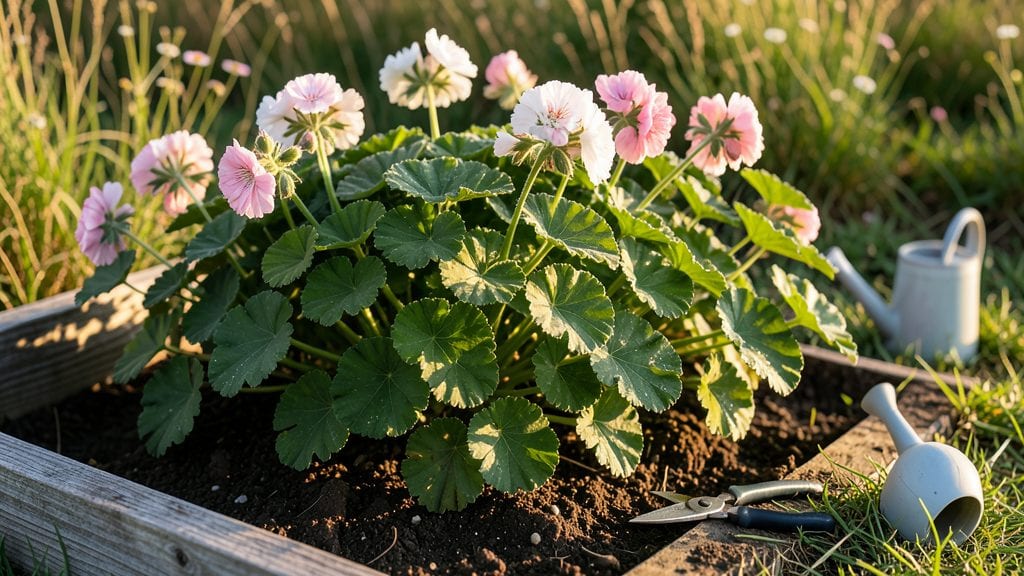
Trimming geranium plants isn’t just about keeping them tidy—it’s the secret to nonstop blooms and plants that shrug off pests. I’ve turned my leggy, half-dead geraniums into vibrant, bushy powerhouses just by following these three cuts, and the difference shows up within weeks.
The key? Timing matters more than you’d think—spring and fall are your best bets, but zonal geraniums need extra love in early summer too.
You’ll only need two tools: sharp bypass pruners (dull scissors tear stems) and a small pair of gloves to keep those sap stains off your hands. Grab a bucket for clippings—those stems root easily if you want free plants.
For deadheading, just pinch off spent blooms at the first set of leaves below the flower; for shaping, cut back leggy stems by one-third to encourage new growth from the base. Ivy geraniums? Let them sprawl unless they get too crowded.
After trimming, your plants will respond with bold new shoots within days, and the flowers come back thicker and longer-lasting. The bushier shape means better airflow—fewer pests, less disease—and those stems stay sturdy enough to hold up to rain without flopping.
Confession: I used to over-prune, leaving bare spots where flowers should be. Now I follow the one-third rule religiously, and my geraniums reward me with blooms from May until frost.
This method works for both zonal and ivy types, though ivy geraniums handle heavier pruning since they’re more forgiving. In colder zones, give them a light haircut in early fall to toughen them up before winter.
Once you see how quickly they bounce back, you’ll never let a geranium go untrimmed again—trust me, your neighbors will notice the difference.
📚 In This Guide
- What you need
- Instructions
- Tips and common mistakes
- Wrapping up and next steps
What you need
- ● Clean, sharp pruning shears or bypass pruners – Choose sterilized tools (70% isopropyl alcohol) to prevent disease spread.
- ● Hand pruners or sharp scissors – For smaller stems or deadheading (1 pair).
- ○ Gloves (optional but recommended) – Nitrile or leather gloves protect against thorns and sap irritation.
- ● Disinfectant (bleach solution or rubbing alcohol) – Mix 1 part bleach to 9 parts water for cleaning tools between cuts.
- ● Compost bin or garden waste bag – For trimmings (avoid composting diseased plants).
- ● Watering can or hose with a gentle spray nozzle – To hydrate plants post-pruning.
- ● Pruning saw – For thick, woody stems (rare in geraniums but useful for mature plants).
- ● Plant food or fertilizer – Balanced 10-10-10 or slow-release granules to boost regrowth.
- ● Plant ties or stakes – If your geraniums need support after heavy trimming.
- ● Spray bottle with neem oil (1%) – Preventative measure against pests post-pruning.
Step-by-Step guide to trimming geranium plants
Revive your geraniums with this simple three-step method for fuller blooms and stronger stems.
Identify and Remove Dead or Diseased Growth
Start by examining each stem from the base upward. Look for brown, mushy stems or leaves with black spots—these are signs of disease or rot. Snip these away first using clean, sharp pruning shears. I always disinfect my tools with rubbing alcohol between cuts to prevent spreading any pathogens.
Next, remove any stems that are completely leafless or have only a few yellowed leaves. These won’t recover and will drain energy from healthier parts of the plant. Cut just above a leaf node where new growth can emerge. You’ll notice how much lighter and airier the plant feels once you’ve cleared out the dead material.
Prune for Shape and Encourage Fullness
Now focus on shaping the plant. Geraniums tend to grow leggy, so I trim back the longest stems to about half their length. This encourages branching and creates a bushier appearance. Cut just above a set of leaves where the stem meets the main trunk—this is where new side shoots will form.
For a rounded shape, pinch or cut back the tips of the outermost stems. Avoid cutting into the center of the plant, as this can leave it bare. Watch for where the stems naturally form branches, and trim just above those points. You’ll see new growth emerging from these nodes within 2-3 weeks.
Thin Out Crowded Foliage for Better Airflow
Geraniums thrive with good airflow, so thin out any overcrowded leaves or stems. Remove any leaves that are touching the soil, as these can rot and attract pests. Use your fingers to gently pull out weak or crowded stems at the base. If a stem is too tough to pull, cut it off with your pruners.
Once you’ve finished trimming, step back and admire your work. The plant should look balanced, with open space between stems. This isn’t just about looks—better airflow reduces humidity around the leaves, which helps prevent fungal diseases like powdery mildew. Water the plant lightly after pruning to help it recover.
Maintain and Monitor for New Growth
After trimming, keep an eye on your geraniums for signs of new growth. You’ll notice small buds forming at the leaf nodes where you made cuts. This is your signal that the plant is responding well. Continue to water deeply but allow the top 1-2 inches of soil to dry out between waterings to prevent root rot.
In 4-6 weeks, your geraniums should be fuller and more vibrant. If you see any new stems growing too long, give them a light trim to maintain shape. Regular pruning throughout the growing season keeps geraniums lush and encourages continuous blooming until frost.
Tips & tricks for perfect geranium trimming
These essential tips will help you transform leggy, overgrown geraniums into vibrant, healthy plants that thrive all season long.
The Disease Detection Trick: When examining stems in Step 1, run your thumb along the stem—healthy stems feel firm and slightly springy, while diseased stems will feel soft or mushy. This simple test helps you spot hidden rot before it spreads. I’ve caught early signs of powdery mildew this way before it became visible to the naked eye.
Pruning Precision: In Step 2, focus on cutting just above leaf nodes where new growth emerges. These nodes are the small bumps or circles where leaves attach to the stem. Cutting here ensures you’re directing energy to new shoots rather than leaving stubs that may rot. I always count the nodes from the base to determine where to make my cuts—this creates a more balanced shape.
Airflow is Everything: Step 3 emphasizes thinning for airflow, but don’t stop there. After pruning, gently shake the plant to dislodge any dust or debris from the leaves. This mimics natural rain and helps prevent fungal spores from settling. I’ve noticed my geraniums stay healthier and bloom longer when I do this simple step after trimming.
Growth Timeline: The 2-3 week window mentioned for new growth is a general guideline, but environmental factors play a huge role. In warmer climates, you might see buds forming in just 10-14 days, while cooler weather can extend this to 4-5 weeks. Keep a small notebook near your plants to track when you prune and when new growth appears—you’ll start recognizing patterns specific to your garden’s microclimate.
Pro Tips for Trimming Geranium Plants
- These essential tips will help you transform leggy, overgrown geraniums into vibrant, healthy plants that thrive all season long.
- The Disease Detection Trick: When examining stems in Step 1, run your thumb along the stem—healthy stems feel firm and slightly springy, while diseased stems will feel soft or mushy.
- Pruning Precision: In Step 2, focus on cutting just above leaf nodes where new growth emerges.
Frequently asked questions
Got questions about trimming geraniums?
Here are answers to the most common ones—so you can keep your plants thriving without stress!
When is the best time to trim geranium plants?
Trim geraniums in early spring (just as new growth starts) or after they finish blooming in late summer. Avoid heavy trimming in fall—wait until after the first frost to prevent winter damage. For container geraniums, light pruning can happen year-round to encourage bushier growth.
How much should I cut back my geraniums?
For a rejuvenating trim, cut back leggy stems by one-third to one-half their height. Remove dead or yellowing leaves entirely. Never trim more than 30% of the plant at once—this can stress it. For annual geraniums, you can be bolder, but perennials need gentler care.
Will trimming geraniums help prevent pests?
Regular trimming improves air circulation, reducing humidity around leaves—where pests like aphids and spider mites love to hide. Plus, removing crowded stems cuts down on fungal risks. Just sterilize your shears with rubbing alcohol between cuts to avoid spreading disease.
Can I propagate geraniums from cuttings after trimming?
Yes! Use healthy, 4-6 inch cuttings from your trims. Remove lower leaves, dip in rooting hormone (optional), and place in water or moist potting mix. Keep in bright, indirect light and change water every 2-3 days. Roots should form in 2-4 weeks—perfect for free new plants!
What if my geraniums look sad after trimming?
Don’t worry! A little shock is normal. Water deeply and place in partial shade for a week to help recovery. If leaves yellow or wilt excessively, check for over-trimming or root rot. Fertilize lightly with a balanced formula after 2-3 weeks to boost regrowth.
| Quick Tip | Do This |
|---|---|
| Temperature Check | Wait to trim until temps are above 50°F (10°C)—cold stress slows healing. |
| Tool Prep | Use clean, sharp shears—dull blades crush stems, inviting disease. |
| Bloom Boost | Pinch back new growth tips in spring to encourage fuller, bushier plants. |
Wrapping up and next steps
Trimming your geranium plants isn’t just about keeping them tidy—it’s a game-changer for their health, vibrancy, and resilience! 🌿 With the right tools, timing, and technique, you’ll encourage bushier blooms, stronger stems, and fewer pests—all while giving your garden a polished look.
Now that you’re armed with these 3 simple steps, there’s no better time to roll up your sleeves and revive your geraniums.
Ready to see the difference? Pick a sunny day, grab your pruners, and start trimming today! Your plants—and your garden—will thank you with explosive new growth all season long. 🌸✨