Pruning
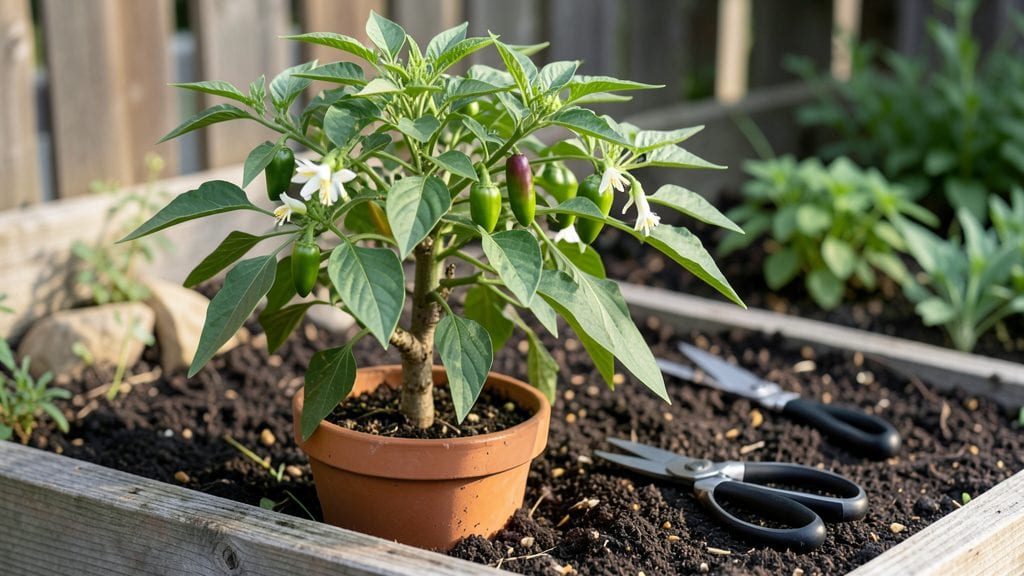
Trimming jalapeno plants isn't just about keeping them tidy—it's the secret to doubling your harvest while preventing disease. 🌱 I learned this the hard way after my first plant got so overgrown it barely produced anything, but now I prune like a pro.
The right cuts redirect energy from leafy growth to fruit production, and it only takes about 15 minutes once you get the hang of it.
You'll need sharp pruning shears, a clean cutting board, and a spray bottle with diluted hydrogen peroxide (1 part peroxide to 3 parts water) to disinfect cuts. Focus on removing any yellow or diseased leaves first, then trim back any leggy stems to encourage bushier growth.
The key is to never take more than one-third of the plant at once—this keeps stress low while maximizing fruit potential.
After pruning, your plants will reward you with thicker stems, more branches, and a steady stream of peppers instead of just a few large ones. I've gone from 20 peppers in a season to over 100 just by making a few strategic cuts.
The best part? You can keep trimming all season long, and your plants will keep producing right up until frost.
Works for both container-grown and in-ground jalapenos, and the same principles apply whether you're growing one plant or a full garden bed. The only real mistake is waiting too long—once your plant gets too crowded, it's harder to fix. Ready to turn your jalapeno patch into a pepper powerhouse?
📚 In This Guide
- What you need
- Instructions
- Tips and common mistakes
- Wrapping up and next steps
What you need
- ● Pruning shears: Bypass pruners (sharp, clean, and sterilized to prevent disease). Avoid anvil pruners—they can crush stems.
- ● Garden gloves: Nitrile or leather (thick enough to protect from thorns and spicy sap).
- ● Disinfectant: 70% isopropyl alcohol or bleach solution (1 part bleach to 9 parts water) to sterilize tools between cuts.
- ○ Plastic bags or bucket: For collecting pruned branches (optional but keeps your workspace tidy!).
- ● Sharpie or plant marker: Permanent marker (for labeling pruned stems if propagating).
- ● Horticultural oil or fungicide: Copper-based (to treat cuts if signs of disease appear).
- ● Rooting hormone: Powder or gel (if you plan to propagate cuttings).
- ● Pruning saw: For thicker stems (rare for jalapeños but useful if your plants are woody).
- ● Notebook or app: For tracking growth stages and pruning dates (e.g., Gardenate or a simple journal).
Step-by-Step instructions for trimming jalapeño plants
Here's how to keep your plants productive and healthy with simple, effective cuts.
✂️ Step 1: Identify and Remove Suckers
Suckers are the small shoots that grow in the crook between a main stem and a branch. These compete with your peppers for energy, so snip them off at the base with clean pruning shears. I always start by scanning the plant from top to bottom—suckers often hide where stems meet branches, especially near the bottom.
Use sharp, sterilized shears to avoid damaging the main stem. You'll know you've got the right spot when you see a tiny leafy shoot emerging from the joint. Remove suckers as soon as you spot them—waiting just gives them more time to drain energy from your peppers.
🌿 Step 2: Prune Lower Leaves for Airflow
Start about 12 inches from the base and work your way up, removing the largest leaves on the lower half of the plant. This improves airflow and reduces disease risk. I aim to leave about half the leaves on the plant—just enough for photosynthesis but not so many that they block sunlight from reaching the fruit.
Focus on leaves that are yellowing or crowded. You'll see the plant's structure more clearly once these are gone, making it easier to spot future suckers. Avoid cutting into the main stem—just trim the leaf stem cleanly at its base. This keeps the plant strong while encouraging energy to flow upward.
☀️ Step 3: Thin Fruit for Larger Peppers
When peppers cluster together, remove all but 2-3 of the largest, healthiest ones per stem. This gives them room to grow bigger and reduces competition for nutrients. I always leave the peppers closest to the main stem—they tend to be the most productive. Look for peppers that are firm, green, and free of blemishes.
Use your fingers to gently twist off smaller or damaged peppers at the stem. Avoid tearing the plant. You'll notice the remaining peppers swell noticeably within a few weeks. This step is especially important in late summer when plants get overloaded with fruit—thinning keeps them from getting stressed.
⏰ Step 4: Trim Leggy Growth After Harvesting
After your first big harvest, you might see long, bare stems where peppers used to be. Trim these back by about one-third to encourage bushier growth. Focus on the top third of the plant—this redirects energy to new branches rather than letting the plant grow tall and spindly.
Make cuts just above a leaf node (the bump where leaves grow). You'll see new side shoots emerge within 1-2 weeks, which will produce another round of peppers. This keeps your plant productive well into fall. Just avoid cutting into old wood—new growth only comes from green stems.
🌱 Step 5: Sterilize Tools and Monitor Growth
After each trimming session, wipe your shears with rubbing alcohol to kill any bacteria or fungi. I keep a small bottle of 70% isopropyl alcohol in my gardening toolbox—just a quick wipe between plants prevents disease spread. You'll also notice fewer pests when your tools are clean.
Check your plants weekly for new suckers or overcrowded peppers. Consistent trimming keeps your jalapeños producing all season. If you see yellow leaves after pruning, it's normal—the plant is redirecting energy. Just keep an eye on it and water consistently to help it recover.
Tips & tricks for perfect jalapeño plant trimming
These precision-focused tips will help you maximize your jalapeño harvest while keeping plants healthy and productive all season.
Timing Secret: I've found that trimming suckers every 7-10 days during peak growing season prevents them from becoming established. In Step 1, when you're removing those tiny leafy shoots, look for new suckers forming at the base of each trimmed sucker—these can appear within just 3-5 days if left unchecked. Consistency is key here; I set a reminder on my phone for every Tuesday and Thursday to keep on top of it.
Leaf Pruning Strategy: During Step 2, when you're removing those lower leaves starting 12 inches from the base, focus on leaves that are larger than your palm. These big leaves create shade that prevents sunlight from reaching the fruit and lower branches. I also make a point to leave the smaller leaves on the top half of the plant—they'll help protect developing peppers from intense afternoon sun while still allowing plenty of airflow.
Fruit Thinning Technique: In Step 3, when you're thinning peppers down to 2-3 per stem, pay special attention to the ones closest to the main stem. These tend to be the most productive because they're directly connected to the plant's main nutrient flow. I like to leave the peppers that are already showing some color development—they'll mature faster than the completely green ones. This visual cue helps me make quicker decisions during my weekly trimming sessions.
Post-Harvest Recovery: After your first big harvest in Step 4, when you're trimming back those leggy stems by one-third, make your cuts just above a leaf node where you can see a tiny bump. These nodes are like growth buds—cutting above them encourages new side shoots to form within 1-2 weeks. I've noticed that plants trimmed this way often produce a second flush of peppers that are even hotter than the first batch, especially if you're growing for spice rather than size.
Pro Tips for Trimming Jalapeno Plants
- These precision-focused tips will help you maximize your jalapeño harvest while keeping plants healthy and productive all season.
- Timing Secret: I've found that trimming suckers every 7-10 days during peak growing season prevents them from becoming established.
- Leaf Pruning Strategy: During Step 2, when you're removing those lower leaves starting 12 inches from the base, focus on leaves that are larger than your palm.
Frequently asked questions
Got questions about trimming your jalapeño plants? You’re not alone! Here are some of the most common queries—plus straightforward answers to keep your peppers thriving.
When is the best time to trim jalapeño plants?
Trim your jalapeños early and often—start when plants are young (about 6–8 inches tall) and continue throughout the growing season. Focus on removing suckers (side shoots) and spent flowers to encourage bushier growth and more peppers. Avoid heavy trimming late in the season, as it can stress plants before harvest.
How much can I trim off without hurting the plant?
You can safely remove up to 25–30% of the plant’s foliage at once, but avoid overdoing it. Prune suckers (those little shoots in the leaf axils) aggressively—they drain energy from fruit production. For main stems, limit cuts to one-third of the plant’s height per session to prevent shock.
Will trimming jalapeños make them hotter?
No, trimming won’t directly increase heat levels, but it can indirectly improve flavor and potency by redirecting the plant’s energy toward fewer, higher-quality peppers. Focus on removing suckers and diseased leaves to boost overall plant health—healthier plants often produce peppers with more capsaicin (the compound that makes them spicy!).
What should I do with the trimmed-off parts?
Don’t toss those clippings! Use them for compost (if disease-free), propagate new plants (sucker cuttings can root in water), or make jalapeño-infused vinegar or oil for cooking. Just avoid composting diseased leaves—bin them separately to prevent spreading issues.
My jalapeño plant looks sad after trimming—what went wrong?
If your plant wilts or stops growing post-trim, you may have over-pruned. Signs of stress: yellowing leaves, stunted growth, or no new flowers. Solution? Water deeply, hold off on more cuts for 2–3 weeks, and fertilize lightly (use a balanced 10-10-10 or compost tea). Most plants bounce back in 1–2 weeks!
Can I trim jalapeños in cold weather?
Wait until temperatures are consistently above 50°F (10°C)—trimming in cold snaps stresses plants and slows recovery. If you’re in a short growing season, prioritize trimming in spring or early summer to maximize harvest time. In frost-prone areas, focus on late-season cleanup (remove dead leaves) to prep plants for winter.
Wrapping up and next steps
Trimming your jalapeño plants isn’t just about tidying up—it’s your secret weapon for a bountiful, year-round harvest! 🌱 By mastering the art of pruning, you’ll encourage bushier growth, healthier peppers, and even milder flavors when needed.
Whether you’re a seasoned gardener or just starting, every snip brings you closer to a garden bursting with flavor.
Ready to take the next step? Grab your pruners and head to the garden—your future jalapeño feast starts with today’s precise cuts! 🌶️✨