Pruning
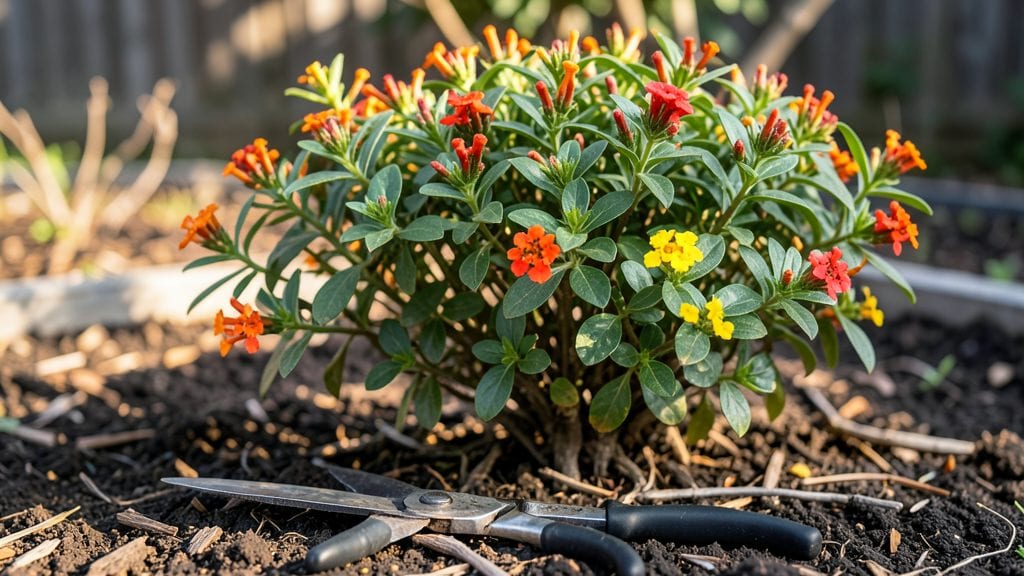
Trimming lantana plants keeps them blooming like crazy all season long. ✨ I’ve turned my once-ragged lantanas into dense, flower-covered bushes just by following a few simple cuts at the right time.
The key is timing—prune after blooms fade, and you’ll trigger a fresh wave of flowers while shaping the plant.
You only need sharp pruning shears and a glove (those stems pack a punch). Cut back leggy growth by one-third to encourage bushier growth, and snip dead flowers right at the base to prevent seed formation. For winter dormancy zones, hold off until spring—lantanas are tough but not frost-proof.
After trimming, your lantana will rebound with vibrant green growth and nonstop blooms in every shade from yellow to purple. The secret is consistency: light trims every 4-6 weeks keep the plant compact and productive. Over-prune, and you’ll stunt growth; under-prune, and it gets woody.
Works for container lantanas too—just use smaller shears and trim more aggressively to maintain shape. Here’s how to avoid common mistakes and keep your plants thriving all year.
📚 In This Guide
- What you need
- Instructions
- Tips and common mistakes
- Wrapping up and next steps
What you need
- ● Pruning shears or bypass pruners – Choose sharp, bypass-style shears (4-6 inches) for clean cuts. Quantity: 1 pair.
- ● Hand pruners (felco or similar) – For thicker stems (up to ½ inch). Quantity: 1 pair.
- ○ Loppers – For larger branches (½–1.5 inches). Quantity: 1 pair (optional if lantana is small).
- ● Garden gloves – Thick, cut-resistant gloves (e.g., mechanized or leather) to protect from thorns. Quantity: 1 pair.
- ● Disinfectant (70% isopropyl alcohol or bleach solution) – To sterilize tools between cuts and prevent disease. Quantity: Small bottle or spray.
- ● Heavy-duty trash bags or bucket – For collecting pruned debris. Quantity: 1–2 (depending on plant size).
- ● Watering can or hose – To hydrate plants post-pruning. Quantity: 1.
- ● Pruning saw – For stubborn, thick branches (rare in lantana but handy for established plants).
- ● Rubbing alcohol wipes – Quick tool disinfection on the go.
- ● Plant food or fertilizer – Apply after trimming to boost regrowth (e.g., balanced 10-10-10).
- ● Knee pads or stool – For comfort if lantana is ground-level or tall.
- ● Spray bottle with water – To mist cuts and reduce stress on the plant.
Step-by-Step instructions for trimming lantana plants
Lantanas reward precision pruning with nonstop blooms—here’s how to shape them without sacrificing vigor.
✂️ Step 1: Identify Dead or Damaged Growth
Start by scanning the plant for stems that are brown, mushy, or hollow—these won’t recover. Lantanas handle pruning aggressively, but removing dead wood first prevents disease from spreading. Use clean, sharp pruners to cut back to healthy green tissue, making cuts at a 45-degree angle just above a leaf node or lateral branch.
Here’s the thing—lantanas often mask dead stems with new growth. Gently tug on suspicious branches; if they pull away easily, they’re dead. You’ll know you’ve found the right spot to cut when you see fresh green just below your finger.
✂️ Step 2: Prune for Shape and Airflow
Lantanas thrive when you encourage a bushy, rounded form. Step back and visualize the plant’s natural shape—aim for a slightly wider base that tapers slightly toward the top. Cut back overgrown branches by one-third to one-half their length, always cutting just above a leaf node or bud.
Don’t fear shearing lightly to refine the outline, but avoid heavy pruning in one session. You’ll see new growth emerge within 7-10 days—watch for compact, leafy stems rather than leggy shoots. This is your signal the plant is responding well.
✂️ Step 3: Encourage Continuous Blooms
Lantanas bloom best when you remove spent flowers regularly. Pinch off faded blooms at the base of the stem, just above a leaf node. This redirects energy into producing more flowers instead of seed pods. For a fuller look, trim back the longest stems by one-third to promote branching.
Real talk: If you skip this step, you’ll end up with fewer but larger clusters of blooms. The key is consistency—spend 5 minutes weekly deadheading during peak bloom season. You’ll notice new buds forming within 2-3 weeks of consistent pruning.
✂️ Step 4: Renew Old Wood in Late Winter
When new growth appears in late winter or early spring, it’s time to rejuvenate the plant. Cut back one-third to one-half of the oldest, woody stems to the ground. This stimulates fresh, vigorous growth from the base. Lantanas are tough—they’ll bounce back with lush foliage and even more blooms.
If your lantana looks leggy or bare at the bottom, this is your chance to fix it. After pruning, water deeply to help the plant recover. You’ll see new shoots emerging from the base within 3-4 weeks, signaling the plant is rebuilding its structure.
🌿 Step 5: Maintain Year-Round Health
Throughout the year, keep an eye out for branches that grow too long or become bare. Trim these back by one-third to maintain balance. Avoid heavy pruning in fall if your lantana is in a cold climate—wait until spring to prevent winter damage.
Here’s where it gets fun—lantanas often produce blooms on old wood, so don’t be afraid to leave a few older stems unpruned. The goal is to strike a balance between shaping the plant and preserving its natural beauty. With consistent care, your lantana will reward you with nonstop color from spring through frost.
Tips & tricks for perfect lantana plant trimming
Mastering lantana pruning transforms a wild shrub into a vibrant, blooming powerhouse—here’s how to avoid common pitfalls and maximize results.
Tool Preparation: Before you begin, sterilize your pruners with rubbing alcohol to prevent spreading disease between cuts. I learned this the hard way after pruning a healthy plant that later developed brown spots—always clean tools between plants, especially when working with lantanas that can harbor fungal spores. A sharp pair of bypass pruners makes cleaner cuts that heal faster, reducing stress on the plant.
Visual Pruning Guide: In Step 2, when shaping your lantana, imagine an inverted triangle—wider at the base, narrower at the top. This natural form allows sunlight to penetrate all branches, preventing the leggy growth that reduces blooms. For stubborn overgrowth, make cuts just above a leaf node where new growth will emerge. You’ll notice the plant filling out more densely within those 7-10 days mentioned in the instructions.
Deadheading Strategy: The 5 minutes weekly you spend deadheading pays off big time. I recommend using your fingers to pinch off spent blooms rather than cutting—it’s faster and prevents accidental damage to healthy stems. For a bushier look, focus on trimming the longest stems by one-third, as this encourages branching. You’ll see new buds forming within 2-3 weeks if you’re consistent.
Seasonal Timing: Late winter renewal in Step 4 is your chance to rejuvenate leggy plants. Cut back one-third to one-half of the oldest stems to the ground, but leave some mature stems unpruned—they often produce the most vibrant blooms. In cold climates, avoid fall pruning, as new growth won’t harden off before winter. Water deeply after pruning to help the plant recover, and you’ll see new shoots emerging from the base within 3-4 weeks.
Pro Tips for Trimming Lantana Plants
- Mastering lantana pruning transforms a wild shrub into a vibrant, blooming powerhouse—here’s how to avoid common pitfalls and maximize results.
- Tool Preparation: Before you begin, sterilize your pruners with rubbing alcohol to prevent spreading disease between cuts.
- Visual Pruning Guide: In Step 2, when shaping your lantana, imagine an inverted triangle—wider at the base, narrower at the top.
Frequently asked questions
Got questions about trimming lantana plants? You’re not alone—this tough, colorful shrub can be tricky to manage! Below, we’ve answered the most common questions to help you keep your lantana looking its best with minimal stress.
When is the best time to trim lantana plants?
Trim lantana after the first frost in late fall or early winter (zones 8-11) to remove dead growth. For warm climates, prune lightly after blooming to encourage new flowers. Avoid heavy cuts in summer—lantana blooms on new growth, so pruning too early can reduce flowers.
How much can I trim my lantana back?
You can trim lantana hard—even up to ⅓ of its height—without harming it. For a bushier shape, cut back to just above a leaf node. If overgrown, prune in stages over a few weeks to avoid shocking the plant. Lantana is resilient and bounces back quickly!
Will trimming lantana reduce its flowers?
Not if done right! Prune right after blooming to stimulate new growth and more flowers. Avoid heavy cuts during peak bloom unless you’re shaping for winter. Lantana blooms continuously, so regular light trims (every 4-6 weeks) keep it flowering year-round.
What should I do if my lantana looks leggy after trimming?
Leggy growth happens when the plant stretches for light. To fix it, prune back to a leaf node (the bump where leaves grow) to encourage branching. Fertilize lightly with a balanced 10-10-10 mix and place in full sun (lantana thrives in 6+ hours of sunlight daily).
Are there any alternatives to pruning if my lantana is invasive?
Yes! If lantana spreads aggressively, mulch heavily around the base to suppress suckers. For stubborn patches, use a vinegar-based herbicide (20% acetic acid) on young shoots—avoid glyphosate, which can harm nearby plants. Always wear gloves, as lantana sap can irritate skin.
Why does my lantana keep growing back after cutting?
Lantana is a perennial (in frost-free zones) with deep roots and underground runners. To slow regrowth, cut as close to the ground as possible and apply pre-emergent herbicide in spring. For container-grown lantana, trim roots back during repotting to control size.
Wrapping up and next steps
Trimming your lantana plants doesn’t have to be a daunting task—it’s all about regular care and a little know-how! 🌸 With the right tools, timing, and techniques, you’ll keep those vibrant blooms thriving while maintaining a neat, healthy shape.
Whether you’re pruning for growth, blooms, or pest control, consistency is key.
Ready to take action? Grab your shears and start shaping! 🌿 Check your plants weekly, especially during peak growing seasons, and enjoy the rewarding results of your efforts. Happy pruning!