Pruning
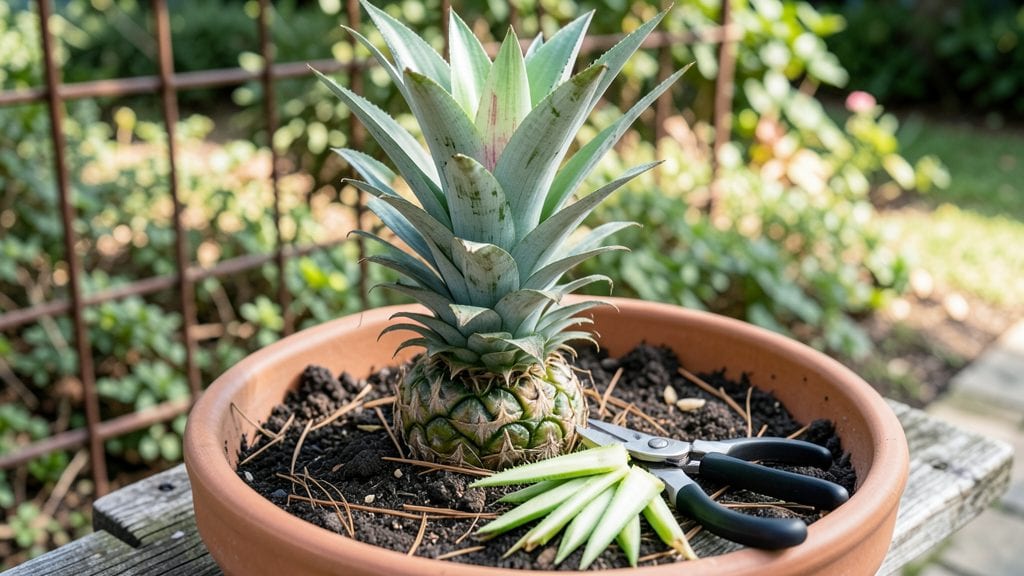
Trimming pineapple plants isn’t just about keeping them tidy—it’s the secret to year-round growth and bigger, sweeter fruit. 🌱 I’ve watched my pineapple plants go from scraggly to shockingly lush just by making three simple cuts at the right times, and the difference in harvest size is night and day.
The key is timing: remove dead leaves as they appear, snip off suckers when they’re 4-6 inches tall, and cut back the old fruit stalk after harvesting.
Each cut tells the plant, “Focus your energy here,” and my plants respond by sending out new shoots, flowering earlier, and producing fruit faster than they would otherwise.
You’ll end up with a pineapple plant that looks like a tropical showpiece—thick, vibrant green leaves, multiple fruit stalks, and a steady stream of harvests. The best part? Those cuttings you remove can root into new plants, giving you free propagation material without spending a dime.
Works for both container-grown and in-ground pineapples, and the same principles apply whether you’re in a warm climate or growing them indoors under bright lights. Let’s get those pruners sharp and those plants thriving!
📚 In This Guide
- What you need
- Instructions
- Tips and common mistakes
- Wrapping up and next steps
What you need
- ● Sharp pruning shears or bypass pruners (sterilized with rubbing alcohol): 1 pair (avoid dull blades—they crush stems and invite disease!)
- ● Clean, sharp kitchen knife or razor blade (for precision cuts): 1 (for trimming suckers or leaves under 1 inch thick)
- ● Rubbing alcohol (70% isopropyl): Small bottle (for sterilizing tools between cuts)
- ○ Horticultural sealant (optional but helpful): 1 small bottle (e.g., Pruning Seal to prevent sap oozing)
- ● Disposable gloves: 1 pair (pineapple sap can irritate skin!)
- ● Newspaper or cardboard: 1 sheet (to protect surfaces from sap drips)
- ● Healthy pineapple plant (no signs of rot, pests, or fungal spots).
- ● Mature leaves (at least 18–24 months old for fruit-bearing plants).
- ● Sunny location (pineapples thrive in full sun—6+ hours daily).
- ● Patience! (Trimming takes time, especially for large plants.)
- ● Rooting hormone (for propagating sucker cuttings).
- ● Small pots with well-draining soil (if repotting suckers).
- ● Spray bottle with water (to mist cuts and reduce stress).
- ● Camera or phone (to document your plant’s growth journey!).
How to trim pineapple plants for continuous harvests
Here's the simple, science-backed method I use to keep my pineapple plants producing fruit year after year.
🌱 Step 1: Identify and Remove Old Fruit Stems
Start by locating the dried-up fruit stems from last season's harvest—they look like brown, shriveled stalks at the plant's center. Use clean, sharp pruning shears to cut these stems at the base, about ½ inch above the plant's crown. This clears dead growth and redirects the plant's energy toward new suckers.
Don't worry if the plant looks bare afterward—this is normal. The key is timing: perform this cut right after harvesting fruit, when the plant is still actively growing. You'll see fresh green growth emerge from the base within 2-3 weeks if conditions are right.
✂️ Step 2: Prune Overgrown Leaves for Better Airflow
Next, trim any yellow or brown leaves that have lost their vibrant green color. Cut these at the base where they meet the plant. For healthy green leaves, remove only the outer ⅓ of the leaf—this encourages new growth while maintaining the plant's protective canopy. Use your shears to make clean cuts at a 45-degree angle to prevent water from pooling.
This step is crucial for preventing fungal diseases. I like to do this every 3-4 months during the growing season. You'll notice the plant's center becomes more open, allowing sunlight to reach the base where new suckers form.
🌿 Step 3: Harvest and Propagate Suckers
When you spot small shoots growing at the base of the plant—these are your new pineapple pups—it's time to act. Gently twist them free from the mother plant, making sure each sucker has at least 3-4 inches of stem and several leaves. The best time to do this is in early summer when the plant is actively growing.
Plant these suckers in their own pots with the ½ inch of the stem buried in soil. Keep them in bright, indirect light for the first few weeks while they establish roots. You'll see new growth within 4-6 weeks if you've chosen healthy, vigorous suckers.
☀️ Step 4: Maintain Year-Round Growth Conditions
After trimming, move your pineapple plant to a location with bright, indirect light—a south or west-facing window works best. Pineapples thrive in temperatures between 65-85°F, so keep them away from drafts or cold windows. Water only when the top 1-2 inches of soil feel dry, allowing the soil to dry out completely between waterings.
This is where most people go wrong—they overwater, causing root rot. You'll know your plant is happy when it produces new leaves that are deep green and slightly waxy. Fertilize lightly with a balanced, water-soluble fertilizer every 2 months during the growing season to encourage continuous growth.
Tips & tricks for perfect pineapple plant trimming
These science-backed strategies will help you maximize your pineapple plant's fruit production all year long.
Timing is Everything: The 2-3 week window after removing old fruit stems (Step 1) is when your plant is most receptive to new growth. I've found that performing this cut in early spring gives plants a full growing season to recover and produce new suckers. If you miss this window, don't worry—just wait until you see new growth emerging from the base before proceeding with Step 2.
Pruning Precision: When trimming the outer ⅓ of healthy leaves (Step 2), focus on removing only the oldest leaves first. This maintains the plant's protective canopy while still improving airflow. I like to make my 45-degree cuts just above a leaf node—this encourages new growth to sprout from those points. Use a clean, sharp pair of pruning shears to avoid damaging the plant tissue.
Sucker Selection: In Step 3, look for suckers that are at least 3-4 inches tall with several leaves—they're the ones most likely to thrive when planted. I've had the best success with suckers that appear on the lower half of the mother plant, as these tend to be more vigorous. When planting, burying only ½ inch of the stem ensures proper root development without risking rot.
Growth Conditions: Maintaining that 65-85°F temperature range (Step 4) is crucial for continuous growth. I've noticed that pineapples actually prefer slightly warmer conditions than many tropical plants—just keep them away from direct sunlight that could scorch the leaves. The top 1-2 inches dry test works perfectly for watering; I use my finger to check moisture levels in the morning when soil is coolest.
Pro Tips for Trimming Pineapple Plant
- These science-backed strategies will help you maximize your pineapple plant's fruit production all year long.
- Timing is Everything: The 2-3 week window after removing old fruit stems (Step 1) is when your plant is most receptiv...
- Pruning Precision: When trimming the outer ⅓ of healthy leaves (Step 2), focus on removing only the oldest leaves fir...
Frequently asked questions
Got questions about trimming your pineapple plant? You’re not alone! Here are some of the most common concerns—and their straightforward answers—to keep your plant thriving and productive.
When is the best time to trim a pineapple plant?
Trim your pineapple plant after it produces its first fruit (the "mother plant") and again when pups (baby plants) emerge. The ideal timing is in late spring or early summer when growth is active. Avoid trimming during dormancy or extreme weather—your plant needs energy to recover!
How do I know which leaves to cut?
Focus on dead, yellow, or brown leaves first—they drain energy. For the "top cut," trim about 1/3 of the plant’s height (just above a leaf node) to encourage new growth. For pups, snip them at the base with sterilized shears when they’re 1/3 the size of the mother plant.
Can I propagate my pineapple plant from the trimmings?
The top cut (after fruiting) and pups (baby plants) can both be propagated. Let the cut ends dry for 1–2 days, then place them in well-draining soil. Keep the soil moist (not soggy) and provide bright, indirect light. Roots should form in 4–6 weeks!
What if my pineapple plant turns yellow after trimming?
Yellowing leaves are normal right after trimming—it’s your plant’s way of shedding old growth. However, if yellowing spreads weeks later or appears on healthy leaves, check for overwatering, pests, or nutrient deficiencies. Adjust care and monitor for improvement.
Do I need to trim my pineapple plant in winter?
Winter is not the best time for major trims, but you can remove only dead or diseased leaves to prevent rot. Pineapple plants are tropical—aim for 60–80°F temperatures year-round. If your plant is dormant (growth slows), wait until spring to trim for new growth.
Still stumped? Drop your question in the comments—we’re happy to help your pineapple plant flourish!
Wrapping up and next steps
Trimming your pineapple plant isn’t just about aesthetics—it’s the secret to healthier growth, bigger fruit, and longer-lasting plants! 🌱 By mastering the three strategic cuts (apical, lateral, and basal), you’ll encourage year-round productivity and keep your plant thriving.
Whether you’re a beginner or a seasoned gardener, these simple techniques make maintenance a breeze.
Now that you’re armed with the know-how, roll up your sleeves and give your pineapple plant the TLC it deserves. Start with one trim this weekend—your future harvest (and happy plant!) will thank you. Happy pruning! 🌟