Watering
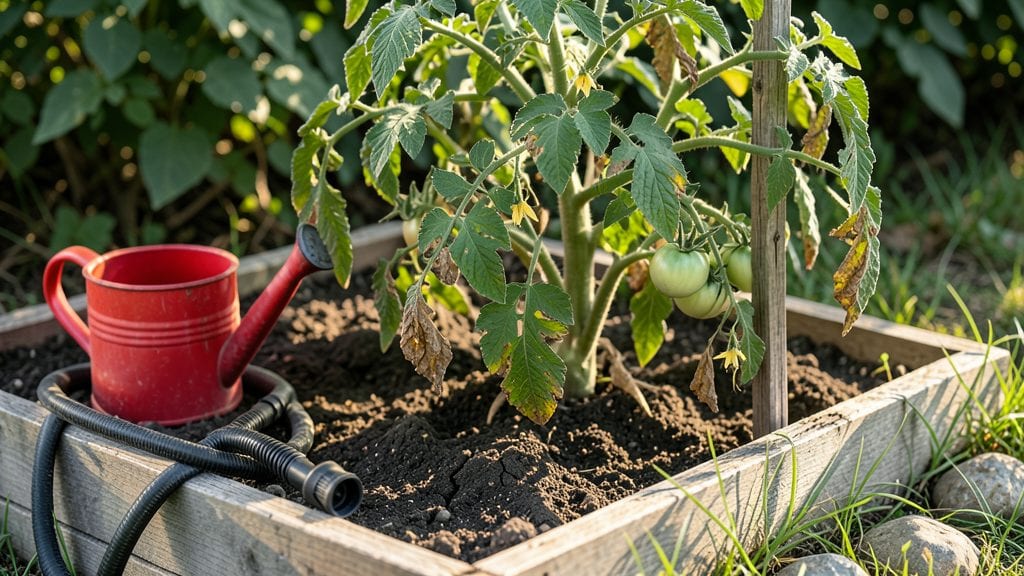
Your underwatered tomato plant can bounce back—sometimes in just 24 hours—if you catch it early and water right. I’ve revived plants that looked like they were giving up by giving them the exact care they needed, and you can too without overcomplicating it.
The first sign is usually wilting leaves that don’t spring back when touched, or dry, cracked soil an inch below the surface. Tomato roots need consistent moisture, not sporadic soaking—think deep watering 1-2 times a week (more in heat) rather than light sprinkles.
A quick soil check with your finger tells you everything: if it’s dry past your first knuckle, it’s time to water.
Once you adjust the routine, you’ll see new growth within 3-5 days, with leaves perking up and stems firming. The key is keeping the soil evenly moist—not soggy, not bone-dry—so the roots stay active.
Mulch helps lock in moisture, and a self-watering system (even a DIY one) takes the guesswork out of it.
If the plant still doesn’t improve after a week of proper care, check for other issues like pests or disease—sometimes underwatering masks bigger problems. But in most cases, these fixes work fast, and your tomatoes will be back on track for a productive season.
Root Causes Of Thirsty Tomatoes
When your tomato plants start wilting, drooping, or showing crispy leaves, they’re often screaming for water—but the reasons behind their thirst can be surprisingly varied. Understanding these causes helps you fix the issue fast and keep your plants thriving.
Here’s why your tomatoes might be underwatered, broken down into the most common culprits.
🌡️ Inconsistent Watering Schedules
Tomatoes thrive on consistency. Their roots need a steady supply of moisture to absorb nutrients efficiently. When you water sporadically—like only when you remember or after a busy week—the soil dries out unevenly. This causes:
- Shallow root stress: Tomato roots grow deep (up to 2–3 feet!) to access water. If the topsoil dries out, roots struggle to reach moisture, leading to wilting even if deeper soil is damp.
- Osmotic shock: Rapid shifts between dry and soggy soil confuse the plant’s water uptake system, damaging delicate root hairs.
- Nutrient lockout: Dry soil binds nutrients like nitrogen and potassium, making them unavailable even if you’ve fertilized.
Pro tip: 💡 Use a moisture meter or the "finger test" (stick your finger 2 inches into soil—if dry, it’s time to water). Aim for 1–1.5 inches of water per week, including rainfall.
🌱 Poor Soil Composition
Not all soil holds water the same way. Tomatoes prefer well-draining but moisture-retentive soil with organic matter. If your soil is:
- Sandy: Water drains too quickly, leaving roots parched within hours. Sandy soil has low water-holding capacity, often losing moisture faster than plants can absorb it.
- Clay-heavy: While it retains water, it can become waterlogged or form a crust that blocks oxygen, suffocating roots.
- Low in organic matter: Without compost or mulch, soil lacks the humus needed to buffer moisture swings.
Science note: Organic matter (like compost) can hold 3–4 times its weight in water—that’s why amending soil with aged manure or coconut coir makes a huge difference.
🌞 Extreme Heat Or Sun Exposure
Tomatoes are sun-lovers, but intense heat accelerates water loss through a process called transpiration. On hot days:
- Leaves act like sponges: Stomata (tiny leaf pores) open to release oxygen but evaporate water vapor at alarming rates—sometimes up to 90% of a plant’s water is lost this way.
- Soil dries faster: Heat increases evapotranspiration (water loss from soil + plants), meaning roots can’t keep up with demand.
- Root burn risk: Overhead watering on hot days can scald leaves, while deep watering at night helps roots absorb moisture without stress.
Pro tip: 🌡️ Mulch heavily with straw or wood chips to reduce soil temperature by 10–15°F and retain moisture. Water early morning or late evening to minimize evaporation.
🌧️ Lack Of Mulch Or Wind Exposure
Mulch isn’t just for looks—it’s a water-saving superhero. Without it, soil loses moisture through:
- Evaporation: Sun beats down on bare soil, turning it into a dry, cracked desert. Mulch blocks up to 70% of sunlight, keeping soil cool and moist.
- Wind erosion: Wind whips away soil moisture like a leaf blower. A 10 mph breeze can dry soil 3x faster than calm conditions.
- Weed competition: Weeds steal water and nutrients, forcing tomatoes to work harder for less.
Actionable fix: Apply 3–4 inches of organic mulch (straw, grass clippings, or shredded leaves) around plants, keeping it 2 inches away from stems to prevent rot.
💧 Over-Reliance On Drip Irrigation Or Manual Watering
Even with irrigation, tomatoes can still dry out if:
- Drip lines clog or misalign: A blocked emitter means only part of the root zone gets water, leaving other areas parched.
- Water pressure is too low: Weak drips fail to penetrate deep enough, encouraging shallow root growth (which wilts faster).
- Manual watering is uneven: Hosing leaves instead of soil wastes water and can cause fungal diseases like early blight.
Pro tip: 🔧 Check irrigation systems weekly for clogs. For manual watering, use a soaker hose or drip tape placed at the base of plants, not on foliage.
Now that you know the real culprits behind your tomato’s thirst, the next step is fixing it—fast. The good news? Most underwatered tomato plants bounce back within 24–48 hours with the right care. Stay tuned for our 3-step revival guide to bring your plants roaring back to life! 🍅💦
Revive Your Tomato Plant Fast
Now that you know the signs and causes of an underwatered tomato plant, it’s time to take action! The good news? With the right approach, you can bring your plant back to life and even prevent future watering mishaps.
Below are practical, step-by-step solutions tailored to the most common causes—plus pro tips to keep your tomatoes thriving.
If your tomato plant is suffering from shallow or inconsistent watering, its roots may have shriveled or become too dry. The solution? Deep, thorough hydration to rejuvenate the root zone.
How to Do It:
- 🔥 Check the Soil First Stick your finger 2–3 inches deep into the soil. If it feels dry and crumbly, it’s time to water. If it’s still slightly damp, wait another day before watering again.
- 🍳 Water Slowly and Deeply Use a watering can with a long spout or a soaker hose to water at the base of the plant (not the leaves).
Let the water run for 10–15 minutes until it seeps 6–8 inches deep into the soil. This encourages roots to grow deeper, making your plant more drought-resistant.
- 👨🍳 Monitor for Runoff Stop watering once you see water pooling at the surface. Overwatering can cause root rot, so drainage is key. If your pot doesn’t have holes, place it in a tray to catch excess water.
- 🥘 Mulch to Retain Moisture After watering, apply 2–3 inches of organic mulch (straw, wood chips, or shredded leaves) around the base. This locks in moisture and keeps soil temperatures stable.
💡 Prevention Tip:
- Water in the morning (6–8 AM) to reduce evaporation and fungal risks.
- Use a moisture meter for pots to track soil hydration accurately.
Tomato plants have different water needs depending on their growth stage and your local climate. If you’re over- or under-watering due to guesswork, here’s how to adjust:
| Growth Stage | Watering Needs | Signs of Stress |
|---|---|---|
| Seedlings | Keep soil evenly moist (not soggy) | Wilting, yellowing leaves |
| Flowering | Water deeply 2–3x per week | Dropped flowers, stunted growth |
| Fruiting | 1–1.5 inches of water per week | Cracked tomatoes, blossom end rot |
How to Adjust:
- 🌡️ For Hot/Dry Climates:
- Water daily in extreme heat (early morning).
- Use drip irrigation or self-watering pots to maintain consistency.
- 🌧️ For Cool/Rainy Climates:
- Reduce frequency—water only when the top 1–2 inches are dry.
- Avoid watering leaves to prevent fungal diseases like blight.
🎯 Pro Tip:
- Group plants together in containers to create a microclimate that retains moisture longer.
If your tomato plant is severely stressed (yellowing leaves, stunted growth), it may need gentle pruning and protection to recover.
How to Do It:
- 🍅 Trim Damaged Leaves Use clean pruning shears to remove:
- Yellow or brown leaves (they drain energy).
- Leaves touching the soil (prevents disease).
- Suckers (small shoots between stems) if the plant is struggling.
- ⏰ Provide Shade Temporarily If your plant is in full sun and wilting, move it to partial shade (4–6 hours of sun) for 3–5 days to reduce stress.
- 🌱 Boost with Fertilizer (If Needed) After reviving the plant, feed it with a balanced fertilizer (10-10-10) or compost tea to replenish nutrients lost during stress.
✨ Prevention Tip:
- Train vines early to grow vertically (using stakes or cages) for better airflow and easier watering.
✅ Water deeply 2–3x per week (adjust for climate). ✅ Mulch to retain moisture and regulate temperature. ✅ Prune damaged foliage to redirect energy to recovery. ✅ Monitor soil moisture with your finger or a meter. ✅ Adjust for growth stage—seedlings need less than fruiting plants.
With these fixes, your tomato plant should show signs of revival in 3–7 days—think perkier leaves, new growth, and even flowers if it was close to recovery! 🍅💚
(Need a quick reference? Bookmark this guide next to your garden tools!)
Frequently asked questions
How do I know if my tomato plant is just underwatered—or something worse?
Look for these key signs: leaves that wilt but spring back when watered (temporary), dry soil 1-2 inches deep, and no other symptoms like spots, holes, or sticky residue. If leaves turn yellow with crispy edges or the plant smells foul, check for pests/disease first. Underwatered plants recover within 24-48 hours of proper watering.
Can I save a tomato plant that’s been underwatered for a week?
It depends! If only leaves are wilted (not brown/mushy), give it deep watering every 12 hours for 3 days while keeping it in shade. If stems are shriveled or hollow, the roots may be permanently damaged. Try soaking the pot in water for 30 minutes daily—if no improvement in 5 days, consider propagating cuttings or starting fresh.
Why does my tomato plant wilt even after I water it?
This usually means shallow roots from inconsistent watering or poor drainage. Water deeply until it runs out drainage holes, then check soil 2 inches down—if still dry, roots haven’t reached that deep. Add 1 inch of compost to encourage deeper growth, and water early morning to prevent evaporation.
Is it better to water tomato plants daily or less frequently?
Less frequently—but deeply—is always better. Daily shallow watering trains roots to stay near the surface, making plants more vulnerable to drought. Instead, aim for 1-1.5 inches of water per week (including rain), delivered in 10-15 minute sessions at the base. Use a soaker hose for even distribution.
Can I use ice cubes to revive an underwatered tomato plant?
Ice cubes can help in emergencies by slowly releasing water, but they’re not a long-term fix. Place 3-4 large ice cubes near the base (not touching stems) to hydrate roots gently. For real recovery, combine this with deep watering every 12 hours and mulching to prevent future stress. Ice works best for container plants where roots can’t seek moisture.