Watering
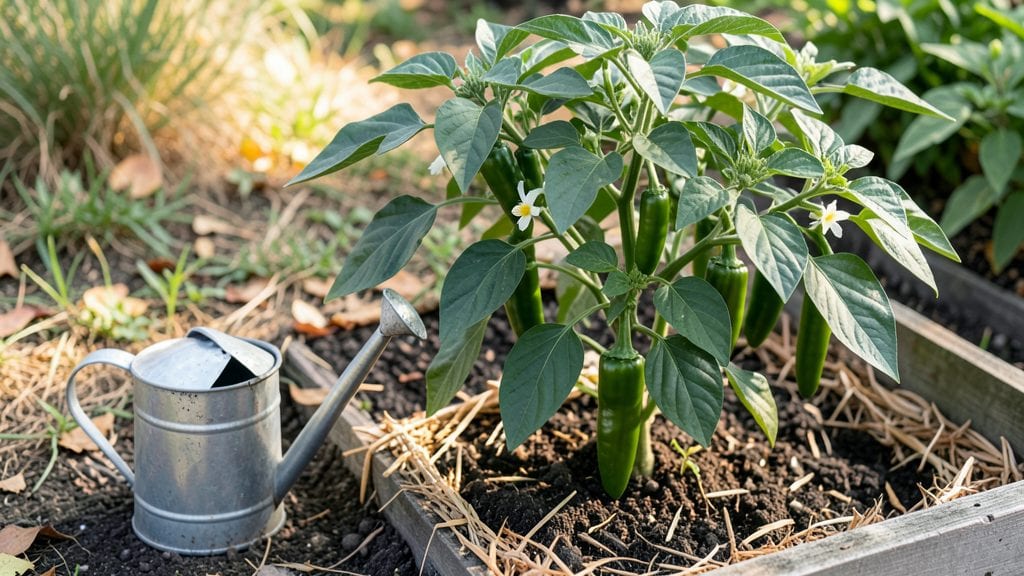
Watering jalapeno plants isn't just about keeping them alive—it's about unlocking their full spicy potential. 🌱 I learned the hard way that too much or too little water can turn your plants into sad, shriveled shadows instead of the productive powerhouses they should be.
The key lies in understanding when to soak the roots and when to let them breathe, especially as they transition from seedlings to fruiting bushes.
Start with seedlings needing consistent moisture—think damp sponge, not swamp. Once they hit flowering stage, cut back slightly to encourage pollination, and then ramp up again when those little peppers start forming.
Containers dry out faster than ground soil, so check moisture daily in summer heat, while in-ground plants might only need weekly deep watering. Climate matters too: hot, dry regions need more frequent watering than humid areas where roots stay cooler.
You'll know you're nailing it when plants stand tall with glossy leaves and firm stems, not wilting or yellowing. Overwatering shows up as droopy leaves that don't bounce back, while underwatered plants develop crispy edges.
The goal is that perfect balance where roots get oxygen but stay hydrated—like a well-tuned engine for spicy growth. This is where your jalapenos go from "meh" to "wow."
Pro tip: Water early in the morning so foliage dries before nightfall, reducing disease risk. And always water at the base, not overhead—those peppers don't need a shower.
With these adjustments at each growth stage, you'll be harvesting plump, fiery jalapenos all season long without the stress of guessing when to water next.
📚 In This Guide
- What you need
- Instructions
- Tips and common mistakes
- Wrapping up and next steps
What you need
- ● Jalapeño Seeds or Seedlings: 1–3 seeds or 1–2 healthy seedlings (choose disease-resistant varieties like Jalapeño M or Early Jalapeño).
- ● Clear Glass Jar or Container: 1–2 quart-sized jars (16–32 oz) with a wide mouth (mason jars work great!).
- ● Water: Distilled or filtered water (avoid tap water with high chlorine/fluoride). ~2–3 gallons per plant initially.
- ● Hydroponic Nutrients: A balanced liquid fertilizer (e.g., Fox Farm Trio or General Hydroponics Flora Series)—follow label instructions for dilution.
- ○ Rooting Hormone (Optional): A gel or powder (e.g., Rootone) to speed up root development.
- ● Small Rocks or Pebbles: ½ cup of clean, smooth river rocks or hydroton (for stability and aeration).
- ● Black Paint or Marker: To cover the bottom ⅓ of the jar (prevents algae growth from light exposure).
- ● Scissors or Pruners: For trimming roots or leaves if needed.
- ● pH Test Kit: To monitor water pH (ideal range: 5.5–6.5).
- ○ Small Fan (Optional): For gentle airflow to strengthen stems.
- ○ Grow Lights (Optional): LED or fluorescent lights (12–16 hours/day) if natural light is limited.
- ● Support Stakes or Trellis: As plants grow taller (jalapeños can reach 2–3 feet!).
Step-by-step instructions for growing jalapeños hydroponically
Skip the soil and grow fiery jalapeños in water with this proven hydroponic method.
🌱 Step 1: Prepare Your Jalapeño Seeds for Germination
Soak the jalapeño seeds in lukewarm water for 12-24 hours to soften the outer coating. This speeds up germination by breaking dormancy—you'll see tiny white roots appear within hours. Drain the seeds and place them between two damp paper towels in a sealed container.
Keep the container in a warm spot (75-85°F), like on top of your fridge. Check daily and mist with water if the towels dry out. Germination should happen in 5-10 days. Once you see white roots and green sprouts, they're ready for the water system.
💧 Step 2: Set Up Your Hydroponic System
Fill a clean 5-gallon bucket with 6-8 inches of water and add hydroponic nutrients following the package instructions for leafy greens (jalapeños are in the pepper family). Use a net pot with drainage holes and place it in the bucket, ensuring the water level stays 1-2 inches below the pot's rim.
Insert your germinated jalapeño seedling into the net pot, pressing the soil (if using) or roots gently into the growing medium. Place the setup in a spot with 6-8 hours of bright light daily. If using artificial light, keep it 6-12 inches away—jalapeños need intensity to prevent leggy growth.
☀️ Step 3: Monitor Water and Nutrients Closely
Check the water level daily and top off with plain water if it drops below 1 inch from the pot's rim. Jalapeños in water need consistent moisture—let the roots sit dry for more than 24 hours, and they'll struggle. Every 7-10 days, drain and refill the bucket with fresh nutrient solution to prevent salt buildup.
Watch for yellowing leaves, which signal nutrient imbalance. If this happens, flush the system with plain water for 24 hours before restarting nutrients. You'll know it's working when new leaves emerge bright green and firm—that's your cue everything's balanced.
✂️ Step 4: Prune and Support for Maximum Yield
Once your jalapeño plant reaches 12 inches tall, pinch off the top set of leaves to encourage bushier growth. This redirects energy to fruit production instead of vertical stretching. Use a small stake or trellis to support the plant as it grows, tying stems gently with soft twine.
Remove any yellow or diseased leaves immediately to keep the plant healthy. When flowers appear, hand-pollinate by gently shaking the plant or using a small brush to transfer pollen. You'll see pepper pods forming in 6-8 weeks—harvest when they're 2-3 inches long and firm for the best heat and flavor.
🪴 Step 5: Transition to Soil (Optional) for Long-Term Growth
If you want to move your jalapeño to soil later, transplant when the plant is 6-8 inches tall and has 4-5 true leaves. Gently remove it from the net pot, loosen the roots in water, and plant in a pot with well-draining potting mix. Water thoroughly and place in full sun for 2-3 days to acclimate.
This step isn't required, but many gardeners find soil-grown jalapeños produce more fruit over time. Either way, your hydroponic-started plants will mature faster and handle transplant stress better than soil-grown seedlings.
Tips & tricks for perfect water jalapeño growth
Real talk: Growing jalapeños in water is easier than you think, but these tricks will help you avoid common pitfalls and get the spiciest harvest possible.
The Germination Game-Changer: Don't rush the 12-24 hour soak—this is when the seeds break their dormancy. I've seen seeds sprout roots within just 6 hours of starting the soak, but push it to the full 24 hours for maximum success. Place your sealed container in a warm spot (75-85°F) like on top of your fridge, and keep those paper towels damp but not soggy. Too much moisture here can cause mold before germination even begins.
Lighting Strategy: Those 6-8 hours of bright light daily are non-negotiable for healthy jalapeños. If you're using artificial grow lights, position them just 6-12 inches away—closer than that can scorch tender leaves, while farther away leads to leggy, weak plants. I've found LED grow lights work best because they mimic natural sunlight without the heat. Rotate your plant every few days so all sides get equal light exposure.
Nutrient Balance Rescue: Yellowing leaves? That's your plant screaming for help. When you see this in Step 3, flush your system immediately with plain water for 24 hours before restarting nutrients. This prevents salt buildup from the hydroponic solution. I've had plants recover completely within 3-4 days after flushing—just watch those new leaves emerge bright green and firm as your cue everything's back on track.
Pruning for Productivity: That 12-inch height mark in Step 4 is your signal to pinch those top leaves. I know it feels counterintuitive to cut your plant, but this redirects all that energy to fruit production instead of vertical growth. Use clean scissors or your fingers to make the cut just above a leaf node. For maximum yield, also remove any yellow or diseased leaves immediately—they're just sucking nutrients your peppers need.
Pro Tips for Water Jalapeno Plants
- Real talk: Growing jalapeños in water is easier than you think, but these tricks will help you avoid common pitfalls and get the spiciest harvest possible.
- The Germination Game-Changer: Don't rush the 12-24 hour soak—this is when the seeds break their dormancy.
- Lighting Strategy: Those 6-8 hours of bright light daily are non-negotiable for healthy jalapeños.
Frequently asked questions
Got questions about growing jalapeños in water? You’re not alone!
Here are answers to the most common concerns—no soil required.
Can jalapeño plants thrive in water long-term?
Yes, but with care! Jalapeños can grow in water for months (even years) if you provide nutrient-rich hydroponic solution (like diluted fish emulsion or seaweed extract) every 2–4 weeks. Prune roots every 4–6 weeks to prevent rot. Expect slightly smaller yields than soil, but bold flavor stays intact!
How quickly will jalapeños grow in water vs. soil?
Timing is similar! Seedlings sprout in 7–14 days, and plants may flower in 60–90 days (same as soil). However, water-grown jalapeños might mature 1–2 weeks faster due to easier nutrient absorption. Watch for yellowing leaves—a sign of nutrient deficiency, not speed!
What’s the best water-to-nutrient ratio for jalapeños?
Start with 1 tsp of hydroponic fertilizer per gallon of water (e.g., Fox Farm Trio or General Hydroponics Flora Series). For organic options, use 1 tbsp of compost tea or worm castings per gallon. Always rinse roots weekly to avoid salt buildup. pH should stay between 5.8–6.5—test with a kit!
Can I switch a water-grown jalapeño to soil later?
Transplant when roots fill the jar (3–6 inches). Gently rinse roots, bury the jar halfway in soil, and water lightly. Wait 3–5 days before fertilizing to avoid shock. Water-grown plants adapt well, but expect a 1–2 week adjustment period as roots adjust to soil microbes.
Why are my jalapeño leaves turning yellow or brown?
Yellow leaves = nutrient deficiency or overwatering. Brown edges = underwatering or salt buildup. Check these fixes:
- Yellowing: Flush roots with fresh water and add fertilizer.
- Brown tips: Reduce water changes to every 5–7 days (let top inch dry).
- Mushy stems: Trim rotted roots and switch to chlorine-free water.
Wrapping up and next steps
Growing jalapeños in water isn’t just possible—it’s a rewarding way to enjoy fresh, spicy peppers with minimal soil fuss! 🌱 By mastering the right balance of nutrients, light, and care, you can thrive even without traditional gardening.
Whether you're a beginner or a seasoned green thumb, this method opens up exciting possibilities for small-space growing.
Ready to take the next step? Start with one plant and experiment—track your progress, adjust your approach, and soon you’ll be harvesting vibrant jalapeños year-round. Happy growing, and may your garden be as fiery as your success! 🔥