Watering
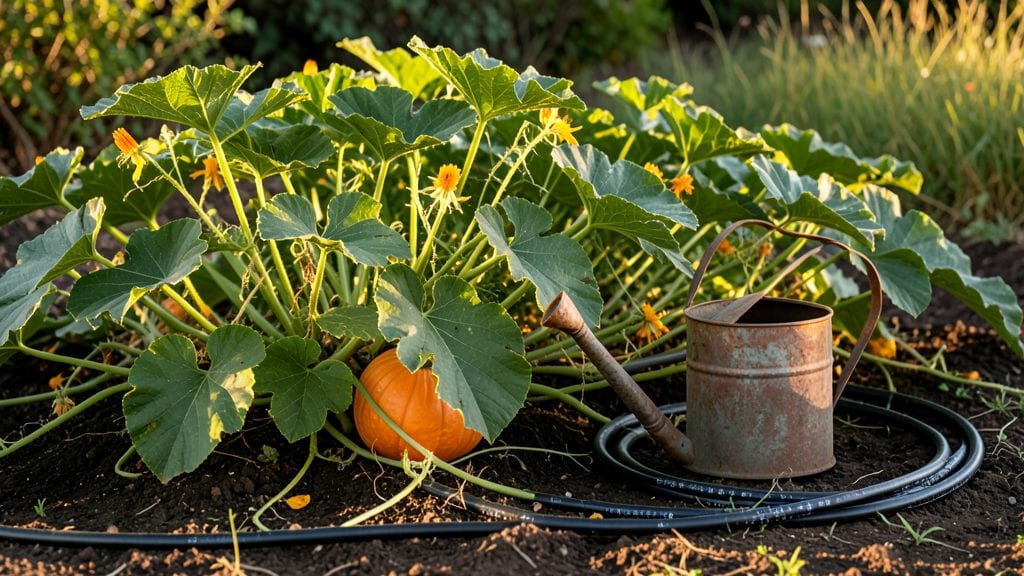
Watering pumpkin plants is all about finding that sweet spot—too little and your vines wilt, too much and rot takes over.
Pumpkin plants demand a delicate balance of water—too little stunts growth, too much invites rot—but mastering these moisture tricks can turn your patchy vines into a thriving, fruit-heavy jungle. 🎃
If you’ve ever watched your pumpkin leaves curl or yellow, you know how quickly things can go wrong. The key is keeping the soil consistently moist without drowning the roots, especially during those hot summer months when thirsty vines spread wide.
In this guide, I’ll break down the exact watering schedule for each growth stage, how to spot over- or underwatering, and the best techniques—like drip irrigation—to keep your pumpkins happy without wasting a drop.


How often to water pumpkin plants by growth stage
Pumpkins are thirsty plants, but their water needs change dramatically as they grow. Seedlings need gentle moisture to establish roots, while flowering vines demand consistent hydration to set fruit, and fruiting plants require deep watering to prevent cracking.
Skipping this stage-specific approach can lead to stunted growth, blossom-end rot, or powdery mildew. Let’s break down the ideal watering schedule for each phase to keep your pumpkins thriving.
Watering pumpkins isn’t just about frequency—it’s about soil moisture consistency and root zone saturation. Young plants need frequent but shallow watering, while mature vines benefit from deep, infrequent soaks that encourage strong root development.
The key is to keep the soil evenly moist (not soggy) while avoiding dry spells that stress the plant. Overwatering is just as harmful as underwatering, especially during hot summers when fungal diseases lurk.
🌱
summary-table
During the seedling stage, your pumpkin plants are fragile, with roots just beginning to explore the soil. Water lightly every 2–3 days, ensuring the top 1–2 inches stay moist but never soggy. Overwatering here can drown tender roots, while underwatering causes wilting and poor germination.
Use a fine mist or drip irrigation to keep the soil evenly damp without disturbing the seedlings. If your soil feels dry more than 1 inch down, it’s time to water again.
Once vines start establishing (around 2–4 weeks), increase watering to every 3–4 days and aim for 2–3 inches of moisture. This phase is critical for vine expansion, so avoid letting the soil dry out completely.
Mulch around the base with straw or grass clippings to retain moisture and prevent weeds. If you notice yellowing leaves, it’s often a sign of inconsistent watering—adjust your schedule to maintain steady soil moisture.
When your pumpkins enter the flowering stage (typically 4–6 weeks in), watering becomes even more critical. Flowers need consistent hydration to develop into fruit, so deep-soak the soil every 2–3 days, targeting 4–6 inches down.
Water in the early morning to allow foliage to dry before nightfall, reducing the risk of powdery mildew. If you see drooping flowers, they’re thirsty—give them a thorough drink immediately.
The fruiting stage (starting around 6–12 weeks) demands the most attention. Pumpkin fruits are 90% water, so they need 1–2 inches of water every 1–2 days to prevent cracking or misshapen growth. Focus on deep watering (6+ inches) to encourage strong root systems.
Use a soaker hose or drip irrigation for even distribution. If your soil feels dry beyond 2 inches, water immediately—don’t wait for wilting signs, as pumpkins can’t recover quickly once stressed.
As harvest approaches (typically 85–120 days after planting), gradually reduce watering to every 3–5 days. This helps the fruit thicken its rind and concentrate sugars. Stop watering 1 week before harvest to allow the soil to dry slightly, which improves storage life.
If you’re growing bush varieties, they’ll need slightly less water than sprawling vines, but the principle remains: consistency is key.
One common mistake is watering based on a schedule rather than soil conditions. Always check moisture with your finger—if the top 1–2 inches are dry, it’s time to water. Another tip: avoid wetting leaves during watering, as this promotes fungal diseases like downy mildew. Instead, water at
Signs of overwatering vs underwatering pumpkin vines
Pumpkin vines are like Goldilocks—they need just the right amount of water, not too much or too little. Overwatering drowns roots, while underwatering stresses the plant, and both can kill your harvest before it starts.
Learning to read your pumpkins' visual and tactile cues is the key to keeping them thriving all season long.
Start by checking the soil moisture with your finger. Stick it 1–2 inches deep—if it feels damp, hold off on watering. If it's bone-dry, your plants are begging for a drink. But watch for leaf discoloration and vine wilting, which are your first warning signs that something’s off.
Overwatering vs Underwatering: Quick Diagnosis
- Yellow leaves (especially lower)
- Mushy stems at soil line
- Foul-smelling soil (rot present)
- Slow vine growth despite water
- Dry, crispy leaf edges
- Wilting vines (even in morning)
- Dull, gray-green leaves
- Fruit cracks or shrinks
If your pumpkin leaves turn yellow and feel soft, you’re likely overwatering. The roots can’t breathe in soggy soil, leading to root rot and fungal diseases. Pull a vine gently—if it slides out easily, the roots are rotting.
In this case, reduce watering immediately and mix sand or perlite into the soil to improve drainage.
On the flip side, underwatered pumpkins show crispy leaf edges and wilting vines, even in the morning. The fruit may develop cracks or stay small and underdeveloped. Water deeply at the base of the plant—aim for 1–2 inches per week—and mulch heavily to retain moisture.
Avoid wetting the leaves to prevent disease.
For quick fixes, adjust your watering schedule based on the weather and soil type. In hot, dry spells, water every other day in the morning.
If your soil is clay-heavy, water less often but more deeply. Morning watering is best—it gives leaves time to dry before nightfall, reducing fungal risks.
Pay attention to the fruit’s condition too. Overwatered pumpkins may develop soft spots or mold, while underwatered ones stay small and lightweight. Adjust your approach based on these clues, and your vines will reward you with healthy, plump pumpkins by harvest time.