Watering
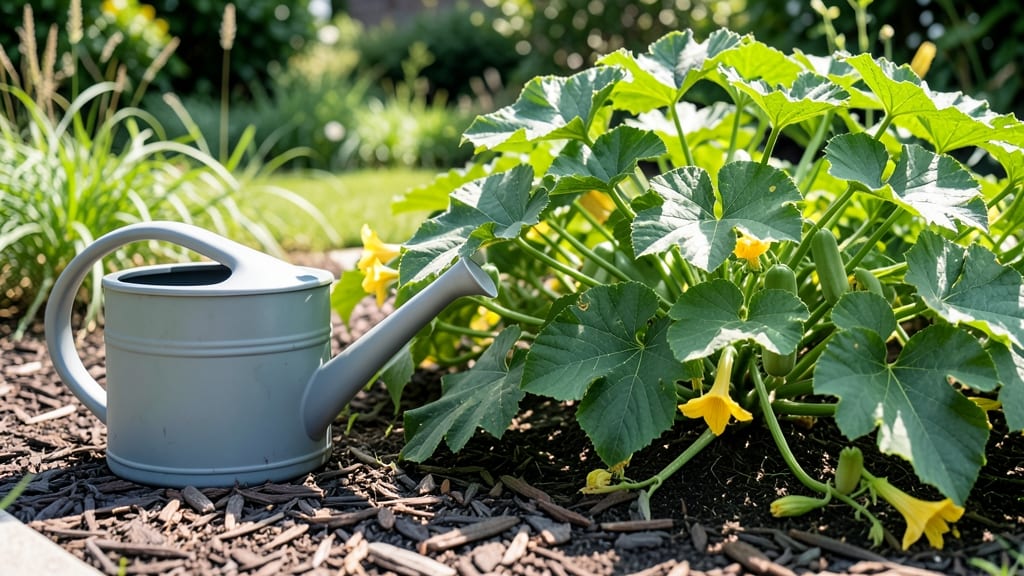
Watering squash plants right means the difference between vibrant vines and wilted leaves—morning watering is the secret weapon I swear by after watching my first crop collapse from afternoon heat stress. The key isn’t just how much you water, but when and how you do it.
Squash plants need deep, consistent moisture to support those heavy fruits, but too much at once leads to rot, while too little stresses the roots.
I’ve learned that soaker hoses or drip irrigation save time and keep the soil evenly damp without splashing leaves, which helps prevent diseases like powdery mildew.
Start with 1-2 inches of water per week, delivered slowly so it soaks down to the roots rather than pooling on the surface.
Young seedlings need frequent, shallow watering to keep the soil moist but not soggy, while mature plants with flowers and fruit can handle deeper watering every 3-4 days—adjust based on your climate. The soil should feel damp 6 inches down when you check with your finger.
Overwatering is just as deadly as underwatering, so always let the top inch dry out between sessions if your soil drains poorly.
What you’ll end up with is strong, sprawling vines loaded with heavy, flavorful squash—no more bitter, undersized fruits or plants that collapse under their own weight.
The morning routine keeps the plants hydrated when they need it most, reduces stress on the roots, and gives you consistent harvests from summer through fall. Plus, you’ll spot problems early, like yellowing leaves or wilting, and fix them before they spiral. Let’s get those squash thriving!
This works for both bush and vining varieties, whether you’re growing zucchini, butternut squash, or pumpkins. The same principles apply in containers or raised beds—just scale the water volume to match the pot size.
Now grab that watering can and let’s keep those plants happy and productive all season long.
📚 In This Guide
- What you need
- Instructions
- Tips and common mistakes
- Wrapping up and next steps
What you need
- ○ Water source: Hose with adjustable nozzle (for precision) or watering can (for smaller gardens). Pro tip: A soaker hose or drip irrigation system (optional but highly recommended) saves time and reduces waste! 💡
- ● Watering schedule tracker: A small notebook, phone app (like Gardenate or GrowVeg), or calendar to log watering sessions.
- ○ pH testing kit: Optional but useful for checking soil moisture levels (aim for 1-2 inches deep before watering).
- ● Mulch: Straw, grass clippings, or wood chips (2-3 inches thick) to retain moisture and suppress weeds.
- ● Well-draining soil: Squash hates soggy roots! Amend heavy clay soil with compost or sand if needed.
- ● Morning sunlight: Water early in the day (before 10 AM) to prevent fungal diseases.
- ● Patience: Young squash plants need 1-2 inches of water per week; mature vines may require 2-3 inches during fruit production.
Instructions for watering squash plants like a pro
Here's the precise morning routine I use to keep squash vines lush and fruit production heavy—no guesswork involved.
Water Deeply at Soil Level
Squash roots run deep, so aim for 1-2 inches of soil moisture at the base of the plant. Use a soaker hose or watering wand to deliver water slowly at the soil surface—this prevents foliar diseases that thrive on wet leaves. I water until the top 6 inches of soil feel damp about 2 inches down from the surface. Avoid overhead watering, which can spread fungal spores and cause powdery mildew.
Check moisture by sticking your finger into the soil—if it feels dry to the touch, water again. Early morning is ideal because it allows foliage to dry completely before evening, reducing humidity-related issues. I typically water every other day during hot, dry weather, but adjust based on rainfall and soil type.
Monitor Soil Consistency and Adjust Frequency
Squash plants wilt easily when thirsty, but they also hate soggy soil. Aim for consistently moist but never waterlogged conditions. Sandy soil drains quickly and may need watering daily, while clay holds moisture longer and might only require watering every 3-4 days. I test soil moisture by lifting a plant—if it feels light, it’s time to water.
Pay close attention during flowering and fruiting stages. These phases demand more frequent watering to support heavy fruit loads. If the soil dries out too quickly, mulch with 2-3 inches of straw to retain moisture and regulate temperature. This simple step can cut watering needs by 30-40% while keeping roots cool.
Direct Water to Root Zones Only
Focus watering efforts on the root zone, which extends 12-18 inches outward from the plant’s base. Avoid wetting leaves or vines, as excess moisture on foliage encourages powdery mildew and downy mildew, two common squash diseases. If you must water overhead (like after transplanting), do it early in the day so leaves dry completely by evening.
Use a drip irrigation system or soaker hose for precision. These tools deliver water directly to the soil without wasting a drop. I place them 6-8 inches from the plant stem and let them run for 20-30 minutes until the soil is thoroughly saturated. This method ensures even moisture distribution and minimizes weed growth by keeping the soil surface dry.
Adjust for Growth Stages and Weather
Young squash plants need less water than mature vines. Start with shallow watering (about 1 inch deep) until the plants establish roots, then gradually increase depth as they grow. During hot, dry spells, I water daily in the morning, while cool, cloudy weather might only require watering every 4-5 days. Always water before 10 AM to prevent evening moisture buildup.
Watch for signs of stress: wilting leaves mean it’s time to water, while yellowing foliage could indicate overwatering or poor drainage. If the soil feels compacted or water pools around the base, amend it with compost or organic matter to improve drainage. Squash plants are resilient, but consistency in watering is key to avoiding blossom-end rot and cracked fruit.
Maintain Even Moisture for Heavy Fruit Production
When squash plants are laden with fruit, they need steady moisture to prevent blossom drop and ensure sweet, tender produce. I water every other morning during peak production, adjusting based on soil checks. Let the top 1-2 inches of soil dry out slightly between waterings—this encourages deep root growth and prevents surface crusting.
Harvest squash promptly once it reaches full size to avoid sapping the plant’s energy. Overripe fruit competes with new growth for nutrients and water. I also prune excess vines and leaves to improve airflow, which helps the remaining foliage dry faster after watering. This reduces disease risk and keeps the plant focused on producing high-quality fruit.
Tips & tricks for perfect squash watering routines
A few targeted strategies will help you master this morning ritual and keep your squash plants thriving all season long.
Soil Moisture Precision: The key to Step 1 lies in understanding exactly what "1-2 inches of soil moisture" means. I've found that sticking your finger 2 inches down should feel damp but not soggy—like a wrung-out sponge. For precise measurement, use a soil moisture meter near the root zone. Remember, squash roots extend deep, so surface moisture isn't enough. If you're using a soaker hose, run it for the full 20-30 minutes until water appears at the outer edges of the 12-18 inch root zone mentioned in Step 3.
Mulching Strategy: The 2-3 inches of straw mulch recommended in Step 2 serves three critical purposes beyond moisture retention. First, it creates a thermal barrier that keeps roots cool during hot afternoons. Second, it blocks light to prevent weed competition. Third, as it decomposes, it adds organic matter to the soil. I've seen mulched beds reduce watering frequency by nearly half while improving fruit quality. Apply mulch after watering to prevent it from drawing moisture away from the soil.
Disease Prevention: The instructions emphasize avoiding wet foliage, but there's more to disease prevention than timing. I've noticed that watering at the same time each morning creates predictable drying patterns. For extra protection, especially in humid climates, consider adding a light application of neem oil to leaves after watering. The oil creates a protective barrier while allowing photosynthesis. Just be sure to apply it early in the morning so it has time to dry completely before evening.
Seasonal Adjustments: While the instructions cover daily adjustments, seasonal changes require different approaches. In early spring when soil is still cool, I water more frequently but with shallower applications to prevent temperature shock. As summer arrives, I switch to deeper waterings every other morning. For fall harvests, I gradually reduce watering as daylight shortens, focusing on keeping the soil consistently moist during the final fruit development stages.
Pro Tips for Watering Squash Plants
- A few targeted strategies will help you master this morning ritual and keep your squash plants thriving all season long.
- Soil Moisture Precision: The key to Step 1 lies in understanding exactly what "1-2 inches of soil moisture" means.
- Mulching Strategy: The 2-3 inches of straw mulch recommended in Step 2 serves three critical purposes beyond moisture retention.
Frequently asked questions
How often should I water squash plants?
Water squash plants deeply 1-2 times per week, especially during flowering and fruiting. Aim for 1-2 inches of water per week, adjusting for heat or drought. Morning watering prevents fungal diseases, and mulching helps retain moisture. Avoid overhead sprinkling to keep leaves dry.
What’s the best time of day to water squash?
Water squash plants early in the morning (6-9 AM) to reduce evaporation and fungal risks. Avoid evening watering—wet foliage overnight invites powdery mildew. If you must water later, do it at least 3 hours before sunset and avoid wetting leaves.
Can I use rainwater or tap water for squash plants?
Both work, but rainwater is ideal—it’s naturally soft and free of chlorine. If using tap water, let it sit 24 hours to off-gas chlorine. Avoid saltwater or heavily treated water, which can harm soil. Test your water’s pH (ideal: 6.0-7.0) for best results.
Why are my squash leaves yellowing after watering?
Yellow leaves often signal overwatering or poor drainage. Check soil moisture—if it’s soggy, reduce watering and improve drainage with organic matter. Yellowing can also mean nutrient deficiency (nitrogen) or fungal issues. Adjust watering, mulch heavily, and ensure 6+ hours of sunlight daily.
How do I adjust watering for extreme heat or cold?
| Condition | Adjustment |
|---|---|
| Heatwaves (90°F+) | Water daily in the morning (1-2 inches) and use mulch to retain moisture. Shade cloth can help. |
| Cold snaps (below 50°F) | Reduce watering to every 3-4 days unless soil is dry. Avoid wet leaves to prevent rot. |
Always monitor soil moisture with your finger—top 1-2 inches should be dry before watering again.
Wrapping up and next steps
Mastering the art of watering squash plants in the morning can transform your garden into a bountiful, thriving oasis! By following a consistent routine—deep, even hydration, mulching, and smart timing—you’ll nurture healthy vines and delicious, heavy fruit. Remember, squash is resilient, but it rewards patience and care.
Now that you’re armed with the know-how, roll up your sleeves and get growing! Start small—pick one or two plants to practice your new watering routine—and watch your garden flourish. Happy gardening! 🌱💧