
Watering
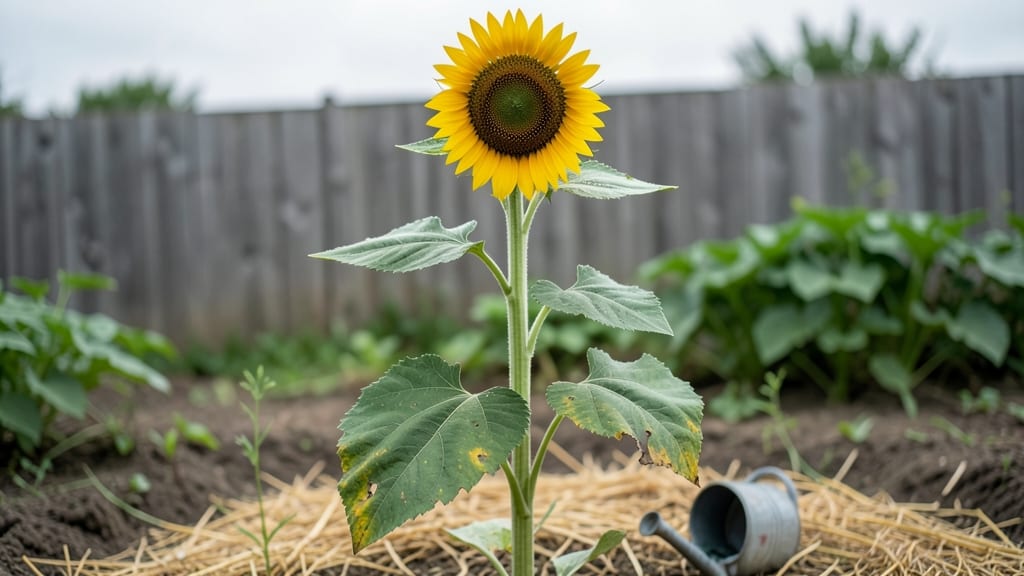
Watering sunflower plants 🌻 correctly is the secret to those 12-foot giants you’ve seen towering over fences—because shallow watering leaves them stunted and weak.
Sunflowers may seem low-maintenance, but their towering growth depends on one critical factor: watering technique. Get this wrong, and your plants will wilt before reaching their full potential—here’s how to master deep-soil hydration for sunflowers that reach for the sky.
Young seedlings need consistent moisture, while mature plants thrive on deep, infrequent watering. The key? Soaking the soil 6 inches down every 3-5 days in spring and daily in summer’s heat.
Below, I’ll show you how to read your sunflower’s thirst signals, avoid common watering mistakes, and keep your plants strong from seedling to bloom.


Deep-watering sunflower plants: the right technique for strong roots
Sunflowers thrive when their roots dive deep into the soil for hydration, not when they rely on surface moisture that evaporates quickly. Deep-watering encourages strong root development, helping your plants reach their full 10+ foot potential.
Unlike shallow sprinkling, which only wets the top inch, deep watering sends moisture 12-18 inches down—right where sunflower roots need it most.
Most gardeners mistakenly water sunflowers like delicate annuals, leading to weak stems and stunted growth. The key is slow, deep absorption that mimics natural rainfall. When done correctly, your sunflowers will develop tapered, fibrous roots capable of supporting massive flower heads. Let’s break down the exact technique to use.
| Growth Stage | Watering Depth | Frequency | Best Time |
|---|---|---|---|
| Seedlings (0-3 weeks) | 4-6 inches | Every 2-3 days | Morning (6-9 AM) |
| Vegetative (3-8 weeks) | 12-18 inches | Every 3-5 days | Early morning |
| Flowering (8-12 weeks) | 18-24 inches | Every 4-7 days | Morning or evening |
| Mature (Post-flowering) | 12-18 inches | Every 7-10 days | Deep soak weekly |
To check if your soil is moist enough, stick your finger 2-3 inches deep—if it feels dry, it’s time to water. For mature plants, dig down 6-8 inches; if the soil is damp, skip watering.
This soil moisture test prevents overwatering, which causes root rot and fungal diseases like powdery mildew.
Use a soaker hose or drip irrigation to deliver water slowly at the base of the plant. Avoid overhead sprinklers, which waste water and promote leaf diseases. For container-grown sunflowers, water until 10% of the water drains from the bottom—this ensures roots get hydrated, not just the surface soil.
Morning watering is ideal because it allows foliage to dry before evening, reducing fungal risks. If you must water in the evening, do so at least 4 hours before sunset to give leaves time to dry.
Never water during the hottest part of the day, as this causes rapid evaporation and burns tender leaves.
Mulching with 2-3 inches of straw or wood chips helps retain moisture and regulates soil temperature. This is especially critical during summer heatwaves, when sunflowers need 1-2 gallons of water per plant every 2-3 days. Without mulch, soil dries out faster, forcing roots to compete for shallow moisture.
Deep-watering isn’t just about quantity—it’s about consistency. Skipping watering sessions can cause root shrinkage, while sudden deep soaks after drought stress can shock the plant. Gradually increase watering depth as your sunflower grows, matching the root zone expansion.
Watch for signs of underwatering, like drooping leaves or crispy edges, and overwatering, such as yellowing leaves or mushy stems. Adjust your schedule based on weather conditions—drought? Water more frequently. Rainy season? Reduce watering to avoid soggy soil.
Pro tip: Use a moisture meter for precise readings, especially in sandy soil, which drains quickly. Clay soil holds moisture longer, so you’ll need to water less often. Always adapt your technique to your local soil type and climate for best results.
How often to water sunflowers: seasonal schedule for healthy growth
Sunflowers thrive when their watering routine matches their growth stages and seasonal needs. Seedlings need consistent moisture to establish roots, while mature plants develop drought tolerance.
Adjusting your schedule prevents wilting or root rot, ensuring those iconic blooms reach their full height. The key? Deep watering that mimics natural rainfall patterns.
Your sunflower’s water needs shift dramatically from spring to summer. Young plants require frequent hydration, but established sunflowers can handle longer dry spells—if you water correctly. Overwatering is just as damaging as underwatering, so learning to read your soil and plants is essential.
Below, I’ve broken down the perfect schedule for each growth phase and season.
- 1 Seedling Stage (Weeks 1-4): Water every 2-3 days with ½ gallon per plant. Keep soil consistently moist—not soggy. Young roots are shallow and need frequent hydration to prevent wilting. Use a spray bottle for delicate seedlings.
- 2 Vegetative Growth (Weeks 4-8): Increase to 1 gallon every 3-4 days. Focus on deep watering (6 inches down) to encourage root expansion. Mulch around the base to retain moisture. Yellowing leaves signal underwatering, while drooping stems mean overwatering.
- 3 Budding Stage (Weeks 8-10): Reduce to every 4-5 days with 1.5 gallons per plant. This phase demands balance—too much water causes blossom drop, while too little stunts growth. Check soil 2 inches down; it should feel damp but not wet.
- 4 Flowering/Maturity (Weeks 10+): Water every 5-7 days with 2 gallons per plant. Mature sunflowers are drought-tolerant but still need deep hydration during peak summer heat. Stop watering 2 weeks before harvest to dry seeds properly.
-
5
Seasonal Adjustments:
- Spring/Rainy Seasons: Reduce frequency by 20%—sunflowers hate soggy soil.
- Summer/Drought: Water daily in extreme heat (early morning or evening).
- Fall: Taper off to bi-weekly as growth slows.
Pay attention to your sunflower’s visual cues—wilting leaves by midday often mean it’s thirsty, while yellowing lower leaves could signal overwatering. In containers, water every 2-3 days since pots dry out faster. For in-ground plants, stick your finger 2 inches deep; if it’s dry, it’s time to water.
Pro tip: Use a soaker hose or drip irrigation to deliver water directly to the roots, reducing evaporation and disease risk. Avoid overhead watering, which can spread fungal spores. With this schedule, your sunflowers will grow taller, stronger, and more vibrant—ready to turn heads in your garden. 🌻