
Plants
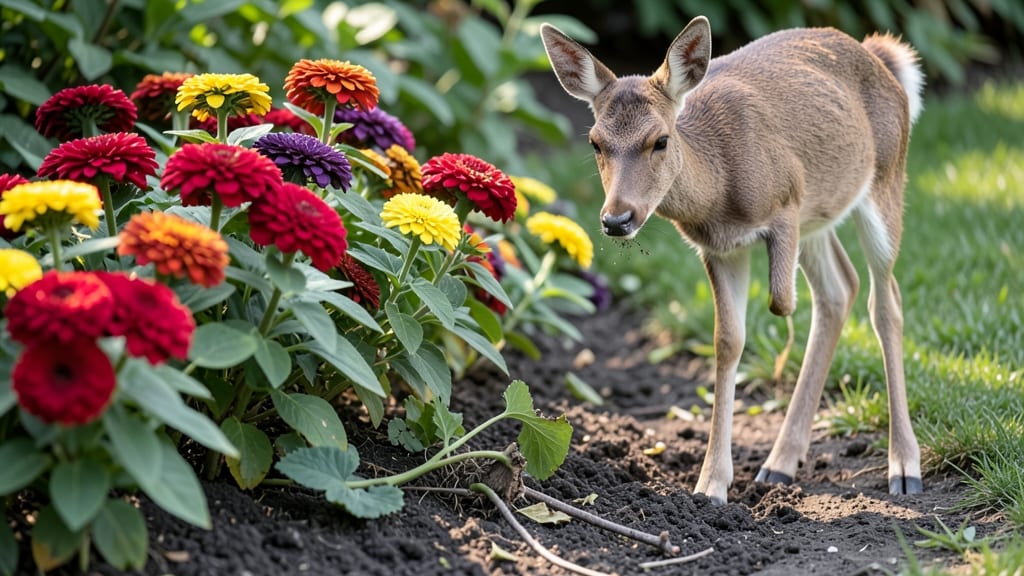
Mums (chrysanthemums) are not deer-resistant plants, as deer frequently eat their leaves and blooms when other food sources dwindle. Their delicate texture and subtle scent make them particularly vulnerable, though certain varieties may offer slightly better protection.
Deer tend to target mum plants because their soft foliage offers little resistance, and the flowers provide easy access to nutrients. 🌿 During late summer and fall—when deer face food shortages—they’re especially drawn to mums, often stripping gardens bare if left unprotected.
While some hybrid varieties contain mild toxins, these aren’t strong enough to reliably deter hungry deer, especially in areas with high browsing pressure.
If you’re concerned about deer damage, consider pairing mums with deer-resistant companions like lavender or Russian sage, which emit strong scents that deer dislike. Physical barriers, such as fencing or plant guards, can also help shield your mums while keeping your garden vibrant.
💡 In This Article
- Why Deer Target Mum Plants in Gardens
- Deer-Proofing Your Garden with Mum Alternatives
Why deer target mum plants in gardens
Deer go after mum plants primarily because of their soft, tender foliage and nutrient-rich flowers. Unlike tougher plants with sharp edges or prickly textures, mums offer little physical resistance, making them an easy snack.
The leaves contain carbohydrates and proteins that deer crave, especially when other food sources like clover or grasses become scarce in late summer and fall. 🌿
Botanically, mums lack the strong chemical defenses found in deer-resistant plants. For example, daffodils contain lycorine (a toxin), while Russian sage emits potent oils that deer avoid. Mums, however, produce only mild pyrethrins—natural compounds that may irritate insects but have minimal effect on deer.
These compounds are nowhere near as potent as the toxins in plants like foxglove or oleander, which deer instinctively avoid.
The timing of mum blooming also plays a role. Deer face peak food shortages in September and October, when mums are at their most lush and colorful. Studies show deer browse up to 30% more during this period, targeting high-calorie plants like mums to survive colder months.
Their bright flower colors (yellow, pink, purple) may even attract them, as deer sometimes associate vibrant hues with ripe, edible fruits or seeds.
Another factor is the lack of strong scent. While some deer-resistant plants (like lavender) emit overpowering aromas that repel browsers, mums have a subtle, sweet fragrance that doesn’t signal danger.
Deer rely heavily on scent to identify toxic plants, and mums simply don’t trigger their avoidance instincts. 🦌 In areas with heavy deer pressure, entire mum beds can be stripped in just 2-3 weeks if left unprotected.
Even mum varieties bred for disease resistance or longer vase life don’t guarantee deer protection. For instance, the 'Bonanza' series (a popular hybrid) may have thicker stems, but deer still find the leaves palatable.
The key difference between deer-resistant plants and mums lies in their evolutionary adaptations: mums prioritize flower production and color over chemical defenses, while deer-resistant species prioritize survival through toxins or physical barriers.
What most gardeners don’t realize is that deer learn from experience. If they discover a mum patch in your yard, they’ll return repeatedly—especially if other food sources are limited.
This is why companion planting with deer-deterring species (like marigolds or snapdragons) can create a natural barrier around your mums, confusing deer and reducing damage by up to 50%. 🌱