
Plants
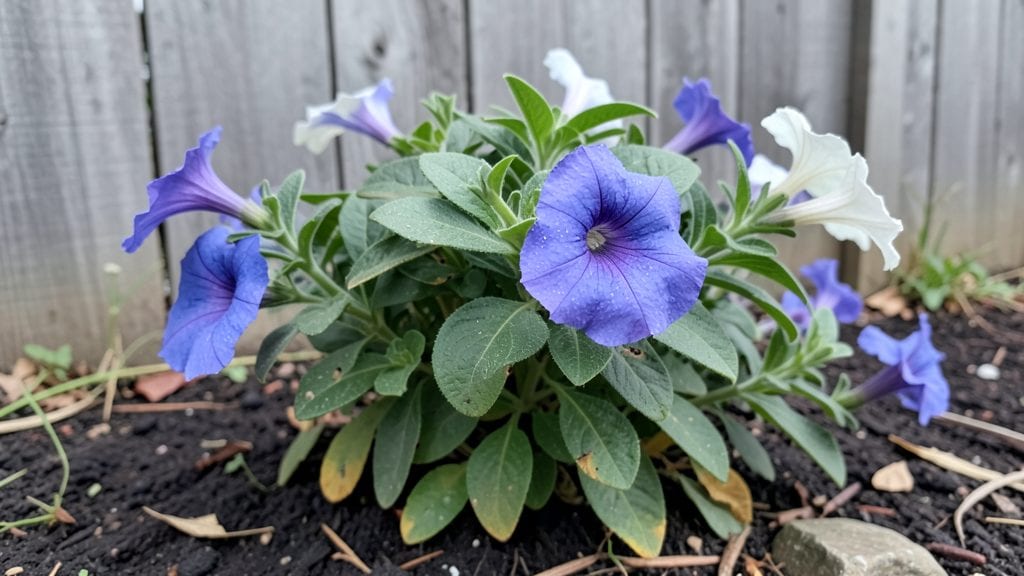
Petunias are full sun plants that need 6 to 8 hours of direct sunlight daily for vibrant blooms and strong growth, though afternoon shade helps prevent heat stress in hot climates.
Petunias aren't just sun-lovers—they practically demand it to reach their full potential.
Without enough light, you'll see fewer blooms and weaker stems that stretch toward any available rays, a condition called etiolation. 🔥 The bright light also triggers the production of those stunning pigments that make petunias so eye-catching, from deep purples to sunny yellows.
What's interesting is how different varieties respond: some handle intense midday sun like champions, while others prefer a more gentle approach, especially in sweltering afternoons.
For gardeners working with these beauties, location matters just as much as sunlight. Planting them in well-draining soil with a little organic matter gives their roots the support they need to handle full-sun conditions.
I've found that grouping them with taller plants on the north side provides natural shade for their delicate petals while still letting them soak up morning rays.
💡 In This Article
- How Sunlight Affects Petunia Flowering and Health
- Best Practices for Growing Petunias in Sunny Gardens
How sunlight affects petunia flowering and health
Sunlight triggers petunias' flowering through a process called photoperiodism, where specific light wavelengths (especially blue and red spectrums) stimulate the production of floral hormones like florigen.
This is why you'll see petunias bursting into bloom when exposed to 6+ hours of direct sunlight—their cells respond by converting stored energy into vibrant petals rather than just leafy growth.
The chlorophyll in petunia leaves absorbs sunlight to power photosynthesis, but the real magic happens in the anthocyanin pigments that create their stunning colors. These pigments need full sun to develop properly, which is why shade-grown petunias often appear paler and less vibrant.
The biological response to insufficient light is dramatic. When petunias don't get enough sunlight, they undergo etiolation, producing long, weak stems that stretch toward any available light source. This happens because the plant prioritizes reaching upward to access light over developing strong, compact structures.
You'll notice the leaves become sparse and the flower production drops by up to 70% compared to fully sun-exposed plants. The stems also become more susceptible to breaking under their own weight—a common issue in container gardens where light access is limited.
Too much direct sunlight, particularly during peak summer heat, creates another set of problems. Petunia petals are delicate and can suffer from sunburn when exposed to intense rays without adequate moisture in the soil.
The edges of leaves and flowers may develop brown, crispy spots as the cell membranes break down from excessive heat. Some varieties, like Petunia × hybrida, handle full sun better than others, but even they benefit from afternoon shade in temperatures exceeding 90°F (32°C).
The key is balancing light exposure with proper hydration—petunias in full sun need about 1 inch of water per week to maintain turgor pressure in their cells.
What most gardeners don't realize is how sunlight affects petunia scent production too. Many fragrant varieties, like 'Mitchell' series, produce their most intoxicating aromas when grown in full sun. The volatile organic compounds responsible for their scent are synthesized through light-dependent pathways in the plant's chloroplasts.
In low-light conditions, these compounds don't form as readily, resulting in noticeably less fragrance. This is why sun-exposed petunias often smell 2-3 times stronger than those grown in partial shade.
For those experimenting with petunias in different light conditions, consider this: East-facing gardens provide gentle morning sun that's perfect for heat-sensitive varieties, while west-facing locations offer intense afternoon light that can scorch petals.
The ideal scenario combines 6 hours of morning sun with 2-3 hours of afternoon shade during peak summer months. This balance prevents both etiolation and heat stress while maximizing bloom production.
The science behind petunia color development is equally fascinating. The red and purple hues come from anthocyanin pigments that accumulate in the petals when exposed to sunlight. Without adequate light, these pigments don't form properly, leading to washed-out colors.
White and pale varieties are less affected by light levels, but even they benefit from full sun for stronger stems and more abundant blooms. 💫